







Pino Perspectives: Designing the next chapter of space
Foretelling future living spaces by design approaches
By Nicholai Go
Published Apr 25, 2026 12:31 pm


As we enter the next quarter-century, the built environment is poised for a profound transformation. In the Philippines, this shift is shaped not only by global technological advances but also by deeply local realities, including rapid urbanization, climate vulnerability, economic pressures, and a growing demand for more inclusive and responsive spaces. Compounding these challenges is the ongoing global oil crisis, which continues to drive up energy, transportation, and construction costs. As an architect practicing in this context, I see three emerging design approaches that will significantly redefine how we live, work, and experience our environments in 2026 and the years ahead: artificial intelligence, prefabrication, and material innovation.
Artificial intelligence
Artificial intelligence is fundamentally changing the way architecture is conceived and communicated. What was once a highly interpretive process, translating a client’s abstract ideas into physical form, is becoming more precise and collaborative. Today, many clients come into initial meetings already equipped with AI-generated images, spatial concepts, and even preliminary layouts that reflect their aspirations. This shift democratizes design by allowing clients to better articulate their needs and preferences. In the Philippine setting, where projects often involve a wide range of stakeholders with varying levels of architecture and design literacy, this is a powerful development.
Artificial intelligence is fundamentally changing the way architecture is conceived and communicated. What was once a highly interpretive process, translating a client’s abstract ideas into physical form, is becoming more precise and collaborative. Today, many clients come into initial meetings already equipped with AI-generated images, spatial concepts, and even preliminary layouts that reflect their aspirations. This shift democratizes design by allowing clients to better articulate their needs and preferences. In the Philippine setting, where projects often involve a wide range of stakeholders with varying levels of architecture and design literacy, this is a powerful development.
However, this accessibility also raises the bar for architects and designers. The profession is no longer defined solely by the ability to visualize or draft, but by the capacity to think critically, contextualize ideas, and deliver solutions that respond to cultural, environmental, and economic realities. AI may generate options, but it cannot replace the nuanced judgment required to design for flood-prone communities, dense urban neighborhoods, or culturally significant spaces. As such, architects must evolve from being sole creators to becoming informed curators and strategic thinkers, ensuring that technology enhances rather than diminishes the integrity of the design process.
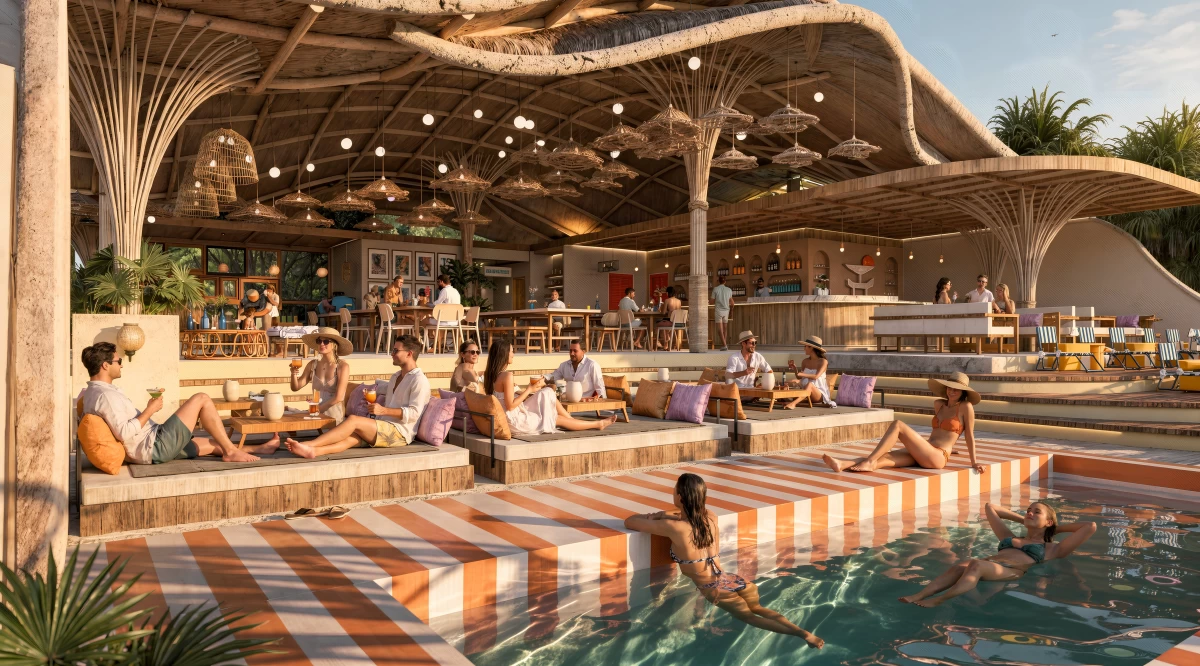
Mr. Turtle Beach Club in Siargao Philippines uses bamboo from Bukidnon for its structure. (Photo: Pino Places)
Prefabrication
Equally transformative is the growing relevance of prefabrication in construction. The Philippine construction industry continues to face persistent challenges, including labor shortages, rising material costs, and unpredictable weather conditions. The oil crisis has further intensified these pressures and difficulties. Higher fuel prices have significantly increased the cost of transporting materials, mobilizing equipment, and operating heavy machinery on-site. This increase will start to trickle down to all aspects of construction. As a result, project budgets are strained, timelines are extended, and smaller developers are often forced to scale back or delay construction.
Equally transformative is the growing relevance of prefabrication in construction. The Philippine construction industry continues to face persistent challenges, including labor shortages, rising material costs, and unpredictable weather conditions. The oil crisis has further intensified these pressures and difficulties. Higher fuel prices have significantly increased the cost of transporting materials, mobilizing equipment, and operating heavy machinery on-site. This increase will start to trickle down to all aspects of construction. As a result, project budgets are strained, timelines are extended, and smaller developers are often forced to scale back or delay construction.
Prefabrication offers a practical and forward-looking response. By shifting much of the construction process into factories with controlled environments, we can reduce the need for prolonged on-site activity and minimize exposure to fluctuating fuel costs. Transporting modular components in fewer, more efficient trips becomes a strategic advantage when logistics are expensive and unpredictable. One can also minimize both inputs and waste by ensuring a much stricter bill of materials and procurement cycles. This approach also allows for better quality control and shorter project timelines.
Designing for prefabrication requires architects to rethink how buildings are conceived from the outset. Rather than treating structures as singular, handcrafted objects, we must begin to view them as systems composed of modular components. This demands a higher level of coordination, precision, and integration across disciplines. Yet the benefits are substantial. Beyond cost and time savings, prefabrication has the potential to significantly improve working conditions for laborers. In a country regularly exposed to extreme heat, heavy rains, and typhoons, moving construction activities into safer, more controlled settings is not only a matter of efficiency but also of social responsibility.
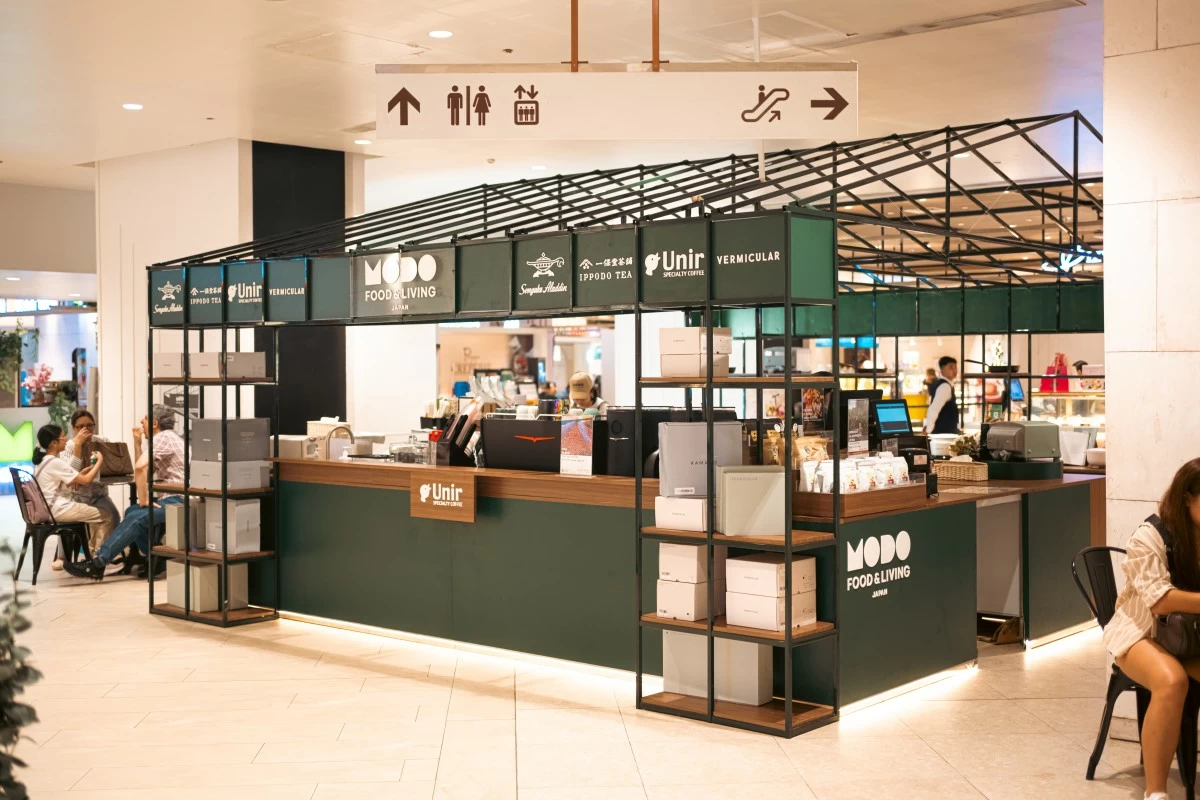
Modo Living stall at MITSUKOSHI Mall was designed and built with Prefabrication in Mind. (Photo: Pino Places)
Material innovation
The third, and perhaps most urgent area of transformation lies, is materials. The Philippines is increasingly affected by global supply chain disruptions, trade tensions, and rising tariffs, all of which contribute to escalating construction costs. The oil crisis further exacerbates this situation, as petroleum-based products, ranging from plastics and sealants to certain insulation materials, become more expensive. Additionally, the cost of importing construction materials rises sharply with increased shipping and freight expenses.
The third, and perhaps most urgent area of transformation lies, is materials. The Philippines is increasingly affected by global supply chain disruptions, trade tensions, and rising tariffs, all of which contribute to escalating construction costs. The oil crisis further exacerbates this situation, as petroleum-based products, ranging from plastics and sealants to certain insulation materials, become more expensive. Additionally, the cost of importing construction materials rises sharply with increased shipping and freight expenses.
Our continued reliance on imported materials places the industry in a vulnerable position. Moving forward, the development and adoption of locally sourced materials will be critical to ensuring resilience and sustainability. Among the most promising innovations is the renewed focus on bamboo. Long used in traditional Filipino architecture, bamboo is now being re-engineered into high-performance materials suitable for modern construction. Its rapid growth cycle, availability, and low environmental impact make it an ideal candidate for widespread use. Advances in processing and treatment technologies have addressed many of the durability and structural concerns that once limited its application. By investing in such materials, the Philippines can reduce its dependence on imports while supporting local industries and minimizing its environmental footprint.
These three approaches, artificial intelligence, prefabrication, and material innovation, are not isolated trends. Together, they signal a broader shift toward a more adaptive, resilient, and inclusive built environment, particularly in a time of economic and energy uncertainty. They challenge architects to rethink traditional methods and embrace new ways of working, while remaining grounded in the specific needs and conditions of the communities we serve.
Ultimately, the future of design in the Philippines will not be defined solely by technological advancement or aesthetic evolution. It will be shaped by our ability to respond to crises, such as rising energy costs, while integrating innovation thoughtfully and responsibly. In doing so, we can create spaces that are not only efficient and sustainable, but also meaningful, resilient, and enduring.