







Philippines' fragile balancing act
Published Apr 25, 2026 12:05 am
|
Updated Apr 24, 2026 05:12 pm


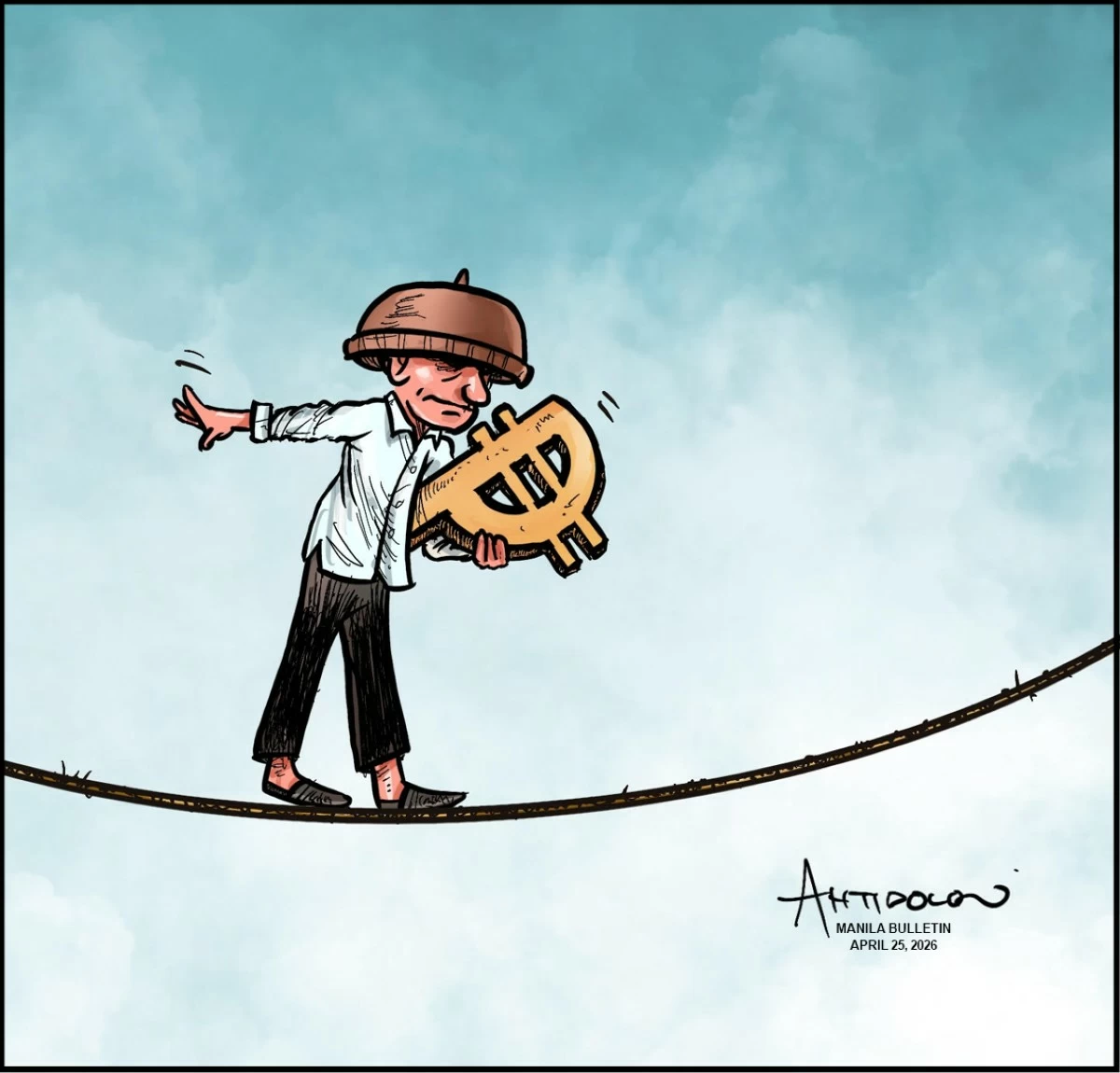
For years, the Philippine economic narrative was one of resilient, if unremarkable, stability. But as 2026 unfolds, that script is being rewritten by volatile cocktail of geopolitical friction, stalled infrastructure, and a central bank forced to abandon its post-pandemic crouch.
The Bangko Sentral ng Pilipinas’ (BSP) recent signal of a definitive shift toward tightening cycle marks the end of an era of easy money, ushering in a period of “measured” but persistent hikes to combat an inflation outlook that is rapidly souring.
The challenge facing the BSP’s Monetary Board is twofold: it must anchor inflation expectations that have drifted toward a projected 6.3 percent for 2026, while ensuring it does not choke off the recovery that remains more fragile than the headline figures suggest. By opting for a “measured cadence” of rate hikes rather than aggressive shocks, the BSP is attempting a surgical strike against price pressures. Yet, with real interest rates sitting in negative territory at -1.5 percent, the central bank is effectively running to stand still.
The urgency of this tightening is underscored by the deteriorating global landscape. The Middle East conflict has evolved from a distant geopolitical concern into a direct hit on the Philippine kitchen table, driving up the costs of oil and fertilizer. For a nation that relies almost entirely on energy imports, these supply shocks are not merely transitory blips; they are systemic threats that Fitch Ratings has cited in its decision to downgrade the Philippines’ outlook to “negative.”
This outlook revision by Fitch is a sobering wake-up call. It threatens to interrupt a 20-year streak of credit resilience, dating back to the fiscal malaise of the mid-2000s. The crux of the problem lies in the stalling of the ”Build, Better, More” engine. A collapse in infrastructure spending in late 2025—born of necessary but disruptive graft probes—has robbed the economy of its traditional growth multipliers. When public investment falters just as energy costs spike, the result is a pincer movement that squeezes both the government’s fiscal space and the consumer’s wallet.
Amid these gathering clouds, however, there is a significant silver lining: the institutional “vote of confidence” from JPMorgan Chase & Co. The inclusion of Philippine sovereign debt in its flagship emerging-market bond index by January 2027 is a landmark event. It promises a ₱240 billion windfall of foreign capital, potentially compressing yields and lowering the long-term cost of debt exactly when the Bureau of the Treasury needs it most.
This inclusion creates a fascinating paradox. While Fitch warns of a potential downgrade due to governance and energy risks, the world’s largest index provider is preparing to pull the Philippines deeper into the global financial fold. It suggests that while the country’s short-term “outlook” is clouded by the Marcos-Duterte political rift and impeachment dramas, its long-term “infrastructure” as a credible borrower remains attractive to passive global capital.
The path forward requires a delicate calibration of policy. The government must expedite the cleanup of its infrastructure bureaucracy to restart the growth engine, while the BSP must remain the “adult in the room,” raising rates enough to defend the peso and tame prices without tipping a cooling economy into a freeze.
The Philippines is currently a tale of two trajectories. One leads toward the prestige of global index inclusion and a broader investor base; the other toward a credit downgrade and a return to the fiscal instability of the past. For the Marcos administration, the “smart risk management” praised by analysts must now transition from rhetoric to results. In a world of six percent inflation and negative real rates, there is no longer any margin for error.