ADVERTISEMENT

'We want peace': Israel envoy calls for de-escalation amid Middle East tensions affecting global stability

Israeli Ambassador Dana Kursh seeks de-escalation as Iran tensions drive oil prices, raise risks for OFWs

Published Apr 24, 2026 04:30 pm
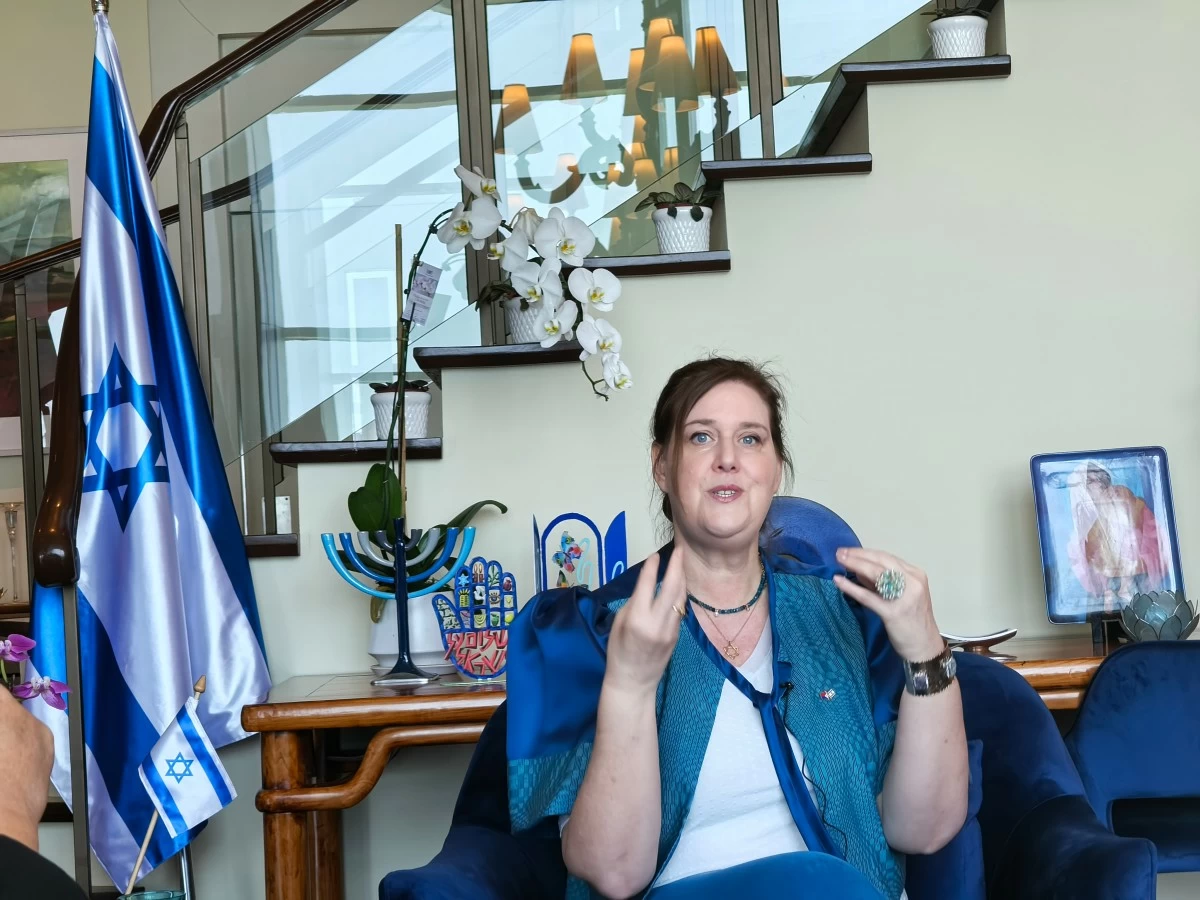
Israeli Ambassador Dana Kursh calls for peace and de-escalation amid rising tensions involving Iran, driving oil prices higher and raising global concerns. (Merlina Hernando-Malipot / Manila Bulletin)
Israeli Ambassador to the Philippines, Dana Kursh, renewed calls for peace and de-escalation in the Middle East, warning that escalating tensions involving Iran are already impacting global stability and economies, including the Philippines.
During a media brunch she hosted on April 23, Kursh said Israel remains hopeful that ongoing diplomatic efforts, including talks in Islamabad, will result in a ceasefire and long-term stability. “We need to see that this ceasefire will lead us in the right direction,” she said.
While underscoring the urgent need to resolve the situation, Kursh stressed that any solution must be long-term.
“God willing, we are hoping for this situation to de-escalate,” Kursh said. “Israel does not want to escalate the situation. We want peace. We want these talks to be successful,” she added.

Kursh explained that the target of the parallel operations of the United States and Israel is not the Iranian people, but the regime, which she described as the “cause” of these problems. “We know that this Iranian regime is vicious,” she added.
“If we talk about success, it has two sides: one is economic stability, and the second is removing the Iranian regime’s threat—its nuclear capabilities, ballistic missiles, and funding for terrorism. We have to do it together,” she said.
Oil prices, Hormuz Strait tensions raise global concerns
The envoy pointed to Iran’s actions in the Strait of Hormuz as a key driver of rising oil prices.
“We are hoping and praying for peace that will provide stability in affected countries like the Philippines,” she said, noting that economic ripple effects from the conflict are being felt far beyond the region.
Kursh criticized Iran for “blocking” the Strait of Hormuz, which she said is driving up oil prices. “It should be open to everyone,” she added.
The Strait of Hormuz is a critical global shipping route for oil, and any disruption can significantly affect fuel costs worldwide, including in the Philippines, which relies heavily on imported energy.
Security concerns: nuclear, missile, and terrorism threats
The Israeli envoy reiterated concerns over Iran’s military capabilities, including nuclear development and ballistic missile programs, as well as alleged support for militant groups such as Hamas and Hezbollah.
She said joint military coordination efforts—such as “Epic Fury” led by the United States and Israel’s “Roaring Lion”—aim to counter these threats.
“The goal is to prevent the Iranian regime from acquiring nuclear weapons, developing ballistic missiles, and funding terrorist organizations,” Kursh said.
Impact in the Philippines, OFWs
Kursh emphasized that the crisis has global implications, particularly for the Philippines, which has over two million overseas Filipino workers (OFWs) in the Middle East.
“Each and every one of us is affected… especially with over two million OFWs in the region,” she said.
She also expressed condolences over the deaths of Filipinos in Israel, assuring continued support for the victims’ families. “We would like to stay in their lives for as long as they want us to,” Kursh said.

Call for unity and de-escalation
Despite ongoing tensions, Kursh stressed that Israel does not seek escalation and remains committed to peace.
“We want these talks to succeed,” she said. “Success means economic stability and removing threats—nuclear, ballistic, and terrorism,” she added.
Kursh emphasized that a lasting ceasefire must address the root causes of instability. “God willing, these talks will move in a positive direction and lead us to a safer and more stable world,” she added.
Peace talks and diplomatic breakthroughs
Kursh also highlighted what she described as a “historic” diplomatic development: for the first time in over 20 years, Israeli and Lebanese ambassadors are holding direct talks in Washington, D.C.
She expressed optimism that these negotiations could pave the way for improved relations between Israel and Lebanon. “The dream of every Israeli diplomat is to be involved in peacemaking,” she said. “We are hoping this will move us closer to peace in the region,” Kursh added.

Related Tags

Israel Iran conflict Dana Kursh Philippines Strait of Hormuz oil prices Middle East peace talks OFWs Middle East impact
ADVERTISEMENT
.most-popular .layout-ratio{ padding-bottom: 79.13%; } @media (min-width: 768px) and (max-width: 1024px) { .widget-title { font-size: 15px !important; } }

{{ articles_filter_1561_widget.title }}

.most-popular .layout-ratio{ padding-bottom: 79.13%; } @media (min-width: 768px) and (max-width: 1024px) { .widget-title { font-size: 15px !important; } }

{{ articles_filter_1562_widget.title }}

.most-popular .layout-ratio{ padding-bottom: 79.13%; } @media (min-width: 768px) and (max-width: 1024px) { .widget-title { font-size: 15px !important; } }

{{ articles_filter_1563_widget.title }}

{{ articles_filter_1564_widget.title }}

.mb-article-details { position: relative; } .mb-article-details .article-body-preview, .mb-article-details .article-body-summary{ font-size: 17px; line-height: 30px; font-family: "Libre Caslon Text", serif; color: #000; } .mb-article-details .article-body-preview iframe , .mb-article-details .article-body-summary iframe{ width: 100%; margin: auto; } .read-more-background { background: linear-gradient(180deg, color(display-p3 1.000 1.000 1.000 / 0) 13.75%, color(display-p3 1.000 1.000 1.000 / 0.8) 30.79%, color(display-p3 1.000 1.000 1.000) 72.5%); position: absolute; height: 200px; width: 100%; bottom: 0; display: flex; justify-content: center; align-items: center; padding: 0; } .read-more-background a{ color: #000; } .read-more-btn { padding: 17px 45px; font-family: Inter; font-weight: 700; font-size: 18px; line-height: 16px; text-align: center; vertical-align: middle; border: 1px solid black; background-color: white; } .hidden { display: none; }
function initializeAllSwipers() { // Get all hidden inputs with cms_article_id document.querySelectorAll('[id^="cms_article_id_"]').forEach(function (input) { const cmsArticleId = input.value; const articleSelector = '#article-' + cmsArticleId + ' .body_images'; const swiperElement = document.querySelector(articleSelector); if (swiperElement && !swiperElement.classList.contains('swiper-initialized')) { new Swiper(articleSelector, { loop: true, pagination: false, navigation: { nextEl: '#article-' + cmsArticleId + ' .swiper-button-next', prevEl: '#article-' + cmsArticleId + ' .swiper-button-prev', }, }); } }); } setTimeout(initializeAllSwipers, 3000); const intersectionObserver = new IntersectionObserver( (entries) => { entries.forEach((entry) => { if (entry.isIntersecting) { const newUrl = entry.target.getAttribute("data-url"); if (newUrl) { history.pushState(null, null, newUrl); let article = entry.target; // Extract metadata const author = article.querySelector('.author-section').textContent.replace('By', '').trim(); const section = article.querySelector('.section-info ').textContent.replace(' ', ' '); const title = article.querySelector('.article-title h1').textContent; // Parse URL for Chartbeat path format const parsedUrl = new URL(newUrl, window.location.origin); const cleanUrl = parsedUrl.host + parsedUrl.pathname; // Update Chartbeat configuration if (typeof window._sf_async_config !== 'undefined') { window._sf_async_config.path = cleanUrl; window._sf_async_config.sections = section; window._sf_async_config.authors = author; } // Track virtual page view with Chartbeat if (typeof pSUPERFLY !== 'undefined' && typeof pSUPERFLY.virtualPage === 'function') { try { pSUPERFLY.virtualPage({ path: cleanUrl, title: title, sections: section, authors: author }); } catch (error) { console.error('ping error', error); } } // Optional: Update document title if (title && title !== document.title) { document.title = title; } } } }); }, { threshold: 0.1 } ); function showArticleBody(button) { const article = button.closest("article"); const summary = article.querySelector(".article-body-summary"); const body = article.querySelector(".article-body-preview"); const readMoreSection = article.querySelector(".read-more-background"); // Hide summary and read-more section summary.style.display = "none"; readMoreSection.style.display = "none"; // Show the full article body body.classList.remove("hidden"); } document.addEventListener("DOMContentLoaded", () => { let loadCount = 0; // Track how many times articles are loaded const offset = [1, 2, 3, 4, 5, 6, 7, 8, 9, 10]; // Offset values const currentUrl = window.location.pathname.substring(1); let isLoading = false; // Prevent multiple calls if (!currentUrl) { console.log("Current URL is invalid."); return; } const sentinel = document.getElementById("load-more-sentinel"); if (!sentinel) { console.log("Sentinel element not found."); return; } function isSentinelVisible() { const rect = sentinel.getBoundingClientRect(); return ( rect.top < window.innerHeight && rect.bottom >= 0 ); } function onScroll() { if (isLoading) return; if (isSentinelVisible()) { if (loadCount >= offset.length) { console.log("Maximum load attempts reached."); window.removeEventListener("scroll", onScroll); return; } isLoading = true; const currentOffset = offset[loadCount]; window.loadMoreItems().then(() => { let article = document.querySelector('#widget_1690 > div:nth-last-of-type(2) article'); intersectionObserver.observe(article) loadCount++; }).catch(error => { console.error("Error loading more items:", error); }).finally(() => { isLoading = false; }); } } window.addEventListener("scroll", onScroll); });

Sign up by email to receive news.