







Red Hat Philippine powers enterprises with open-source
How the world's leading open source company is helping Filipino businesses, including GCash, modernize their technology and move beyond the fear of going open.
Published Apr 24, 2026 07:47 am


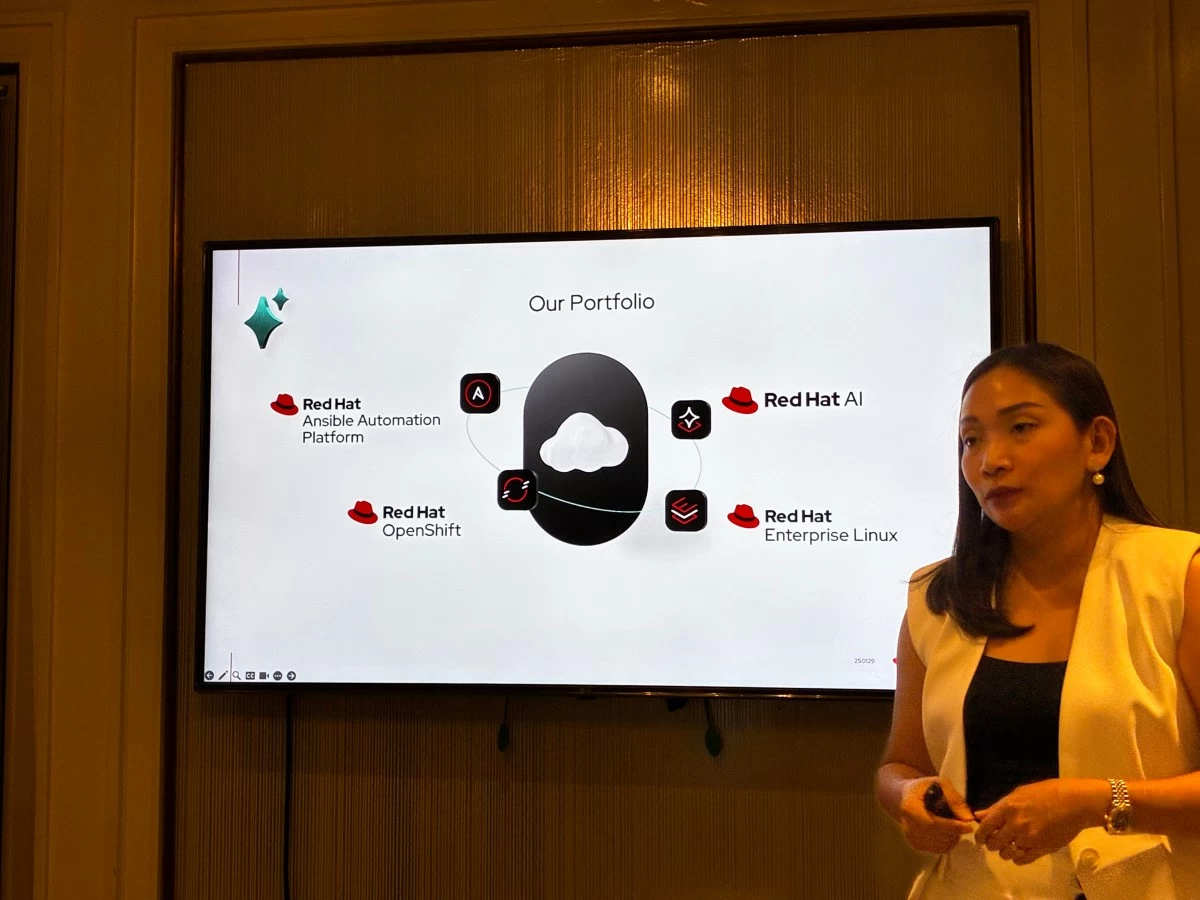
In a recent session for enterprise technology leaders, Djang Granados, country manager of Red Hat Philippines, outlined how her company is helping local organizations tackle four critical journeys: hybrid cloud, AI, automation, and virtualization.
The open source trust gap
Despite the global momentum behind open source, Granados acknowledged that skepticism persists among some enterprises, and didn't shy away from naming the root cause.
"Enterprises are not that confident with open source solutions because of the lack of support when needed," she noted, adding that this hesitation is precisely where Red Hat steps in.
The company's pitch to the market leans on a track record that is difficult to argue with. More than 90% of Fortune 500 companies trust Red Hat for their enterprise technology needs, a statistic Granados cited to underscore the platform's credibility at the highest levels of global business.
"We're the leading open source provider for IT enterprise solutions. 90% of the Fortune 500 is using a Red Hat," said Granados.
Red Hat's standing in the open source world is historic. In 2012, the company became the first open source company to reach $1 billion in annual revenue. It crossed the $2 billion mark in 2015, and by early 2018, its annual revenue had climbed to nearly $3 billion, making it the most commercially successful pure-play open source company in history.
What makes Red Hat different
The Red Hat model is built on a fundamental distinction: Unlike proprietary software vendors, Red Hat enterprise subscribers have access to source code that they can inspect, modify, and customize. But the real differentiator, Granados said, is what happens at the community level.
"Our engineers participate in the community to make sure that there's ongoing projects that have been built over time, by millions of community practitioners," she said. "Red Hat integrates these projects within our existing portfolio and within our existing ecosystem, making sure that they're validated and certified to run a Red Hat."
Granados framed Red Hat's local value proposition around four areas where enterprises in the Philippines are actively seeking guidance:
Hybrid cloud — building flexible, non-siloed environments that allow workloads to run across on-premises data centers and public cloud platforms without creating technology lock-in.
Artificial intelligence — helping organizations move beyond experimentation toward production-ready AI deployments that actually deliver business value.
Automation — scaling operations efficiently through the Red Hat Ansible Automation Platform, reducing manual overhead and enabling IT teams to do more with less.
Virtualization — modernizing traditional workloads and preparing them for a cloud-native future, rather than maintaining aging infrastructure indefinitely.
GCash: Open source at scale
Joining the session was Nico Alina, assistant vice president at GCash.
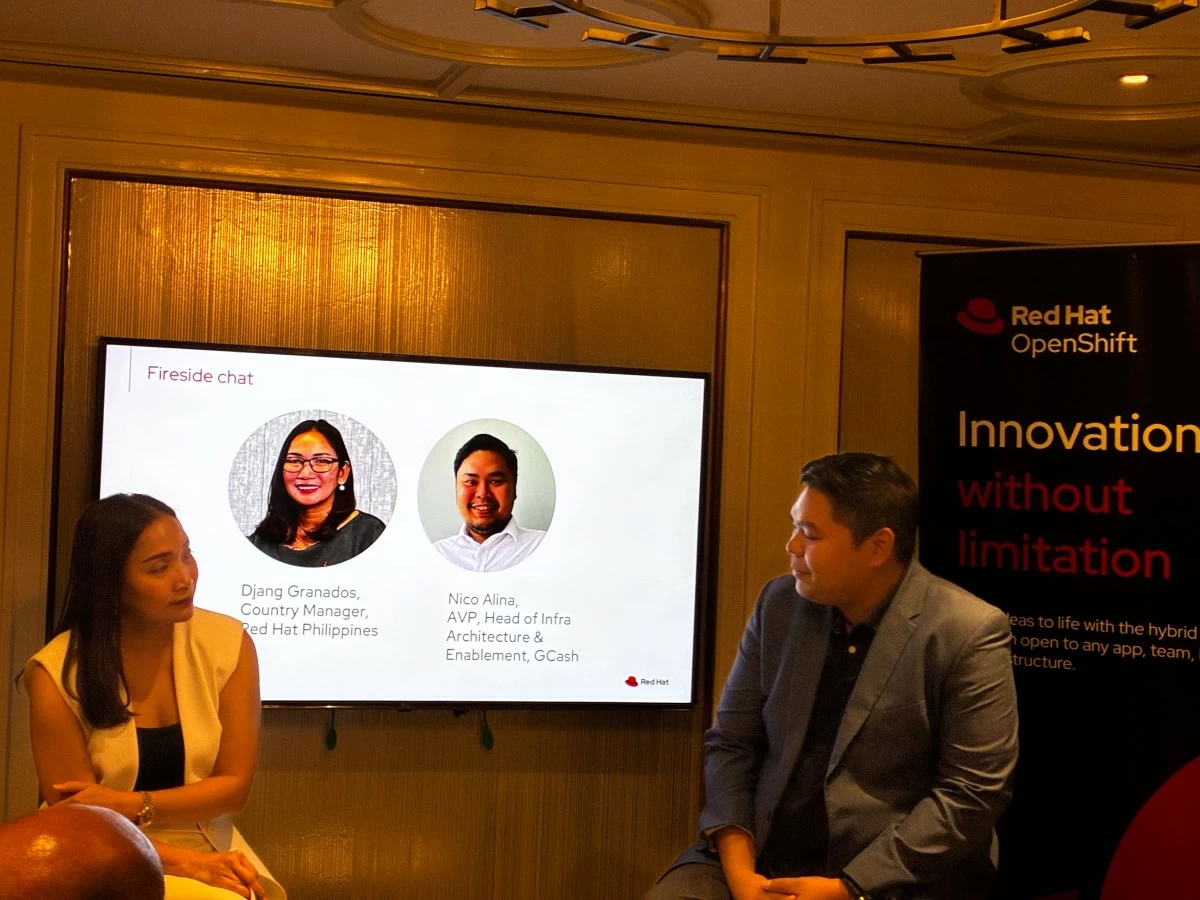
As one of the experiences structural challenges Alina described was having three different service teams, each having its own deployment infrastructure and application. This increases operational complexity and different pools of specialized knowledge.
The solution was consolidation. By standardizing their architecture around Red Hat, GCash was able to build, manage, and deploy applications at scale across all three environments while requiring only one skill set to do it.
Given GCash's scale and its role in serving tens of millions of Filipinos through mobile-first financial services, the stakes of getting that infrastructure right are high.
Open source as innovation infrastructure
As enterprises across the Philippines pursue infrastructure modernization and cloud-native adoption, the transparency and collaborative frameworks that open source enables give organizations the ability to adapt quickly, avoid vendor dependency, and participate in technology development rather than simply consuming it.
Red Hat's positioning in the Philippine market reflects this thesis. The company is presenting itself not as a software supplier, but as a strategic collaborator, one whose engineers sit inside the open source communities building the technologies that will define enterprise IT for the next decade, and whose commercial subscriptions translate that community work into production-grade, supported solutions.