






 Business
The Economy
Philippine-US 'economic security zone' eyes groundbreaking before Marcos steps down in 2028
Business
The Economy
Philippine-US 'economic security zone' eyes groundbreaking before Marcos steps down in 2028
Philippine-US 'economic security zone' eyes groundbreaking before Marcos steps down in 2028


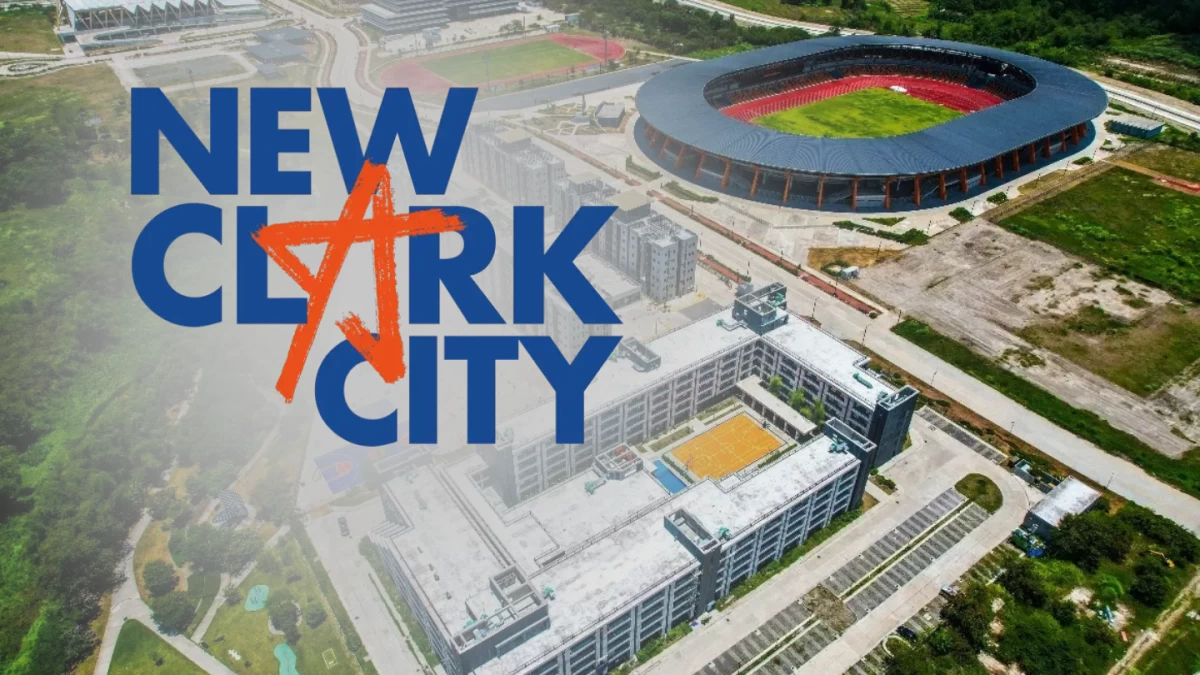
Groundbreaking for the planned United States (US) economic security zone in the Philippines could take place within the current Marcos Jr. administration, with the project expected to generate hundreds of thousands of jobs once fully developed, Philippine investment officials said.
Officials from the Department of Trade and Industry (DTI) and state-run Bases Conversion and Development Authority (BCDA) on Friday, April 24, clarified that the agreement signed with the US government last week does not cede any Philippine territory, despite claims by US Department of State officials that the soon-to-rise industrial hub may be operated “under US common law.”
DTI Undersecretary and Board of Investments (BOI) Managing Head Ceferino S. Rodolfo and BCDA President and Chief Executive Officer (CEO) Joshua M. Bingcang presented to reporters the signed agreement covering the 1,619-hectare (ha), first-of-its-kind artificial intelligence (AI)-native investment acceleration hub to be located within New Clark City in Tarlac province. The BOI also uploaded the document on its website on Friday.
According to the officials, the agreement contains no provision relinquishing Philippine sovereignty over the BCDA-owned land and adheres to existing laws, including Republic Act (RA) No. 7916 or the Special Economic Zone Act, and RA 7227 or the Bases Conversion and Development Act, as well as other rules governing the use of public land for international cooperation.
The BOI likewise released the agreement signed by Rodolfo for the Philippines’ participation in the Pax Silica Initiative, noting that it is non-binding and uniform across all 14 signatories.
As for the economic security zone, Bingcang said the arrangement follows a commercial structure, with BCDA retaining ownership of the land while a master lessee—the US—will be responsible for developing infrastructure and utilities within the hub. This setup, he noted, allows BCDA to avoid tapping the national budget for funding.
Under the preliminary term sheet, the project includes a two-year grace period on lease payments, which the document described as an unconditional in-kind contribution by the Philippines to support the development of the bilateral economic security initiative. Lease rates starting from the third year will be determined under a separate agreement, while renewal terms will be subject to mutual written consent upon the expiration of the initial lease period, the document showed.
Bingcang emphasized that BCDA will continue to operate within its mandate to develop former military camps and remains authorized to enter into commercial agreements with both local and foreign governments. He said project implementation will follow a plan approved by BCDA, with provisions allowing the agency to slap penalties, sanctions, or termination in case of non-compliance or breach of contract.
The BCDA chief also said the project may be structured as a joint venture (JV) or a concession, depending on final negotiations, and described the initiative as a form of public-private partnership (PPP), with a feasibility study (FS) initially supported by the Philippine and US governments and investments expected from American firms.
Investor interest, according to Bingcang, has been focused on key infrastructure requirements such as logistics, power, and water supply. He noted that logistics players are already expanding in Clark, with UPS expected to open a large sorting facility by September and FedEx set to begin construction of a regional hub. BCDA is also in discussions with US firms on renewable energy (RE) supply and data center investments, he added.
Bingcang said a US technical team, likely composed of private contractors, is expected to arrive this year to conduct site inspections, surveys, and concept planning. He noted that the two-year grace period aligns with the timeline for due diligence and project preparation, which typically spans up to five years for a project of this scale.
“In the first two years, we would be able to break ground,” Bingcang said, adding that the government expects the project to move forward within the term of President Ferdinand R. Marcos Jr., which ends in June 2028.
He expressed confidence that the hub’s location—near Clark International Airport, the Subic port, and the upcoming North-South Commuter Railway (NSCR)—will support its viability and attract manufacturing investments.
Bingcang said firms locating in the zone are expected to benefit from incentives under the Corporate Recovery and Tax Incentives for Enterprises to Maximize Opportunities for Reinvigorating the Economy (CREATE MORE) Act, with additional BCDA support potentially extended through lease arrangements to further reduce investor risk.
He added that while the master lessee will take the lead in developing the site, investor participation will still be subject to BCDA guidelines, with the agency retaining final approval as landowner.
The preliminary agreement signed last week will be followed by a more formal lease agreement, which Bingcang said is expected to be finalized within six months.