

ADVERTISEMENT

Filipino Food Month kicks off in Davao City

Published Apr 24, 2026 05:26 pm

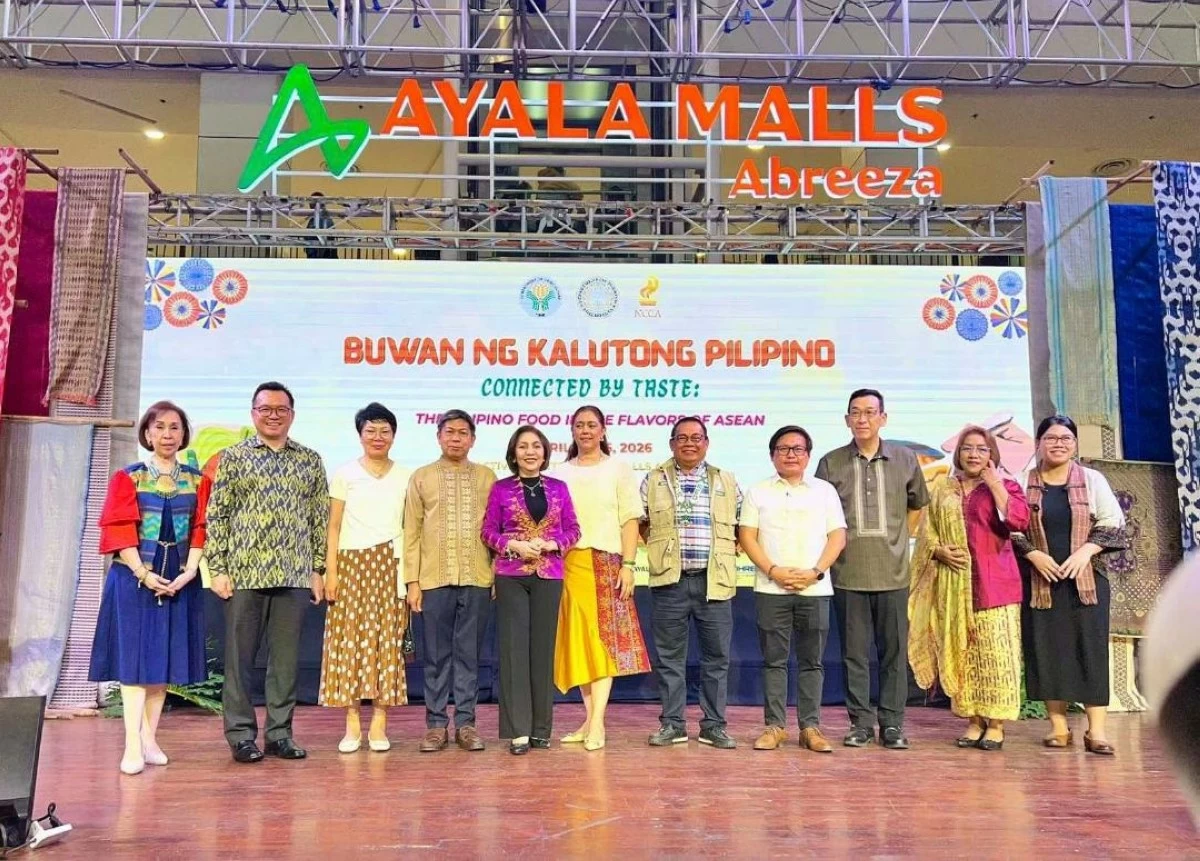
THE Department of Tourism-11, Department of Agriculture-11, and the National Commission for Culture and the Arts kick off the Buwan ng Kalutong Pilipino (Filipino Food Month) at Ayala Malls Abreeza in Davao City on Friday, April 24. (Photo via Ivy Tejano / MB)
DAVAO CITY – The Buwan ng Kalutong Pilipino (Filipino Food Month) officially kicked off on Friday, April 24, at Ayala Malls Abreeza in Davao City.
The event highlights Filipino culinary heritage and rediscovers traditional ingredients in the Association of Southeast Asian Nations.
This year's edition with the theme "Connected by Taste: Filipino Food in the Flavors of Asia" was spearheaded by the Department of Tourism-11 in partnership with the Department of Agriculture-11 and the National Commission for Culture and the Arts.
Organizers said the event until April 26 goes beyond showcasing classic Filipino dishes by spotlighting lesser-known backyard fruits and heirloom produce once common in homes across the Philippines and neighboring Southeast Asian countries.
DOT-11 Regional Director Tanya Rabat-Tan said the celebration has evolved since it began in 2019, growing from a simple effort to highlight Davao region and Mindanao flavors into a platform that tells the stories of the people behind the food.
She emphasized that the event recognizes not only the dishes served but also the farmers who cultivate the ingredients, the fisherfolk who harvest from coastal waters, the cooks and chefs who transform raw produce into meals, and the communities that preserve culinary traditions.
Tan said the event aims to rediscover backyard fruits and ingredients that are slowly disappearing from modern tables, such as caimito, guava, iba, balimbing, kamansi, rimas, and tambis. She added that bringing them back helps younger generations reconnect with these traditional flavors.
"These traditional ingredients give chefs and food entrepreneurs a chance to create new dishes while preserving culinary heritage. The celebration also looks at how shared ingredients and cooking techniques connect the Davao region with its Asian neighbors," Tan said.
DA-11 Regional Executive Director Macario Gonzaga said the event underscores the link between food, culture, and national identity. He noted that while ASEAN countries differ in taste and traditions, they remain connected through food.
Gonzaga acknowledged challenges faced by farmers and fisherfolk, including climate risks, market pressures, and limited access to resources and assured the government's continued support for sustainable agriculture and food security.
Davao City Councilor Myrna Dalodo-Ortiz, chairperson of the Committees on Tourism and Beautification and Trade and Commerce, said the event helps promote Davao as a vibrant destination while empowering farmers, fisherfolk, and local entrepreneurs.
Ortiz added that initiatives like Buwan ng Kalutong Pilipino showcase the creativity and excellence of Davao's food industry on a broader stage, allowing local chefs, food producers, and entrepreneurs to showcase their products and attract more tourists, investors, and potential markets.
Davao City Mayor Sebastian Duterte, in a message read by the councilor, extended the city government's support and described Davao's culinary heritage as a reflection of history, identity, and vibrant culture shaped by both local and international influences.
Duterte recognized the continued support of partner agencies and stakeholders in preserving culinary traditions and promoting cultural connections through food, saying their collaboration helps sustain local recipes and highlight shared food heritage.
He said the celebration provides an avenue for local governments, small business enterprises, chefs, culinary experts, and visitors to rediscover traditional recipes and products, promote local goods, and learn best practices.
Duterte added that bringing together stakeholders in the culinary industry strengthens linkages that support local food systems, tourism development, and the livelihoods of farmers, fisherfolk, and food producers.
Mindanao Development Authority Assistant Secretary Romeo Montenegro, on behalf of MinDA Chairman Secretary Leo Tereso Magno, described the celebration as a recognition of food as heritage and as a connection.
He said Mindanao's cuisine reflects diverse cultural influences, including indigenous traditions, Muslim and halal food heritage, and rich agricultural resources. He added that cuisine also drives development by linking agriculture, tourism, entrepreneurship, and regional trade.
Montenegro said promoting local ingredients and culinary traditions helps position Mindanao as a growing culinary destination in the ASEAN region and the Brunei Darussalam-Indonesia-Malaysia-Philippines East ASEAN Growth Area subregional grouping.
Aside from local and national government officials, diplomats from Japan, Malaysia, and China, tourism stakeholders, and members from the academe, saw and browsed locally made food products and regional delicacies during the opening of Buwan ng Kalutong Pilipino.
Filipino Food Month runs with activities focused on culinary heritage, local products, and regional collaboration, reinforcing the role of food in strengthening cultural identity and supporting sustainable development.

Related Tags

Davao City Filipino Food Month
ADVERTISEMENT
.most-popular .layout-ratio{ padding-bottom: 79.13%; } @media (min-width: 768px) and (max-width: 1024px) { .widget-title { font-size: 15px !important; } }

{{ articles_filter_1561_widget.title }}

.most-popular .layout-ratio{ padding-bottom: 79.13%; } @media (min-width: 768px) and (max-width: 1024px) { .widget-title { font-size: 15px !important; } }

{{ articles_filter_1562_widget.title }}

.most-popular .layout-ratio{ padding-bottom: 79.13%; } @media (min-width: 768px) and (max-width: 1024px) { .widget-title { font-size: 15px !important; } }

{{ articles_filter_1563_widget.title }}

{{ articles_filter_1564_widget.title }}

.mb-article-details { position: relative; } .mb-article-details .article-body-preview, .mb-article-details .article-body-summary{ font-size: 17px; line-height: 30px; font-family: "Libre Caslon Text", serif; color: #000; } .mb-article-details .article-body-preview iframe , .mb-article-details .article-body-summary iframe{ width: 100%; margin: auto; } .read-more-background { background: linear-gradient(180deg, color(display-p3 1.000 1.000 1.000 / 0) 13.75%, color(display-p3 1.000 1.000 1.000 / 0.8) 30.79%, color(display-p3 1.000 1.000 1.000) 72.5%); position: absolute; height: 200px; width: 100%; bottom: 0; display: flex; justify-content: center; align-items: center; padding: 0; } .read-more-background a{ color: #000; } .read-more-btn { padding: 17px 45px; font-family: Inter; font-weight: 700; font-size: 18px; line-height: 16px; text-align: center; vertical-align: middle; border: 1px solid black; background-color: white; } .hidden { display: none; }
function initializeAllSwipers() { // Get all hidden inputs with cms_article_id document.querySelectorAll('[id^="cms_article_id_"]').forEach(function (input) { const cmsArticleId = input.value; const articleSelector = '#article-' + cmsArticleId + ' .body_images'; const swiperElement = document.querySelector(articleSelector); if (swiperElement && !swiperElement.classList.contains('swiper-initialized')) { new Swiper(articleSelector, { loop: true, pagination: false, navigation: { nextEl: '#article-' + cmsArticleId + ' .swiper-button-next', prevEl: '#article-' + cmsArticleId + ' .swiper-button-prev', }, }); } }); } setTimeout(initializeAllSwipers, 3000); const intersectionObserver = new IntersectionObserver( (entries) => { entries.forEach((entry) => { if (entry.isIntersecting) { const newUrl = entry.target.getAttribute("data-url"); if (newUrl) { history.pushState(null, null, newUrl); let article = entry.target; // Extract metadata const author = article.querySelector('.author-section').textContent.replace('By', '').trim(); const section = article.querySelector('.section-info ').textContent.replace(' ', ' '); const title = article.querySelector('.article-title h1').textContent; // Parse URL for Chartbeat path format const parsedUrl = new URL(newUrl, window.location.origin); const cleanUrl = parsedUrl.host + parsedUrl.pathname; // Update Chartbeat configuration if (typeof window._sf_async_config !== 'undefined') { window._sf_async_config.path = cleanUrl; window._sf_async_config.sections = section; window._sf_async_config.authors = author; } // Track virtual page view with Chartbeat if (typeof pSUPERFLY !== 'undefined' && typeof pSUPERFLY.virtualPage === 'function') { try { pSUPERFLY.virtualPage({ path: cleanUrl, title: title, sections: section, authors: author }); } catch (error) { console.error('ping error', error); } } // Optional: Update document title if (title && title !== document.title) { document.title = title; } } } }); }, { threshold: 0.1 } ); function showArticleBody(button) { const article = button.closest("article"); const summary = article.querySelector(".article-body-summary"); const body = article.querySelector(".article-body-preview"); const readMoreSection = article.querySelector(".read-more-background"); // Hide summary and read-more section summary.style.display = "none"; readMoreSection.style.display = "none"; // Show the full article body body.classList.remove("hidden"); } document.addEventListener("DOMContentLoaded", () => { let loadCount = 0; // Track how many times articles are loaded const offset = [1, 2, 3, 4, 5, 6, 7, 8, 9, 10]; // Offset values const currentUrl = window.location.pathname.substring(1); let isLoading = false; // Prevent multiple calls if (!currentUrl) { console.log("Current URL is invalid."); return; } const sentinel = document.getElementById("load-more-sentinel"); if (!sentinel) { console.log("Sentinel element not found."); return; } function isSentinelVisible() { const rect = sentinel.getBoundingClientRect(); return ( rect.top < window.innerHeight && rect.bottom >= 0 ); } function onScroll() { if (isLoading) return; if (isSentinelVisible()) { if (loadCount >= offset.length) { console.log("Maximum load attempts reached."); window.removeEventListener("scroll", onScroll); return; } isLoading = true; const currentOffset = offset[loadCount]; window.loadMoreItems().then(() => { let article = document.querySelector('#widget_1690 > div:nth-last-of-type(2) article'); intersectionObserver.observe(article) loadCount++; }).catch(error => { console.error("Error loading more items:", error); }).finally(() => { isLoading = false; }); } } window.addEventListener("scroll", onScroll); });

Sign up by email to receive news.