






 Business
The Economy
BDO: Philippine economy 'stronger' amid Middle East crisis than during pandemic
Business
The Economy
BDO: Philippine economy 'stronger' amid Middle East crisis than during pandemic
BDO: Philippine economy 'stronger' amid Middle East crisis than during pandemic
Loan loss provisions double to ₱6 billion
By Derco Rosal


At A Glance
- Top lender BDO Unibank, Inc. said the escalating Middle East war is weighing on its outlook, though its chief maintained that the Philippine economy would remain relatively resilient compared with past global crises like the Covid-19 pandemic.
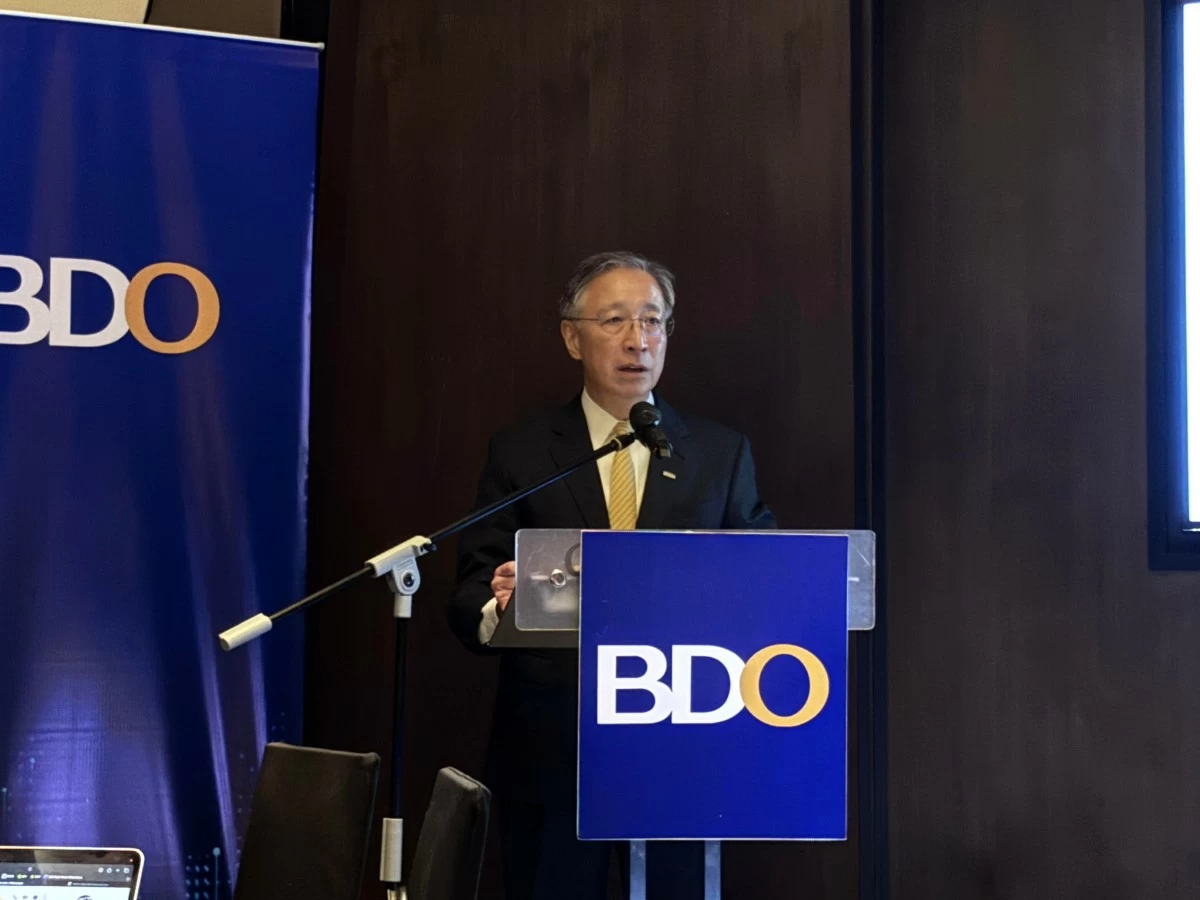
Sy-led top lender BDO Unibank Inc. said the escalating Middle East war is weighing on its outlook, though its chief maintained that the Philippine economy would remain relatively resilient compared with past global crises like the Covid-19 pandemic.
BDO President and Chief Executive Officer (CEO) Nestor V. Tan told a pre-annual stockholders’ meeting (ASM) press briefing on Friday, April 24, that the Philippines stands stronger against the current price pressures compared with the domestic footing during the global financial crisis (GFC) and the pandemic.
Relative to past challenges, Tan believes the current slowdown in economic activity is expected to recover more quickly than in previous crises. “In fact, this one is stronger than what it was pre-crisis and very much stronger than Covid-19,” he said.
Crude oil prices have hit all-time highs, and the Bangko Sentral ng Pilipinas (BSP) has indicated that inflation could breach six percent. This spike may reverse the previous trend of lowering policy rates. Tan noted that a “series of rate movements upwards” is possible if inflation persists.
Specific business segments are already bearing the brunt of the global crisis. BDO reported that its investment banking and capital markets segment has “almost dried up” as clients defer large transactions due to uncertainty.
Furthermore, BDO expects the country’s trade deficit to widen as the Philippines continues to import the bulk of its energy and food.
BDO posted a two-percent increase in net income to ₱20.1 billion in the first quarter of 2026, slowing from the 6.5-percent growth recorded in the same period last year, when earnings stood at ₱19.7 billion.
Tan said this was influenced by pricing issues amid lower interest rates, which were 4.25 percent during the period.
“Net income was tempered by higher provisions, as the bank is building strong reserves, primarily a preemptive measure undertaken in response to evolving geopolitical risk conditions,” the lender said in a statement.
For this year, BDO “expects delinquencies to increase, depending on how long the crisis persists, particularly in unsecured segments such as credit cards.”
Meanwhile, the lender posted robust loan growth of 16 percent year-on-year, driven largely by private capital expenditure (capex).
Net interest income rose by 11 percent as gross customer loans expanded by 16 percent to ₱3.8 trillion, driven by double-digit growth across all segments. Total deposits increased by 15 percent, with current and savings account (CASA) growth picking up to seven percent. Non-interest income climbed by six percent, while insurance income jumped by over a quarter.
To guard against potential instability, BDO more than doubled its provisions to ₱6.1 billion, compared with ₱3 billion in the same period last year.
This move included “preempted provisioning” for three specific accounts that are not yet non-performing loans (NPLs) or bad loans but are being watched in anticipation of a prolonged crisis.
BDO’s lending portfolio remains diverse, with half in large corporate accounts, a quarter in consumer loans, and a quarter in the middle market. The middle market, composed of midsized firms, has emerged as one of the best-performing segments, growing at 14 percent as of March.
On concerns about consumer vulnerability, BDO noted that its clients typically have “disposable income” and are less affected by rising costs than the general population. “This is the nature of banking—we typically serve clients with disposable income, who tend to be less affected by inflation and rising costs of goods,” Tan said.
Looking ahead, BDO is not scaling back its physical expansion. After adding 120 branches in 2025, it expects to “put up the same” approach this year to support financial inclusion.