






Manila Bulletin
 Lifestyle
Fashion and Beauty
Woven histories come alive at Bench Fashion Week spring-summer 2026
Lifestyle
Fashion and Beauty
Woven histories come alive at Bench Fashion Week spring-summer 2026
Lifestyle
Fashion and Beauty
Woven histories come alive at Bench Fashion Week spring-summer 2026
Woven histories come alive at Bench Fashion Week spring-summer 2026
Rhett Eala, Jaggy Glarino, and Joey Samson reimagine Japanese and Filipino heritage through deeply personal and cultural designs
Published Apr 23, 2026 10:20 am


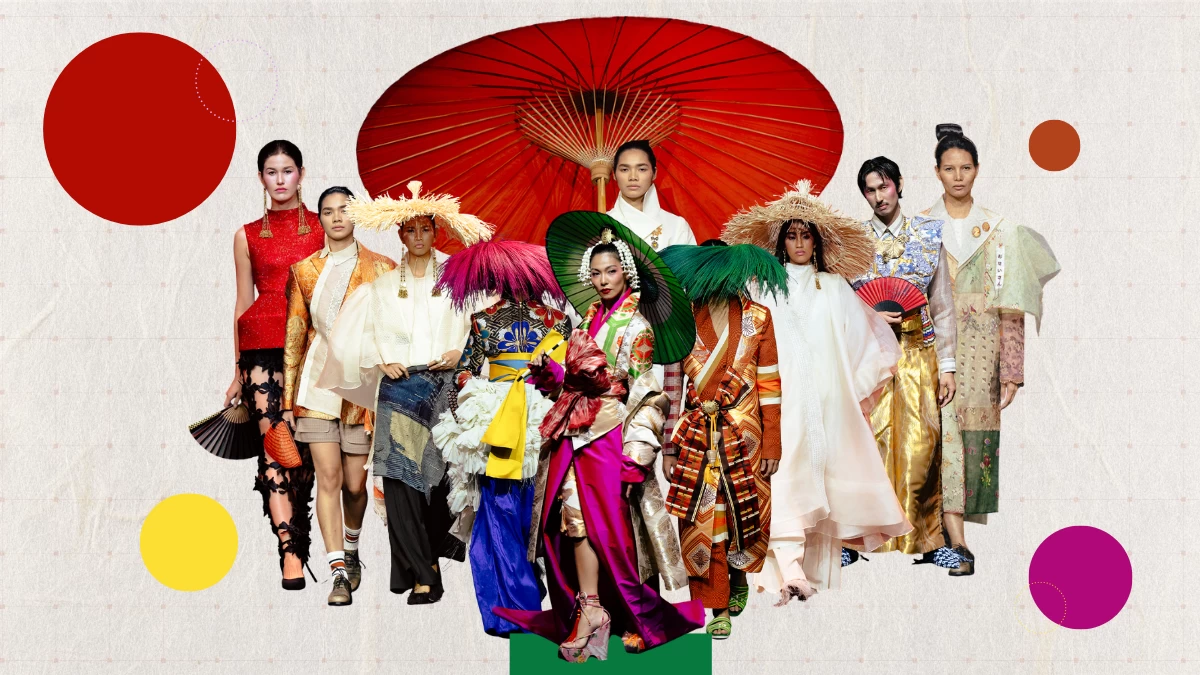
Since July 23, 1956, the day the San Francisco Peace Treaty and the Reparations Agreement between Japan and the Philippines were signed, Japan and the Philippines have sustained a relationship defined by diplomacy, exchange, and a steady interweaving of cultures.
What happens when that shared history is translated into fashion? On the second day of Bench Fashion Week spring-summer 2026, held on April 18, 2026, at One Ayala, the answer came to life. In a special presentation titled “Threads of Dreams,” Filipino designers Rhett Eala, Jaggy Glarino, and Joey Samson each offered their own interpretation of Japanese and Filipino aesthetics. The show, mounted through Bench’s partnership with the Embassy of Japan in the Philippines and Japan Foundation Manila, marked 70 years of friendship between the two nations.
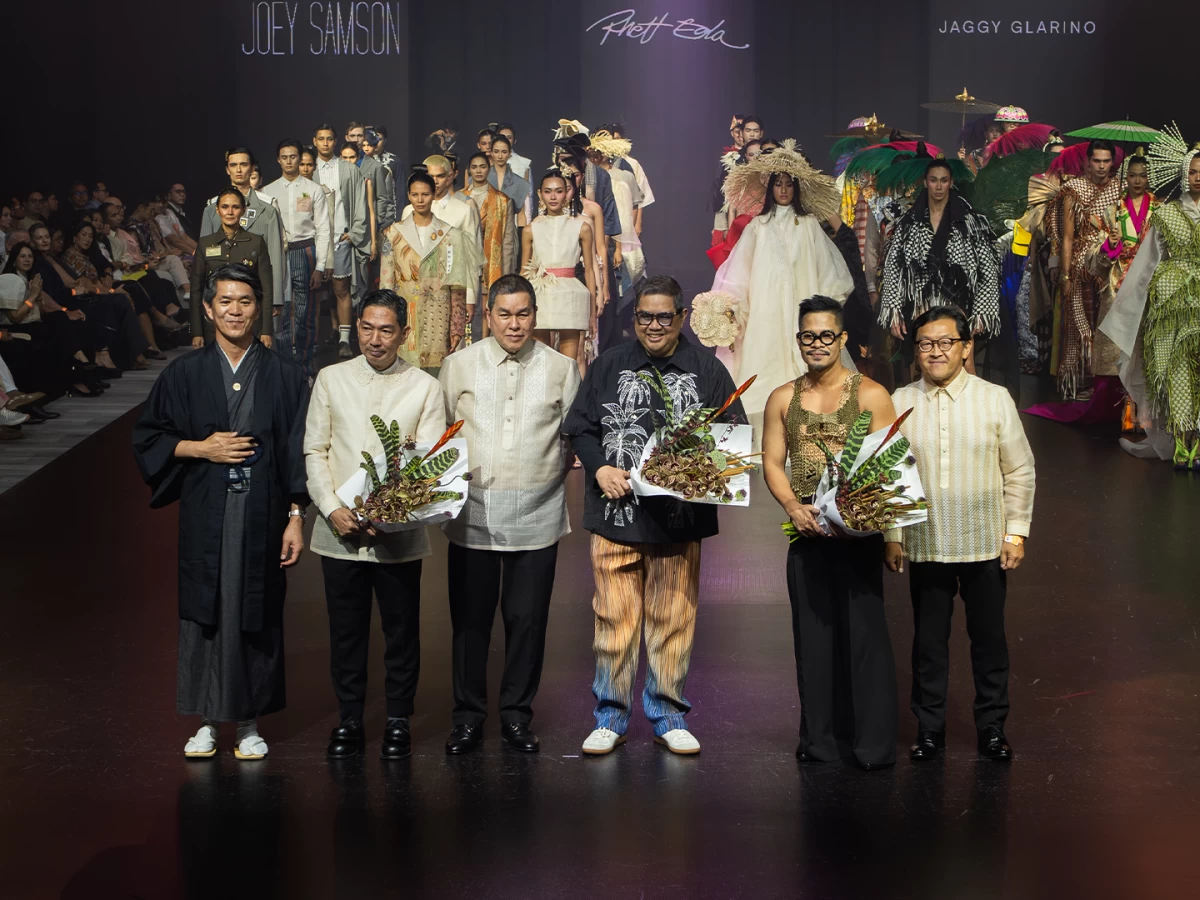
Japanese Ambassador to the Philippines Endo Kazuya, Joey Samson, Suyen Corporation chairman and CEO Ben Chan, Rhett Eala, Jaggy Glarino (Photo: Bench)
A celebration of friendship
According to Ben Chan, chairman and CEO of Suyen Corporation, the company behind Bench, the platform has always been rooted in championing Filipino creativity on a global stage.
“Bench has been in the business of fashion in the Philippines for close to four decades,” he said. “For us, fashion is never only about clothing. It is about identity, national and personal. It holds history, but also continues interpretation.”
Meanwhile, Japanese Ambassador to the Philippines Endo Kazuya underscored fashion’s role as a language of identity and connection.
“This milestone is not only a testament to seven decades of friendship, but also a moment to look forward with hope and shared purpose,” he said. “The theme of this year's celebration, ‘Weaving the Future Together: Peace, Prosperity, Possibilities,’ resonates deeply with the spirit of today's event. Just as fashion weaves threads into beautiful designs, our two nations have woven a strong bond of trust, cooperation, and mutual respect.”
Memories, interpretations, and migrations
More than a runway presentation, “Threads of Dreams” transformed the packed venue into a series of immersive worlds: spaces where memory, movement, and material converged.
Each collection stood as both garment and artifact, articulating the layered dialogue between Japanese and Filipino cultures.
For Rhett, the starting point was deeply personal. His collection revisits childhood memories shaped by his mother, artist Roceli “Baby” Valencia, whose enduring affection for Japan informed his early visual landscape. That inheritance unfolds across the pieces—objects, impressions, and stories translated into designs that echo the elegance, restraint, and quiet permanence of Japanese aesthetics.
Jaggy, on the other hand, approached the exchange through geography and history. His “Imin” collection draws from Mindanao’s vibrant cultural fabric, placing it in conversation with Japanese influence. By examining early encounters between local communities and the Japanese presence, the collection asks: What happens to clothing when cultures meet through proximity and repetition? The result is a thoughtful interplay of indigenous dress systems and precise Japanese construction where craft becomes both function and survival, and garments are reimagined through cut, layering, and intent.
Closing the presentation, Joey offered a more imaginative lens, one rooted in narrative and historical fiction. His collection envisions a dialogue between two women: the “Una Bulaqueña,” immortalized by Juan Luna in his 1895 portrait, and O Sei San, the Japanese woman admired by Jose Rizal during his time in Yokohama in 1888. Through this imagined encounter, Samson constructs a visual exchange that is at once romantic and reflective, where dress becomes a meeting point for identity, history, and desire.
Together, the collections did more than celebrate a milestone. They traced a living, evolving narrative. In “Threads of Dreams,” fashion becomes the medium through which two nations continue to meet, remember, and reimagine each other.