

ADVERTISEMENT

When carbon becomes currency

Published Apr 23, 2026 10:58 am
Back when I was a seafood reporter, I encountered the topic of eco-labels for the first time. Sustainability as a beat was fascinating, and I asked my editor if I could cover it. The eco-labels in question were the little blue checkmarks often found on cans of sardines or tuna, given by bodies such as the Marine Stewardship Council. These labels indicate that the fish inside was “responsibly sourced.” It seemed straightforward.
Only when I dug into the research did I learn that using those little blue checkmarks could cost a company hundreds of thousands of dollars, or likely more. What appeared to be environmentalism was, in reality, much simpler: it was business.
I recall asking a colleague—three years my senior—why companies even bought these labels. She was confused and responded, “What do you mean by ‘bought’?”
In short, she didn’t know. For the entire three years she had been covering the seafood beat, she was under the impression that those little blue checkmarks were awarded without cost.
This story comes to mind when considering how “blue carbon” has been covered in Philippine media.
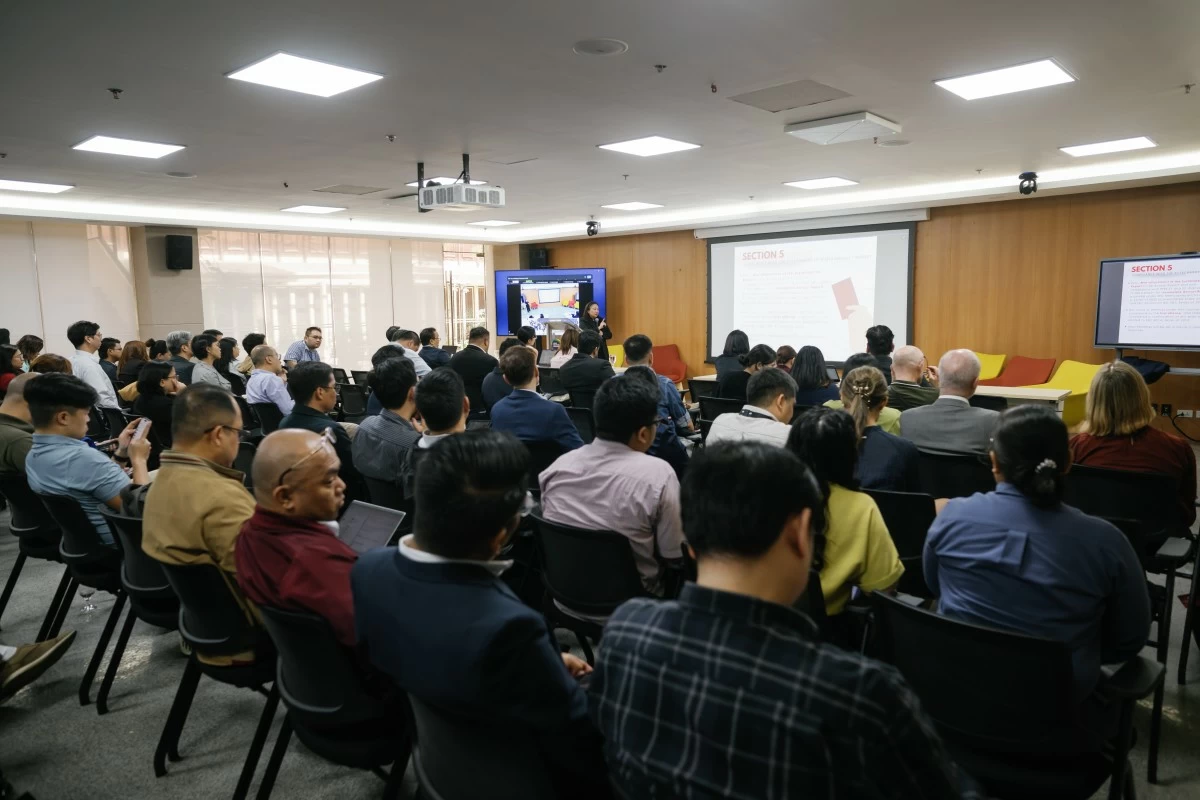
An audience of government officials, business leaders and technical experts at the Philippine Decarbonization Forum.
Carbon and its invisible pricetag
On March 26, during the Philippine Mangrove Conference 2026, the Department of Environment and Natural Resources (DENR) launched a roadmap towards sustainable blue carbon.
"This roadmap reflects the Philippines' strong commitment to advancing blue carbon accounting and delivering tangible impact for coastal communities,” said DENR Undersecretary Analiza Rebuelta-Teh.
Carbon projects are initiatives that reduce greenhouse gas emissions by protecting or regenerating ecosystems. These reductions must be measured, verified, and systematized. Mangrove preservation is one of the most effective methods. Mangroves are among the most carbon-dense ecosystems on the planet, absorbing and storing carbon while preventing its release back into the atmosphere.
These initiatives are important for the Philippines, one of the most climate-vulnerable countries in the world. However, it is equally important to recognize that these efforts are not pursued for environmental reasons alone. They also allow carbon to be assigned an economic value.
The voluntary carbon marketplace
On Jan. 20, DENR announced its intent to enter the voluntary carbon marketplace. This means that by 2030, if all goes according to plan, these carbon projects will have a mechanism to sell carbon credits. Companies, mostly in the Global North and required to reduce emissions by law, can purchase these credits to offset their greenhouse gas emissions.
Green carbon, blue carbon, or just carbon—under DENR’s roadmap, the term signals an intent to sell. And where intent to sell a national resource exists, scrutiny must follow.
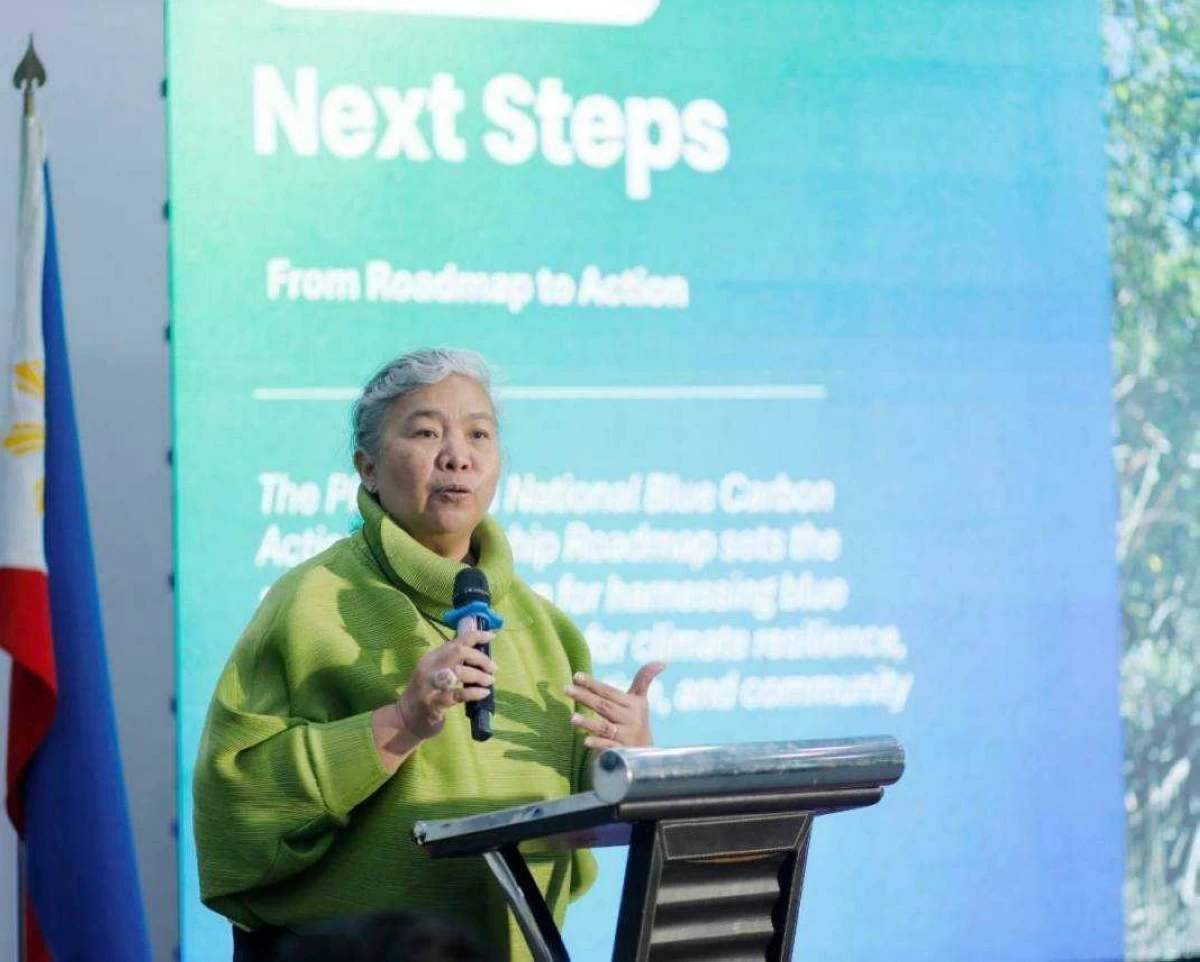
DENR Biodiversity Management Bureau Assistant Director Mariglo Laririt, sharing the next steps for the NBCAP Roadmap.
At a press conference, DENR Biodiversity Management Bureau Assistant Director Mariglo Laririt said there is still much work to be done, noting that there is some advantage in not being at the forefront of the industry. “We now have the benefit of being able to observe how it’s moving along in other [countries],” she said.
Other countries show that carbon markets face credibility issues. In China, investigations found that rice farming carbon credit projects sold to oil companies did not exist at all. In Papua New Guinea, foreign-backed firms signed carbon deals with indigenous communities, promising to protect forests from logging. Investigations later revealed that logging continued in those same forests and that promised benefits to landowners largely failed to materialize.
This suggests a broader pattern: A 2023 study found that 78 percent of the top 50 carbon offset projects globally were environmentally ineffective. These are often referred to as “phantom credits,” or, in more familiar terms, “ghost projects.”
These findings are not new, but they remain relevant.
The path ahead
In the past two months, my sustainability organization, Sustina, was invited to three forums on the carbon marketplace. We attended a policy meeting on agricultural carbon and met with researchers from Stanford University studying how to unlock climate finance for the Philippines. The conversation on carbon credits is gaining ground.
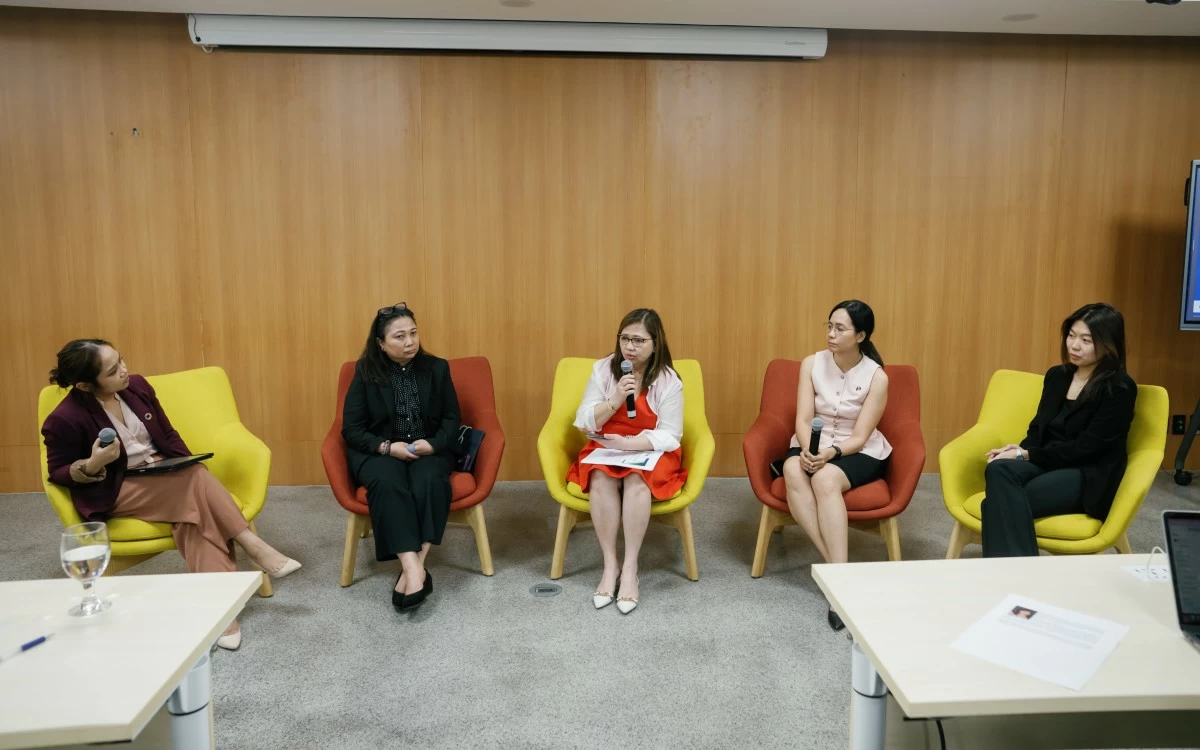
Sustina's Executive Director Anna Reyes, moderating a panel featuring Securities and Exchange Commission (SEC) Director Atty. Rachel Esther Gumtang Remalante, DENR Undersecretary Atty. Analiza Rebuelta-Teh, Campaign Lead for European Chamber of Commerce - Race to Net Zero Philippines Dawn Cabigon
In these discussions, there has been a noticeable level of skepticism among sustainability consultants and business executives, many of whom believe there is still a workable middle ground. Their views merit attention.
At the Mangrove Conference, the absence of business and financial reporters was notable. Environmental journalists were present, keeping the science at the forefront and center. Yet carbon—despite its environmental framing—is also a matter of finance.
The questions that must be asked are straightforward: How will these credits be priced? Who will buy them? And most importantly, who stands to benefit?
For now, the roadmap remains a plan, and the credits have yet to materialize. There is still time to ensure that when they do, the impact is real and the benefits are accounted for.

Related Tags

Philippine Mangrove Conference 2026 DENR
ADVERTISEMENT
.most-popular .layout-ratio{ padding-bottom: 79.13%; } @media (min-width: 768px) and (max-width: 1024px) { .widget-title { font-size: 15px !important; } }

{{ articles_filter_1561_widget.title }}

.most-popular .layout-ratio{ padding-bottom: 79.13%; } @media (min-width: 768px) and (max-width: 1024px) { .widget-title { font-size: 15px !important; } }

{{ articles_filter_1562_widget.title }}

.most-popular .layout-ratio{ padding-bottom: 79.13%; } @media (min-width: 768px) and (max-width: 1024px) { .widget-title { font-size: 15px !important; } }

{{ articles_filter_1563_widget.title }}

{{ articles_filter_1564_widget.title }}

.mb-article-details { position: relative; } .mb-article-details .article-body-preview, .mb-article-details .article-body-summary{ font-size: 17px; line-height: 30px; font-family: "Libre Caslon Text", serif; color: #000; } .mb-article-details .article-body-preview iframe , .mb-article-details .article-body-summary iframe{ width: 100%; margin: auto; } .read-more-background { background: linear-gradient(180deg, color(display-p3 1.000 1.000 1.000 / 0) 13.75%, color(display-p3 1.000 1.000 1.000 / 0.8) 30.79%, color(display-p3 1.000 1.000 1.000) 72.5%); position: absolute; height: 200px; width: 100%; bottom: 0; display: flex; justify-content: center; align-items: center; padding: 0; } .read-more-background a{ color: #000; } .read-more-btn { padding: 17px 45px; font-family: Inter; font-weight: 700; font-size: 18px; line-height: 16px; text-align: center; vertical-align: middle; border: 1px solid black; background-color: white; } .hidden { display: none; }
function initializeAllSwipers() { // Get all hidden inputs with cms_article_id document.querySelectorAll('[id^="cms_article_id_"]').forEach(function (input) { const cmsArticleId = input.value; const articleSelector = '#article-' + cmsArticleId + ' .body_images'; const swiperElement = document.querySelector(articleSelector); if (swiperElement && !swiperElement.classList.contains('swiper-initialized')) { new Swiper(articleSelector, { loop: true, pagination: false, navigation: { nextEl: '#article-' + cmsArticleId + ' .swiper-button-next', prevEl: '#article-' + cmsArticleId + ' .swiper-button-prev', }, }); } }); } setTimeout(initializeAllSwipers, 3000); const intersectionObserver = new IntersectionObserver( (entries) => { entries.forEach((entry) => { if (entry.isIntersecting) { const newUrl = entry.target.getAttribute("data-url"); if (newUrl) { history.pushState(null, null, newUrl); let article = entry.target; // Extract metadata const author = article.querySelector('.author-section').textContent.replace('By', '').trim(); const section = article.querySelector('.section-info ').textContent.replace(' ', ' '); const title = article.querySelector('.article-title h1').textContent; // Parse URL for Chartbeat path format const parsedUrl = new URL(newUrl, window.location.origin); const cleanUrl = parsedUrl.host + parsedUrl.pathname; // Update Chartbeat configuration if (typeof window._sf_async_config !== 'undefined') { window._sf_async_config.path = cleanUrl; window._sf_async_config.sections = section; window._sf_async_config.authors = author; } // Track virtual page view with Chartbeat if (typeof pSUPERFLY !== 'undefined' && typeof pSUPERFLY.virtualPage === 'function') { try { pSUPERFLY.virtualPage({ path: cleanUrl, title: title, sections: section, authors: author }); } catch (error) { console.error('ping error', error); } } // Optional: Update document title if (title && title !== document.title) { document.title = title; } } } }); }, { threshold: 0.1 } ); function showArticleBody(button) { const article = button.closest("article"); const summary = article.querySelector(".article-body-summary"); const body = article.querySelector(".article-body-preview"); const readMoreSection = article.querySelector(".read-more-background"); // Hide summary and read-more section summary.style.display = "none"; readMoreSection.style.display = "none"; // Show the full article body body.classList.remove("hidden"); } document.addEventListener("DOMContentLoaded", () => { let loadCount = 0; // Track how many times articles are loaded const offset = [1, 2, 3, 4, 5, 6, 7, 8, 9, 10]; // Offset values const currentUrl = window.location.pathname.substring(1); let isLoading = false; // Prevent multiple calls if (!currentUrl) { console.log("Current URL is invalid."); return; } const sentinel = document.getElementById("load-more-sentinel"); if (!sentinel) { console.log("Sentinel element not found."); return; } function isSentinelVisible() { const rect = sentinel.getBoundingClientRect(); return ( rect.top < window.innerHeight && rect.bottom >= 0 ); } function onScroll() { if (isLoading) return; if (isSentinelVisible()) { if (loadCount >= offset.length) { console.log("Maximum load attempts reached."); window.removeEventListener("scroll", onScroll); return; } isLoading = true; const currentOffset = offset[loadCount]; window.loadMoreItems().then(() => { let article = document.querySelector('#widget_1690 > div:nth-last-of-type(2) article'); intersectionObserver.observe(article) loadCount++; }).catch(error => { console.error("Error loading more items:", error); }).finally(() => { isLoading = false; }); } } window.addEventListener("scroll", onScroll); });

Sign up by email to receive news.