

ADVERTISEMENT

This hub lets farm byproducts find new value and communities find new income

Published Apr 23, 2026 12:26 pm  |  Updated Apr 23, 2026 01:02 pm
Farm materials that once had little value are now finding a new purpose, as a facility in Laguna helps turn agricultural by-products into sources of income for local communities.
This is what a new facility in Laguna is doing; turning agricultural byproducts into higher-value products, as the Department of Science and Technology–Philippine Textile Research Institute (DOST-PTRI) formally launched the Natural Textile Fiber Innovation Hub (NTFIH) Laguna at Laguna University in Sta. Cruz on April 16.
The hub, the third of its kind in the country, is designed to transform raw agricultural materials such as abaca, banana, pineapple, and even emerging sources like water hyacinths into yarn and other textile inputs. It can process up to 40 kilograms of natural fibers for yarn production.
At the center of the initiative is the goal of linking local communities directly to a higher-value textile supply chain—moving beyond the export of raw materials toward finished and semi-finished products that generate greater economic return.
DOST-PTRI Director Julius Leaño said the hub represents a shift in how the country treats its natural resources.
“We are trying to extend the supply and value chain such that we do not just export raw materials, we export higher-value products,” Leaño said. “Ang mga materyales po natin… instead of being sold at very low value, we convert them into materials that are of higher value, of higher impact, to both commerce, trade, and sustainability.”
He also pointed to Laguna’s strategic advantage, particularly its proximity to Metro Manila, which reduces transportation-related emissions.
“The number one selling point of fiber from Laguna is not just quality, but the carbon footprint,” he said, noting that closer sourcing significantly improves sustainability compared to fibers transported from farther regions.
DOST Secretary Renato U. Solidum Jr. emphasized that the initiative goes beyond infrastructure and technology, stressing the importance of tangible benefits for communities.
“Beyond strategies and frameworks, what matters most is impact,” Solidum said. “We ensure that the technologies we develop create quality jobs.”
He said the NTFIH Laguna is designed to serve as a model for inclusive industrial growth, integrating small producers into the textile value chain while also serving as a space for innovation in materials and engineering.
DOST Undersecretary for Regional Operations Engr. Sancho A. Maborrang echoed this focus on livelihood creation, saying the project is intended to directly benefit communities.
“This will help create livelihood, eventually employment, and produce world-class textiles in the future,” he said.
For local stakeholders, the impact is already being felt. Villa Socorro Farm field worker Jhomier Casaul said the facility could help improve and streamline yarn production processes in the area.
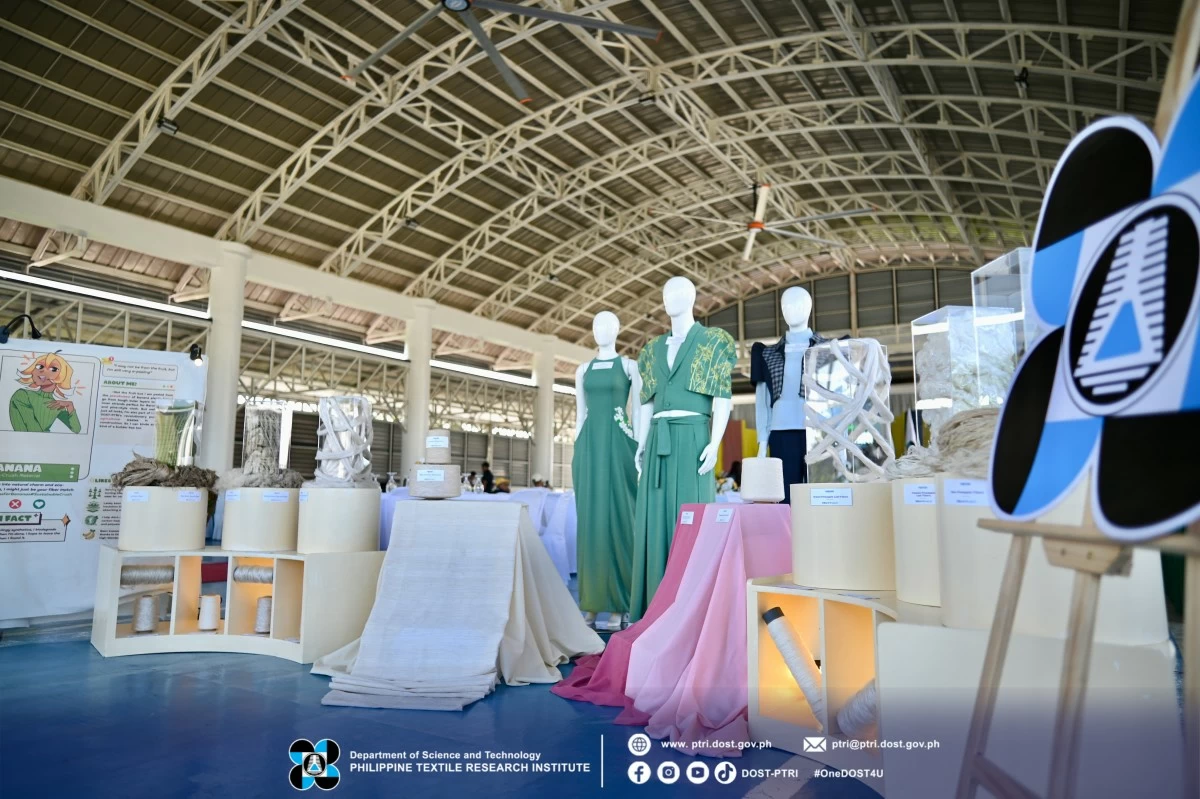
(Photo from DOST-PTRI)
Laguna Governor Sol Aragones, through Provincial Administrator Carina F. Macalos, also assured continued support from the provincial government, saying the initiative should be sustained and strengthened to benefit farmers and local industries.
Local leaders also expressed support for linking the hub with academic institutions such as the University of the Philippines Los Baños and Laguna University, including plans to use locally sourced fibers for traditional academic garments like the sablay.
During a facility tour, officials also noted ongoing testing of water hyacinths from Laguna de Bay for potential use in yarn production, with early results showing promise.
The NTFIH Laguna is expected to support micro, small, and medium enterprises, generate jobs for farmers and weavers, and strengthen the country’s sustainable textile industry by connecting research, innovation, and community-based production.
It forms part of DOST’s broader strategy anchored on innovation and inclusive development, aimed at turning local resources into opportunities for human well-being, job creation, and long-term sustainability.

Related Tags

Department of Science and Technology (DOST) Renato Solidum philippine textile research institute farm byproducts
ADVERTISEMENT
.most-popular .layout-ratio{ padding-bottom: 79.13%; } @media (min-width: 768px) and (max-width: 1024px) { .widget-title { font-size: 15px !important; } }

{{ articles_filter_1561_widget.title }}

.most-popular .layout-ratio{ padding-bottom: 79.13%; } @media (min-width: 768px) and (max-width: 1024px) { .widget-title { font-size: 15px !important; } }

{{ articles_filter_1562_widget.title }}

.most-popular .layout-ratio{ padding-bottom: 79.13%; } @media (min-width: 768px) and (max-width: 1024px) { .widget-title { font-size: 15px !important; } }

{{ articles_filter_1563_widget.title }}

{{ articles_filter_1564_widget.title }}

.mb-article-details { position: relative; } .mb-article-details .article-body-preview, .mb-article-details .article-body-summary{ font-size: 17px; line-height: 30px; font-family: "Libre Caslon Text", serif; color: #000; } .mb-article-details .article-body-preview iframe , .mb-article-details .article-body-summary iframe{ width: 100%; margin: auto; } .read-more-background { background: linear-gradient(180deg, color(display-p3 1.000 1.000 1.000 / 0) 13.75%, color(display-p3 1.000 1.000 1.000 / 0.8) 30.79%, color(display-p3 1.000 1.000 1.000) 72.5%); position: absolute; height: 200px; width: 100%; bottom: 0; display: flex; justify-content: center; align-items: center; padding: 0; } .read-more-background a{ color: #000; } .read-more-btn { padding: 17px 45px; font-family: Inter; font-weight: 700; font-size: 18px; line-height: 16px; text-align: center; vertical-align: middle; border: 1px solid black; background-color: white; } .hidden { display: none; }
function initializeAllSwipers() { // Get all hidden inputs with cms_article_id document.querySelectorAll('[id^="cms_article_id_"]').forEach(function (input) { const cmsArticleId = input.value; const articleSelector = '#article-' + cmsArticleId + ' .body_images'; const swiperElement = document.querySelector(articleSelector); if (swiperElement && !swiperElement.classList.contains('swiper-initialized')) { new Swiper(articleSelector, { loop: true, pagination: false, navigation: { nextEl: '#article-' + cmsArticleId + ' .swiper-button-next', prevEl: '#article-' + cmsArticleId + ' .swiper-button-prev', }, }); } }); } setTimeout(initializeAllSwipers, 3000); const intersectionObserver = new IntersectionObserver( (entries) => { entries.forEach((entry) => { if (entry.isIntersecting) { const newUrl = entry.target.getAttribute("data-url"); if (newUrl) { history.pushState(null, null, newUrl); let article = entry.target; // Extract metadata const author = article.querySelector('.author-section').textContent.replace('By', '').trim(); const section = article.querySelector('.section-info ').textContent.replace(' ', ' '); const title = article.querySelector('.article-title h1').textContent; // Parse URL for Chartbeat path format const parsedUrl = new URL(newUrl, window.location.origin); const cleanUrl = parsedUrl.host + parsedUrl.pathname; // Update Chartbeat configuration if (typeof window._sf_async_config !== 'undefined') { window._sf_async_config.path = cleanUrl; window._sf_async_config.sections = section; window._sf_async_config.authors = author; } // Track virtual page view with Chartbeat if (typeof pSUPERFLY !== 'undefined' && typeof pSUPERFLY.virtualPage === 'function') { try { pSUPERFLY.virtualPage({ path: cleanUrl, title: title, sections: section, authors: author }); } catch (error) { console.error('ping error', error); } } // Optional: Update document title if (title && title !== document.title) { document.title = title; } } } }); }, { threshold: 0.1 } ); function showArticleBody(button) { const article = button.closest("article"); const summary = article.querySelector(".article-body-summary"); const body = article.querySelector(".article-body-preview"); const readMoreSection = article.querySelector(".read-more-background"); // Hide summary and read-more section summary.style.display = "none"; readMoreSection.style.display = "none"; // Show the full article body body.classList.remove("hidden"); } document.addEventListener("DOMContentLoaded", () => { let loadCount = 0; // Track how many times articles are loaded const offset = [1, 2, 3, 4, 5, 6, 7, 8, 9, 10]; // Offset values const currentUrl = window.location.pathname.substring(1); let isLoading = false; // Prevent multiple calls if (!currentUrl) { console.log("Current URL is invalid."); return; } const sentinel = document.getElementById("load-more-sentinel"); if (!sentinel) { console.log("Sentinel element not found."); return; } function isSentinelVisible() { const rect = sentinel.getBoundingClientRect(); return ( rect.top < window.innerHeight && rect.bottom >= 0 ); } function onScroll() { if (isLoading) return; if (isSentinelVisible()) { if (loadCount >= offset.length) { console.log("Maximum load attempts reached."); window.removeEventListener("scroll", onScroll); return; } isLoading = true; const currentOffset = offset[loadCount]; window.loadMoreItems().then(() => { let article = document.querySelector('#widget_1690 > div:nth-last-of-type(2) article'); intersectionObserver.observe(article) loadCount++; }).catch(error => { console.error("Error loading more items:", error); }).finally(() => { isLoading = false; }); } } window.addEventListener("scroll", onScroll); });

Sign up by email to receive news.