






 Business
The Economy
Luzon economic security zone could lift Philippines up supply chain ladder—US think tank
Business
The Economy
Luzon economic security zone could lift Philippines up supply chain ladder—US think tank
Luzon economic security zone could lift Philippines up supply chain ladder—US think tank


The soon-to-rise United States (US) economic security zone in the Philippines could strengthen the country’s role in global supply chains for semiconductors and critical minerals, potentially moving the local industry beyond its current focus on low-value assembly and testing, according to the Washington-based economic think tank Peterson Institute for International Economics (PIIE).
In an April 22 report, PIIE communications manager and research fellow Anjali V. Bhatt noted that the first-of-its-kind economic security zone is “expected to serve as a purpose-built platform for allied manufacturing.”
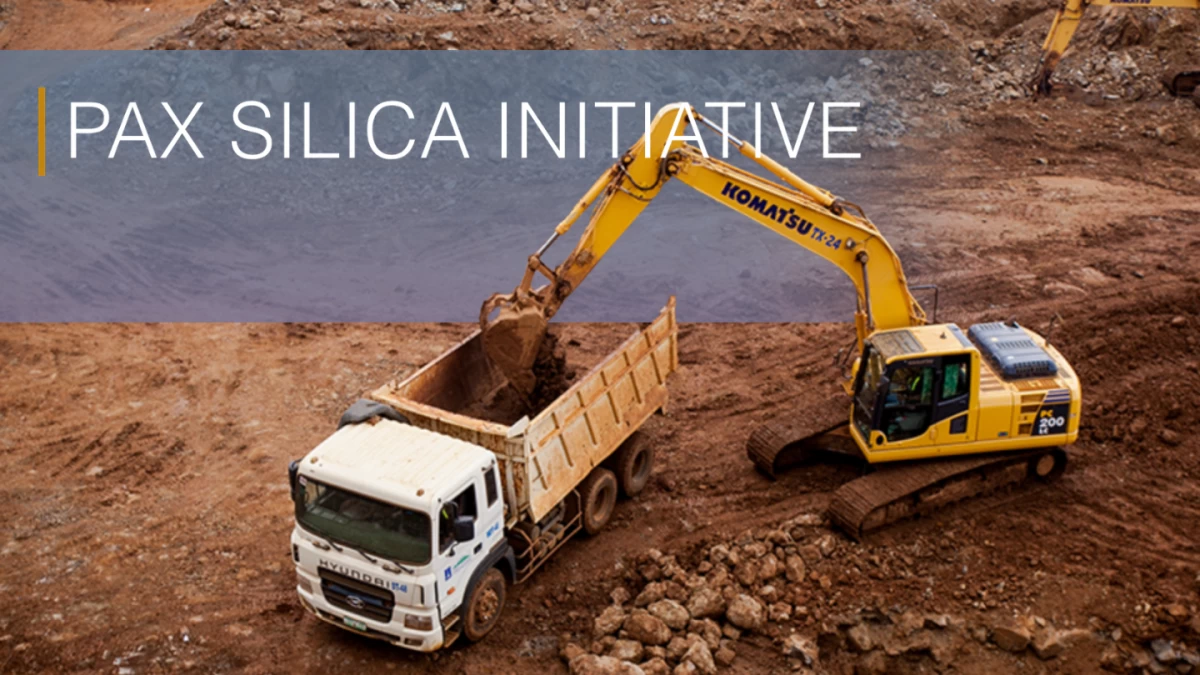
Located within the Luzon Economic Corridor (LEC), the project is part of the US-led Pax Silica initiative, which is designed to connect allied economies through artificial intelligence (AI) development and supply chain security, PIIE further noted.
PIIE described the special economic zone as an “AI-native investment acceleration hub,” featuring a unique legal framework. It cited that Washington is set to operate the ecozone “under US common law, despite being on Philippine soil—unlike any other existing investment arrangement in the world.”
The think tank said the upcoming economic security zone and the broader Pax Silica framework are a not-so-subtle response to China’s dominance in supply chains for critical technologies.
The report cited remarks by US State Department Undersecretary for economic affairs Jacob Helberg, who noted that “roughly 80 percent of global rare earth processing, over 70 percent of lithium-ion battery production, and dominant shares of semiconductor packaging are controlled by a single country that is not our ally.” While Helberg made no further mention of China, PIIE pointed out that the US official described the partnership as a “historic first in economic statecraft,” highlighting its geopolitical strategic importance.
A primary benefit of the hub, according to PIIE, is the potential to upgrade the Philippines’ industrial capabilities. While semiconductors are already the country’s top export, the report noted that the country remains concentrated in lower-value activities such as assembly, testing, and packaging (ATP).
US investment in the Philippine economic security zone “could help move the country up the value chain with activities like integrated circuit (IC) design and wafer fabrication,” PIIE said.
The report identified a similar opportunity for the country’s critical minerals sector. PIIE said that while the Philippines holds significant reserves of cobalt, copper, chromite, and nickel, it currently lacks the capacity for processing and refinement needed to integrate these materials into tech and defense supply chains.
Finance Secretary Frederick D. Go, the Marcos Jr. administration’s chief economic manager, earlier identified New Clark City as the specific site for the economic security zone, calling it a major step toward elevating the Philippines’ role in global trade and technology ecosystems.
The PIIE report, however, pointed out that details on specific investors remain “scant.”
PIIE added that the initiative reflects continued US interest in economic and security relationships in Asia-Pacific, even as global attention remains focused on the Middle East amid the war in Iran.