






Manila Bulletin
 Philippines
National
Half of Filipino families say quality of life worsened in past 12 months — SWS
Philippines
National
Half of Filipino families say quality of life worsened in past 12 months — SWS
Philippines
National
Half of Filipino families say quality of life worsened in past 12 months — SWS
Half of Filipino families say quality of life worsened in past 12 months — SWS
Published Apr 23, 2026 11:06 am


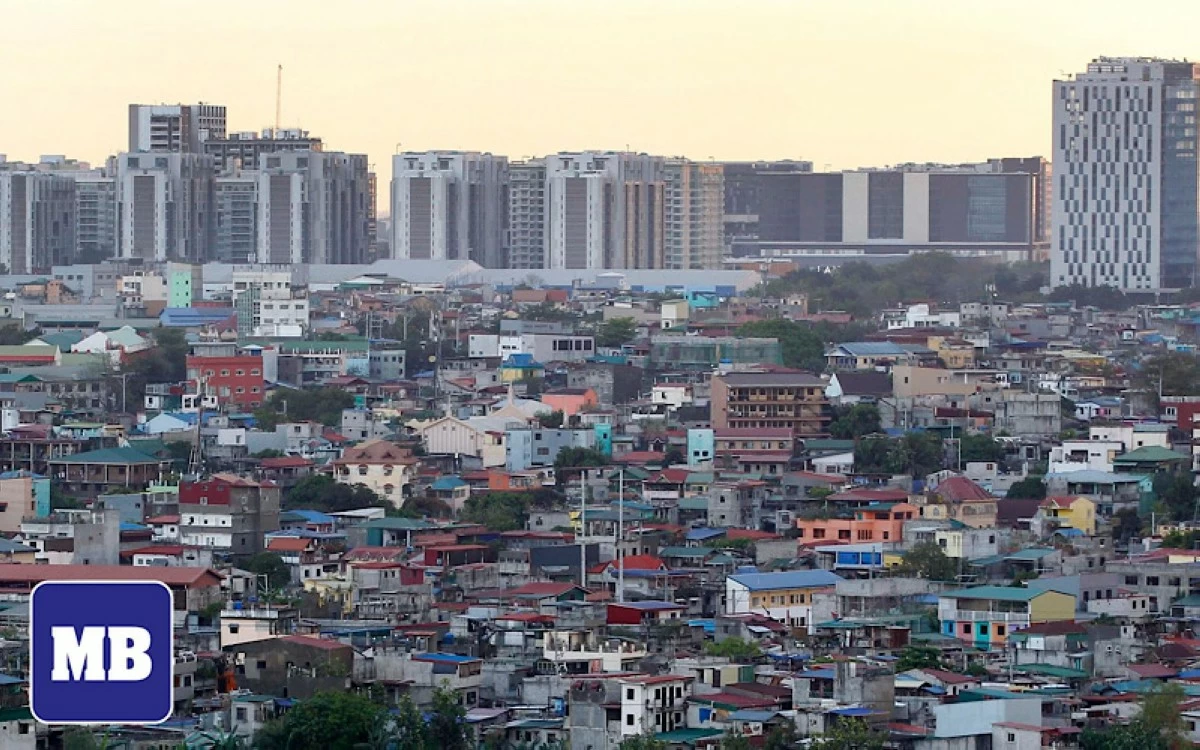
(Mark Balmores/Manila Bulletin)
A Social Weather Stations (SWS) survey conducted in the first quarter of 2026 found that 50 percent of adult Filipinos said their quality of life had worsened compared to 12 months ago.
Results of the survey, conducted from March 24 to 31 and released on Thursday, April 23, showed that 23 percent of respondents said their quality of life improved, while 26 percent said it stayed the same.
SWS uses the term “losers” to refer to respondents who report that their quality of life has worsened, “gainers” for those who report improvement, and “unchanged” for those who say their situation remained the same.
The latest figures translate to a net gainers score of -26 (percentage of gainers minus percentage of losers), which SWS classified as “low.”
SWS classifies net gainers as follows: “excellent” (+20 and above), “very high” (+10 to +19), “high” (+1 to +9), “fair” (0 to –9), “mediocre” (–10 to –19), “low” (–20 to –29), “very low” (–30 to –39), “extremely low” (–40 to –49), and “catastrophic” (–50 and below).
Compared to the fourth quarter of 2025, the latest figure is 19 points lower than the -7 recorded in November.
SWS also noted that Filipinos’ assessment of their quality of life has been on a downtrend since posting a “very high” +12 in June 2025 and “fair” -2 in September 2025.
“The March 2026 Net Gainers score of -26 is the lowest in over four years, since the extremely low -44 in September 2021. It is 18 points below the 2025 annual Net Gainers score of fair -8,” SWS said.
Net gainers down across demographic groups
SWS found that net gainers scores were lowest in Mindanao and Metro Manila, both at -31, followed by the Visayas at -25, and Balance Luzon (or Luzon outside Metro Manila) at -23.
“The 19-point fall in the nationwide Net Gainers score from November 2025 to March 2026 was due to sharp decreases in all areas,” it said.
In Metro Manila, the score dropped from “mediocre” to “very low,” declining by 19 points from -12 in November 2025 to -31 in March 2026.
It fell from “fair” to “low” in Balance Luzon (from -7 to -23), from “mediocre” to “low” in the Visayas (from -14 to -25), and from “high” to “very low” in Mindanao (from +2 to -31).
By area, net gainers declined from “mediocre” to “very low” in urban areas (from -10 to -32) and from “fair” to “mediocre” in rural areas (from -3 to -18).
By gender, the score fell from “fair” to “low” among men (from -8 to -28) and from “fair” to “low” among women (from -6 to -25).
SWS also noted that net gainers tend to decline with age.
In the latest survey, the score was highest among those aged 18 to 24 at -4 (from +31), followed by those aged 25 to 34 at -21 (from +2), 35 to 44 at -31 (from -7), 45 to 54 at -38 (from -12), and those aged 55 and above at -39 (from -21).
By educational attainment, net gainers fell among non-elementary graduates (from -4 to -39), elementary graduates (from -14 to -31), those who completed junior high school or vocational courses (from -7 to -33), those with some senior high school or some college (from +1 to -9), and college graduates (from -6 to -19).
The First Quarter 2026 Social Weather Survey was conducted through face-to-face interviews with 1,500 adults aged 18 and above nationwide.
Respondents were distributed as follows: 300 each in Metro Manila, the Visayas, and Mindanao, and 600 in Balance Luzon.
The survey has sampling error margins of ±3 percent for national estimates, ±6 percent each for Metro Manila, the Visayas, and Mindanao, and ±4 percent for Balance Luzon.