






Manila Bulletin
 Philippines
National
For students displaced by disasters, these DepEd classrooms rise in weeks
Philippines
National
For students displaced by disasters, these DepEd classrooms rise in weeks
Philippines
National
For students displaced by disasters, these DepEd classrooms rise in weeks
For students displaced by disasters, these DepEd classrooms rise in weeks
By Dhel Nazario
Published Apr 23, 2026 02:50 pm


For many students in disaster-prone communities, education is often the first casualty when typhoons strike.
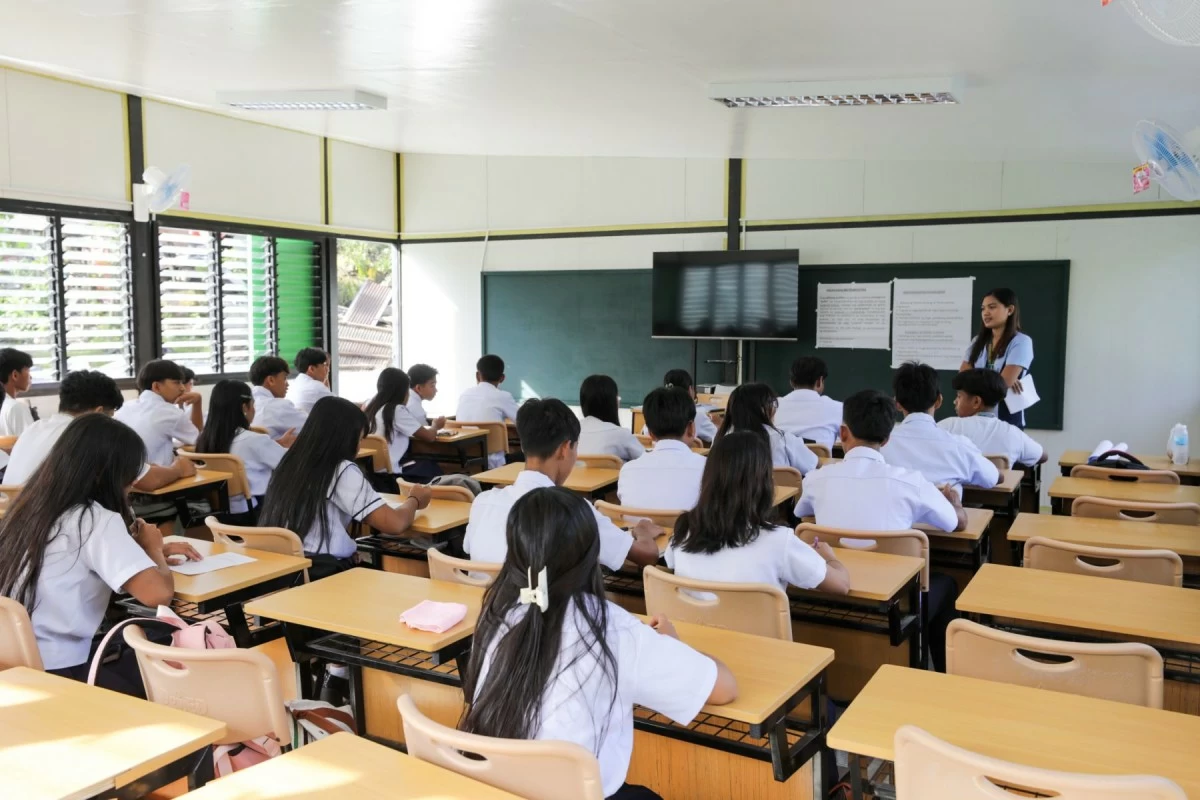
(DepEd photo)
Classrooms are damaged or repurposed as evacuation centers, leaving learners with nowhere to go once the rains stop. Days turn into weeks of missed lessons, and the disruption becomes a recurring cycle.
To address this, the Department of Education (DepEd) is accelerating the nationwide rollout of Learning Continuity Spaces (LCS)—modular, disaster-resilient classrooms designed to keep education going even in the aftermath of calamities.
Education Secretary Juan Edgardo “Sonny” Angara said technical support for field offices has been intensified to fast-track implementation, particularly in areas most vulnerable to extreme weather and infrastructure damage.
Backed by a P3.5-billion allocation under the Basic Education Facilities Fund (BEFF), the initiative prioritizes schools facing severe classroom shortages or structural risks.
“Sa direktiba ni Pangulong Bongbong Marcos, sinisiguro natin na may matibay na silid-aralan ang mga bata kahit may sakuna (Under the directive of President Bongbong Marcos, we are ensuring that children have sturdy classrooms even in times of disaster),” Angara said.
“Prayoridad ng administrasyong Marcos na walang mag-aaral ang mapag-iiwanan sa pamamagitan ng mabilis na pagtatayo ng mga de-kalidad na pasilidad sa bawat sulok ng bansa (The Marcos administration prioritizes ensuring that no student is left behind through the rapid construction of quality facilities in every corner of the country),” he added.
Unlike traditional school buildings that can take months to complete, LCS units are designed for rapid deployment. By downloading funds directly to Schools Division Offices (SDOs), DepEd enables local procurement and construction, allowing units to be built and made operational within one to two weeks.
The agency has also rolled out support systems to ensure smooth implementation, including nationwide webinars for field offices, online monitoring tools, and real-time technical assistance. A dedicated digital communication group and regularly updated FAQs aim to maintain coordination between the central office and on-the-ground implementers.
Early progress is already visible. SDOs in Capiz, Zamboanga del Norte, and Zamboanga del Sur have begun posting tenders for dozens of LCS units, while 29 other divisions are conducting pre-procurement activities to finalize project requirements.
Beyond speed, the program emphasizes sustainability and community involvement. Construction relies on local materials and labor, helping boost local economies while avoiding logistical delays often caused by transporting supplies from distant areas.
Each LCS unit is also built to meet climate-safety standards, ensuring durability in high-risk environments frequently exposed to typhoons and other hazards.
President Ferdinand R. Marcos Jr. and Angara previously inspected similar modular learning hubs in Bogo City, Cebu; Masbate; and Tagum City, Davao, where the structures have already been used to restore learning spaces after disruptions.
For students who routinely lose access to classrooms during disasters, the initiative represents more than just infrastructure—it offers continuity.
With faster construction, targeted deployment, and sustained monitoring, DepEd aims to ensure that when classrooms disappear, learning does not.