






 Business
The Stock Market
Ayala Land cools expansion, boosts leasing push amid Middle East uncertainty
Business
The Stock Market
Ayala Land cools expansion, boosts leasing push amid Middle East uncertainty
Ayala Land cools expansion, boosts leasing push amid Middle East uncertainty



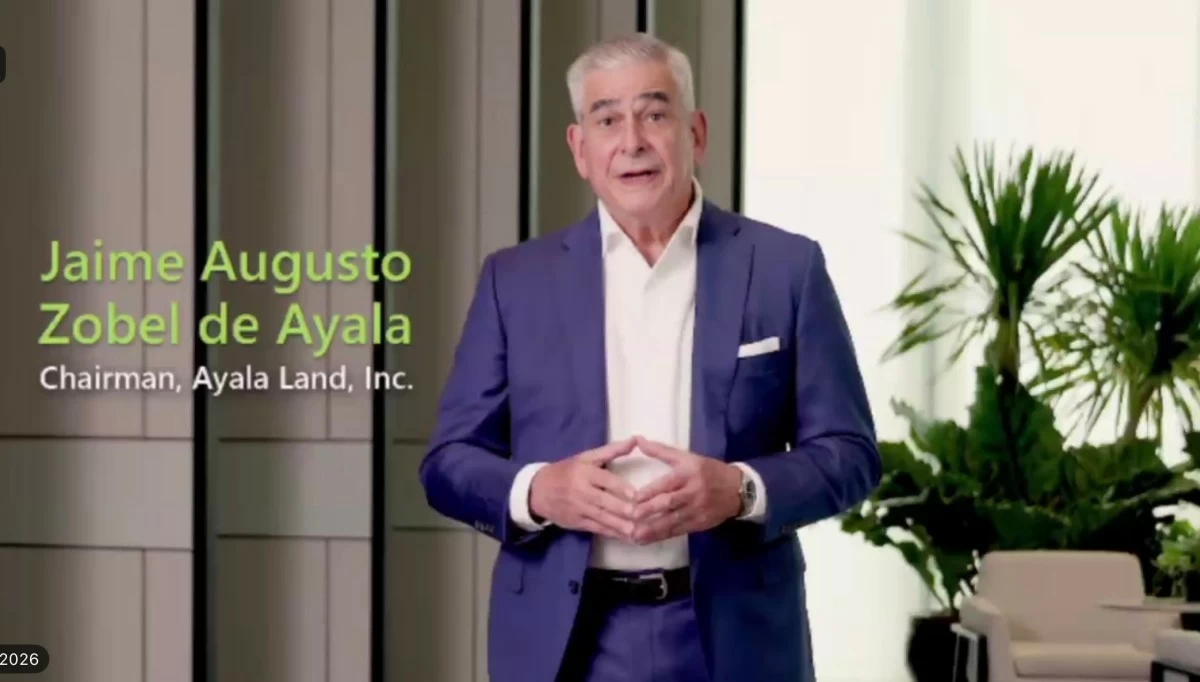


Real estate giant Ayala Land Inc. (ALI) is choosing to hunker down and easing its aggression in the face of additional challenges posed by the conflict in Iran, even as it has yet to recover from the adverse impact of a middle-income condominium oversupply after the loss of the Philippine offshore gaming operators (POGO) market.
“There’s no doubt that the Middle East crisis is a significant disruptor, especially for the property development industry. In times like these, our top priority is stability over aggressive growth. We’re focused on ensuring ample liquidity and maintaining the flexibility to act swiftly when the environment improves,” said ALI Chairman Jaime Augusto Zobel de Ayala during the company’s annual stockholders’ meeting (ASM) on Thursday, April 23.
In this light, ALI will manage its residential launches, reduce inventory, and lower its capital expenditure (capex) plans as part of balance sheet management.
“We want to preserve our flexibility so that we have the resources available when this crisis ends or when new opportunities arise. ALI’s track record shows resilience through multiple cycles, and that’s thanks to our prudent management of both our balance sheet and our diverse portfolio,” Mr. Zobel said.
ALI’s strategy now pivots toward leasing, with the company noting that expanding its leasing footprint and reinventing its malls and hotels has become even more relevant under these circumstances.
“Our focus on building a stronger recurring income business is precisely to help us weather disruptions and cycles with more dependable revenue streams,” Mr. Zobel said.
ALI President and Chief Executive Officer (CEO) Anna Ma. Margarita Bautista-Dy noted that, “Visibility as to what lies ahead is admittedly limited. However, we’re preparing for the lingering effects of this crisis. We will face these challenges with direction.”
Despite the difficult environment, she said, “Our leasing business is expected to remain on a growth trajectory and will be the primary driver of our company’s expansion once there is greater clarity in the operating environment.”
Meanwhile, Bautista-Dy said they believe certain segments of property development will recover and grow and, when that happens, ALI will be ready with its offerings.
The property giant’s estates will continue to serve as the cornerstone for both its leasing and property development activities, and 100 percent of the leasing footprint planned over the next three years will be located within these estates.
“We foresee that in this period, the share of leasing in our earnings portfolio will increase, making our business more predictable,” Bautista-Dy said.
ALI Senior Vice President and Leasing and Hospitality Group Head Mariana Beatriz Zobel de Ayala said that, “Across both malls and hotels, reinvestments are expected to deliver a 15- to 20-percent uplift in rents and room rates upon stabilization. Our office portfolio remained resilient with an 87-percent lease upgrade.”
“Looking ahead to 2026, we will open over 200,000 square meters (sqm) of new retail space, our largest annual addition in history, and deliver more than 70,000 sqm of new office capacity,” she noted.
The Mandarin Oriental will also reopen in the fourth quarter, returning five-star hospitality to Makati City after more than a decade.
ALI is also scaling its industrial real estate, particularly cold storage facilities, which are steadily gaining strategic importance within its leasing portfolio.
“Together, these efforts are repositioning leasing to play a much larger role in our earnings mix over time,” Ms. Zobel said.