







Stocks sink below 6,000 level before BSP rate decision
Published Apr 22, 2026 05:36 pm


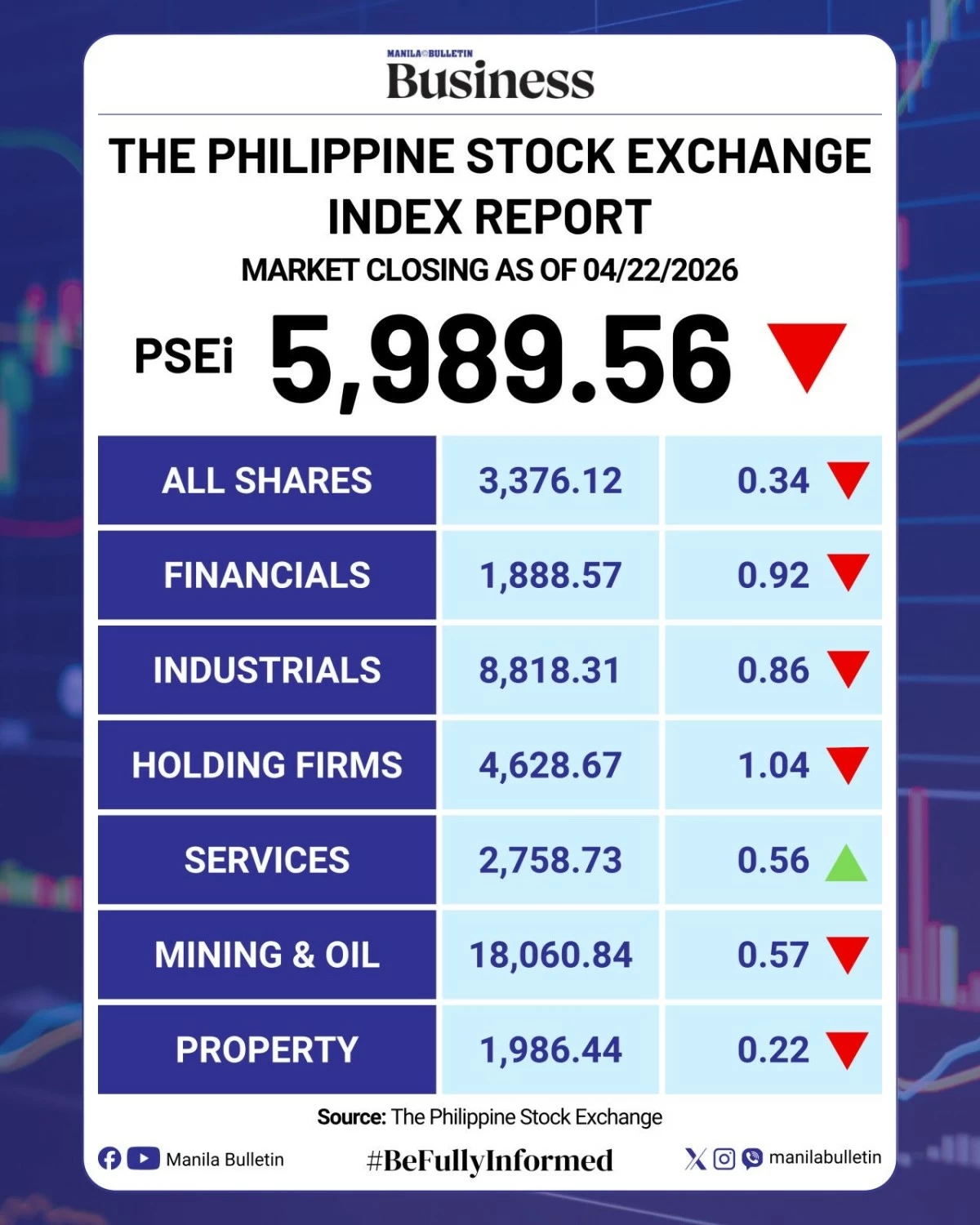
Local equities fell for the second consecutive session, dragging the benchmark index below the psychological 6,000-level as investors braced for the potential interest rate hike by the central bank and monitored simmering geopolitical tensions in the Middle East.
The Philippine Stock Exchange index (PSEi) declined 29.14 points, or 0.48 percent, to close at 5,989.56 on Wednesday, April 22. The move was led by a retreat in large-cap conglomerates, which outweighed gains in the services sector.
Market participation remained thin, with turnover dropping to 2.86 billion shares valued at ₱5.96 billion on the back of cautious stance among local and foreign funds. Decliners dominated the session, with 105 issues falling against 23 gainers, while 66 remained unchanged.
Sentiment was primarily weighed down by expectations that the Bangko Sentral ng Pilipinas (BSP) will tighten monetary policy during its meeting on Thursday. Most analysts anticipate a 25-basis-point increase to combat persistent inflationary pressures. The prospect of higher borrowing costs typically dampens the valuation of equities, particularly capital-intensive holding firms.
The Philippine market retreated from early gains as investors turned cautious ahead of the BSP policy meeting, according to Luis Limlingan, managing director at Regina Capital Development Corp.
He noted that trading sentiment remained guarded, with participants opting to stay on the sidelines pending a clearer policy direction from the central bank.
Geopolitical uncertainty also contributed to the risk-off environment. Tensions between the United States (US) and Iran have resurfaced as a ceasefire agreement remains elusive.
Japhet Tantiangco, research manager at Philstocks Financial, said the market was rattled by the lack of a definitive deal between the two nations, noting that the US has maintained a blockade at the Strait of Hormuz.
Such disruptions in the Middle East often trigger concerns over global energy prices, which could further complicate the inflation outlook for the Philippines.
The peso also felt the pressure of the hawkish central bank outlook and global instability, weakening to close at ₱60.13 against the US dollar.
Michael Ricafort, chief economist at Rizal Commercial Banking Corp., noted that the decline in the PSEi came as the market prepared for the possibility of a rate hike that would inevitably increase the cost of doing business.
The combination of a weaker currency and rising interest rates continues to cloud the near-term recovery prospects for the local equity market.