







Head of ADB seeks second term in office
Published Apr 22, 2026 03:20 pm


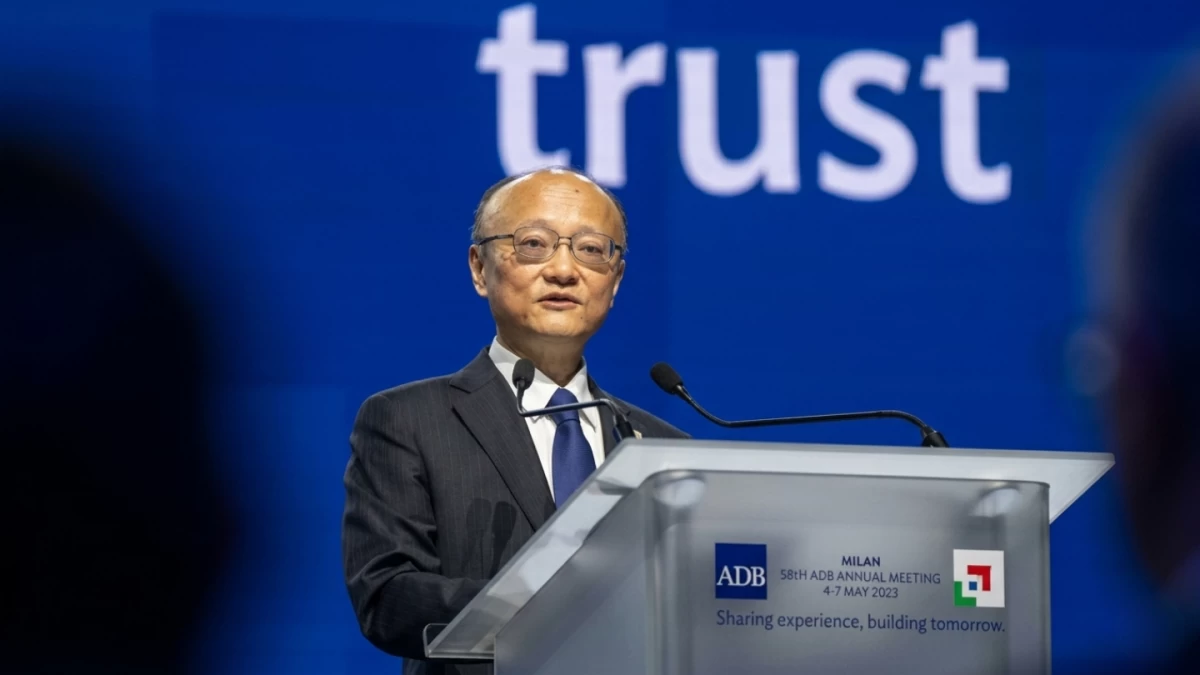
ADB President Masato Kanda
Asian Development Bank (ADB) President Masato Kanda announced on Wednesday, April 22, his intention to seek a full five-year term as head of the Manila-based lender, positioning himself to steer the institution through a period of heightened geopolitical volatility and climate-driven economic shocks.
Kanda, whose current term expires Nov. 23, 2026, said the bank serves as an “anchor of stability” for developing member countries in Asia and the Pacific. The announcement comes as the region faces compounding pressures from shifting trade dynamics and the accelerating need for energy transition. If reelected by the Board of Governors, Kanda’s next term would officially commence as the region’s development landscape undergoes what he described as a radical transformation.
The president's bid for reelection follows a record-breaking year for the bank’s balance sheet. Under Kanda’s tenure, the ADB committed $29.3 billion from its own resources in 2025, a 20 percent increase from the previous year. When combined with partner contributions, total development finance reached $44 billion.
Despite the global scale of these figures, the bank remains a critical pillar for the Philippine economy, maintaining deep ties with its host nation as it prepares to provide comprehensive support for the Philippines’ ASEAN 2026 Chairship.
Kanda has overseen a fundamental shift in the bank’s operational DNA. For the first time in its history, the ADB updated its energy policy to include support for nuclear power, reflecting a pragmatic turn toward diverse energy sources to meet the region's massive power demands.
The bank also successfully pushed through the first amendment to its Charter in 60 years, a move that unlocked a 50 percent expansion in operational capacity.
Regionally, Kanda has moved to consolidate fragmented infrastructure. The bank recently pledged $10 billion toward the ASEAN Power Grid and more than $10 billion for the Central Asia Regional Economic Cooperation Program.
These initiatives, alongside the 14 billion dollars already deployed toward food systems transformation, underscore Kanda’s strategy of using large-scale capital injections to address systemic vulnerabilities.
The election process requires Kanda to be nominated by regional members and confirmed by the Board of Governors.
He originally assumed office in February 2025 to complete the term of his predecessor, Masatsugu Asakawa. Since then, the lender has sought to streamline its bureaucracy, entering a landmark agreement with the World Bank to mutually rely on each other’s procurement systems—a move designed to reduce the “red tape” often associated with sovereign projects.