






Manila Bulletin
 Philippines
National
'Hawak niyo ang build': Angara greenlights LGU procurement for classroom construction
Philippines
National
'Hawak niyo ang build': Angara greenlights LGU procurement for classroom construction
Philippines
National
'Hawak niyo ang build': Angara greenlights LGU procurement for classroom construction
'Hawak niyo ang build': Angara greenlights LGU procurement for classroom construction
By Dhel Nazario
Published Apr 22, 2026 03:47 pm


Selected local government units (LGUs) across the country have been authorized to directly undertake classroom construction projects, in a move by the government aimed at accelerating the delivery of much-needed school infrastructure and easing classroom shortages.
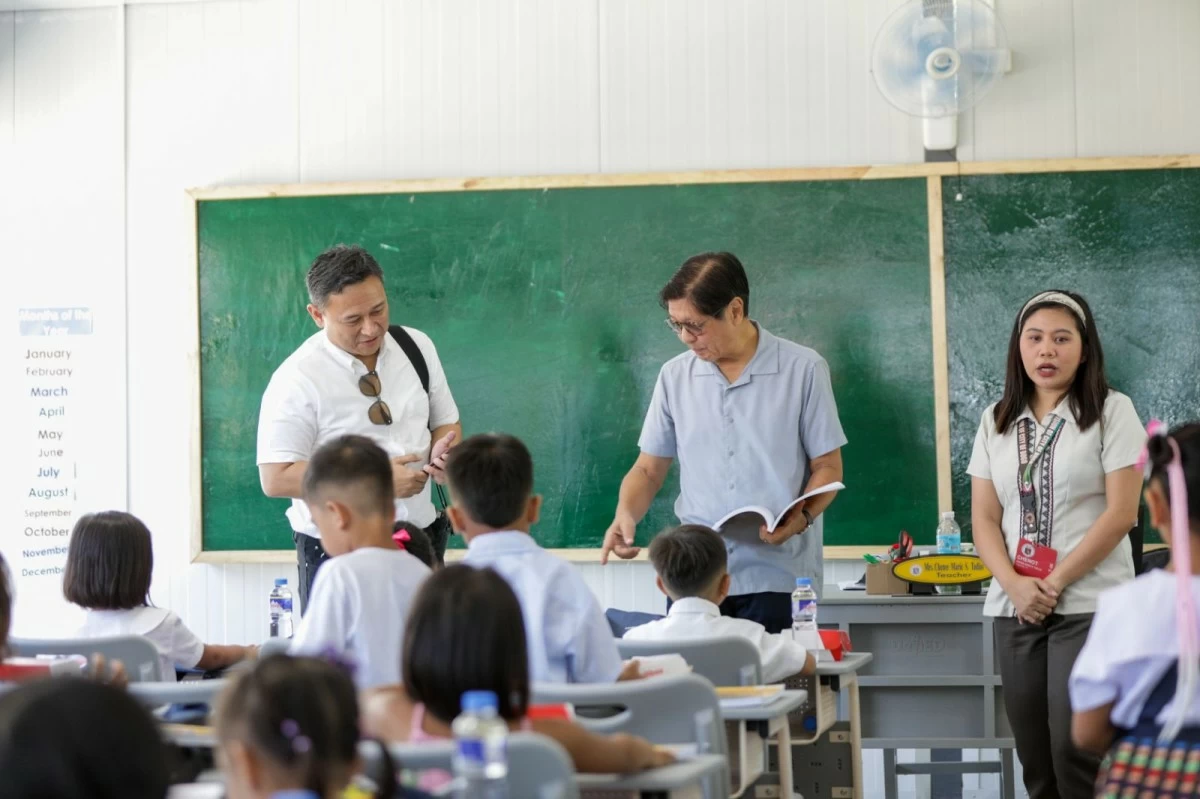
(DepEd photo)
Education Secretary Sonny Angara announced that 14 provinces have been cleared to begin procurement for classroom building projects following the signing of supplemental Memoranda of Agreement (MOA) under the Department of Education’s (DepEd) Classroom Building Program.
The provinces include Ifugao, Sorsogon, Mountain Province, Abra, Quezon, Samar, Ilocos Sur, Pangasinan, Oriental Mindoro, Biliran, Dinagat Islands, Misamis Oriental, Southern Leyte, and Siquijor. They are now allowed to proceed with their respective procurement processes for classroom construction.
“Bahagi ito ng direktiba ni Pangulong Bongbong Marcos na pabilisin ang pagpapatayo ng mga pasilidad sa edukasyon sa pamamagitan ng pagbibigay ng kapangyarihan sa mga lokal na pamahalaan bilang katuwang sa pagpapatupad nito (This is part of President Bongbong Marcos’ directive to accelerate the construction of educational facilities by empowering local governments as partners in its implementation),” Angara said.
“Sa pamamagitan ng paggamit ng lokal na kapasidad at kaalaman, mas mabilis nating magagawa ang mga silid-aralan na kailangang-kailangan ng ating mga guro at mag-aaral (By harnessing local capacity and knowledge, we can more quickly build the classrooms that our teachers and students urgently need).”
DepEd said it conducted online technical workshops with LGUs to guide them on the program of work preparation, engineering and architectural designs, procurement timelines, and bidding requirements to ensure smooth implementation.
The department added that 37 more supplemental agreements are expected to be signed in the coming weeks as it moves to complete coverage for the remaining provinces and cities.
To prepare for rollout, several LGUs and school division offices have also begun site validation and market scoping to ensure project readiness.
The initiative is anchored on the 2026 General Appropriations Act, which allows DepEd to partner with the Department of Public Works and Highways (DPWH), LGUs, the Armed Forces of the Philippines Corps of Engineers, and the private sector to speed up the construction of learning facilities.
Since taking office in 2024, Angara has pushed for a more decentralized approach to classroom construction, allowing LGUs to manage procurement and implementation while DepEd retains oversight for monitoring and compliance.
Earlier this week, President Ferdinand R. Marcos Jr. ordered the release of P17.27 billion for the construction of 4,960 classrooms nationwide, including furniture, as part of efforts to address overcrowding in public schools.
Under the supplemental MOA, LGUs will act as procuring entities responsible for construction, fund management, and compliance with procurement and building regulations. They are required to maintain separate trust accounts and submit regular financial reports to ensure transparency.
DepEd, meanwhile, will continue to provide technical supervision and conduct validation inspections to ensure that classroom designs and structures meet national standards.
The department also cited parallel efforts to speed up classroom delivery, including its partnership with the DPWH for technical validation and the rollout of the Public-Private Partnership for School Infrastructure Project Phase III, which covers 3,563 classrooms in multiple regions.
The expanded LGU-led model is expected to further accelerate classroom construction nationwide as the government seeks to address persistent shortages in public education facilities.