






Manila Bulletin
 Philippines
National
Romualdez debunks 'mastermind' tag in flood control projects mess
Philippines
National
Romualdez debunks 'mastermind' tag in flood control projects mess
Philippines
National
Romualdez debunks 'mastermind' tag in flood control projects mess
Romualdez debunks 'mastermind' tag in flood control projects mess
Published Apr 21, 2026 08:45 pm


At A Glance
- Former House Speaker Leyte 1st district Rep. Martin Romualdez debunked on Tuesday night, April 21 the narrative that he was the "mastermind" of the flood control projects corruption scandal.
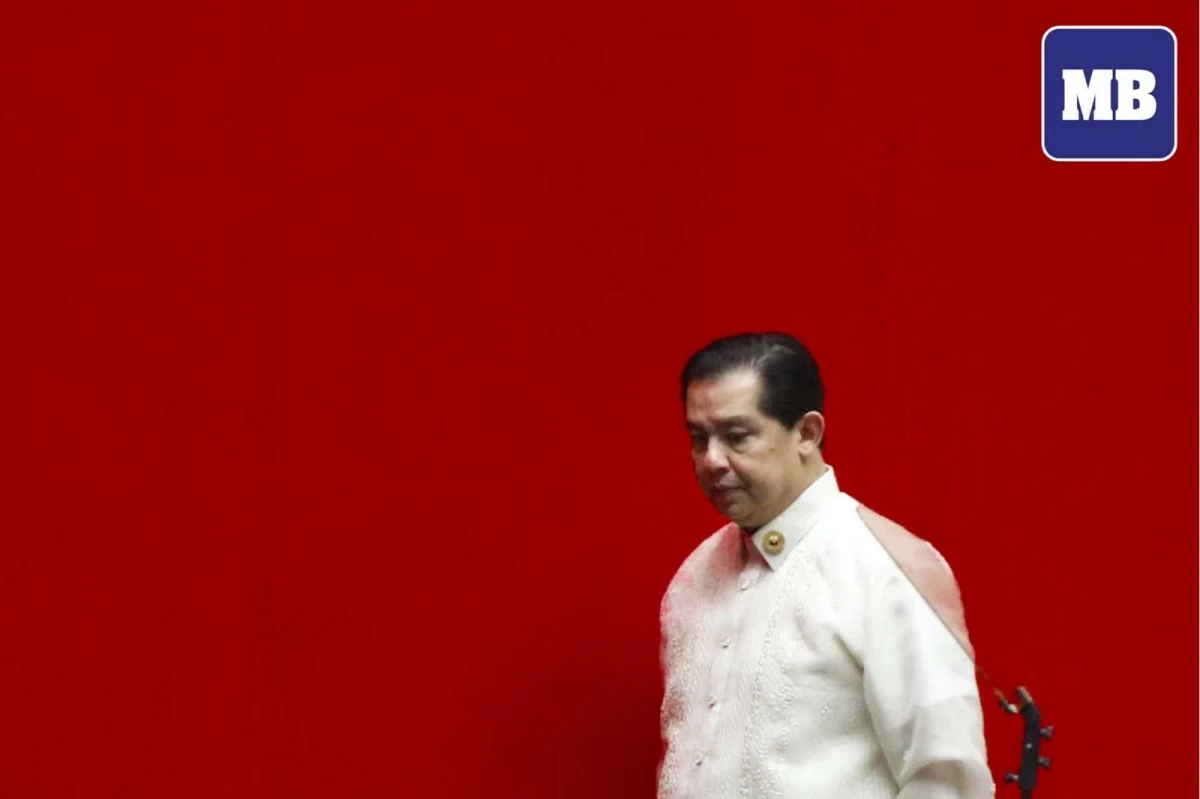
Former House Speaker Leyte 1st district Rep. Martin Romualdez (MANILA BULLETIN)
Former House Speaker Leyte 1st district Rep. Martin Romualdez debunked on Tuesday night, April 21 the narrative that he was the "mastermind" of the flood control projects corruption scandal.
In an 11-minute video message, Romualdez argued that his mastermind tag simply doesn't make sense with the way that government actually works.
"Let us address the most absurd accusation of all: that I am supposedly the 'mastermind' of this corruption scheme. How can I be the mastermind?" asked the Lakas-Christian Muslim Democrats (Lakas-CMD) president.
"I was the former Speaker of the House of Representatives. But the House of Representatives is only part of one branch of government: the legislature," he underscored.
The legislature refers to the bicameral Congress, which is composed of the House and the Senate. The top task of Congress every year is to pass the General Appropriations Bill (GAB) or proposed national budget.
In a simplified sense, crusaders against anomalous flood control projects have pointed to the legislated national budget as the source of these corrupt projects.
"The national budget is not conceived, executed, implemented, bid out, supervised, and completed by one congressman or even by Congress alone. And certainly not by the Speaker of the House," Romualdez said.
"Congress does not build flood control projects. Congress does not conduct procurement. Congress does not inspect whether a project was actually completed. Congress does not certify whether the work done was substandard or not," he pointed out.
He went on to share that the national budget or GAB begins as a collection of proposals from the executive branch. This GAB precursor is known as the National Expenditure Program (NEP).
"I want to make this simple and clear. The national budget does not depend on just one person: The budget does not begin in the House. It begins in the executive. The agencies prepare their proposals, the executive consolidates them into the [NEP], and that program is then submitted to Congress," said Romualdez.
He noted that the other legislative chamber, the Senate, also conducts its own deliberations, reviews its own version, and plays its own role in shaping the final budget. "It is not a bystander. It is an active constitutional participant in the process."
"After that, the House and the Senate reconcile their versions in the bicameral conference committee. Only then is the final bill transmitted to the President for approval or veto.
So let us be honest about what becomes law," Romualdez said.
"The national budget is not the act of one person or one chamber. It is the product of a constitutional chain involving the executive, the House, and the Senate," he said.
Accountability, command responsibility
So, who is the true mastermind of the flood control projects mess? Romualdez did not give a definite answer, but argued that "accountability must apply to everyone involved".
"This is something I want the public to understand: the budget process is collective, multi-layered, and shared. Accountability must apply to everyone involved, not be selectively assigned after the fact. And certainly not when it becomes politically useful," he said.
He reckoned that If such magnitude of corruption were to occur, then "It's clear that real corruption does not happen at the level of general legislative approval alone. It happens at the level of execution of the General Appropriations Act (GAA)."
The GAB becomes the GAA after it is signed by the President.
"It happens when projects are implemented. It happens where projects are actually implemented, where procurement is undertaken, where monetary disbursements are actually made, and it happens when substandard projects are passed off as legitimate, or when ghost projects are made to appear real," Romualdez said.
"That is why command responsibility is far more logically relevant in the executive branch, where there is actual supervision, operational control, and implementation on the ground, than in a collegial legislative body whose constitutional role is deliberation and appropriation," he added.