ADVERTISEMENT

Philippines eyed as key ASEAN sustainable aviation fuel exporter amid decarbonization push

Published Apr 21, 2026 08:50 am
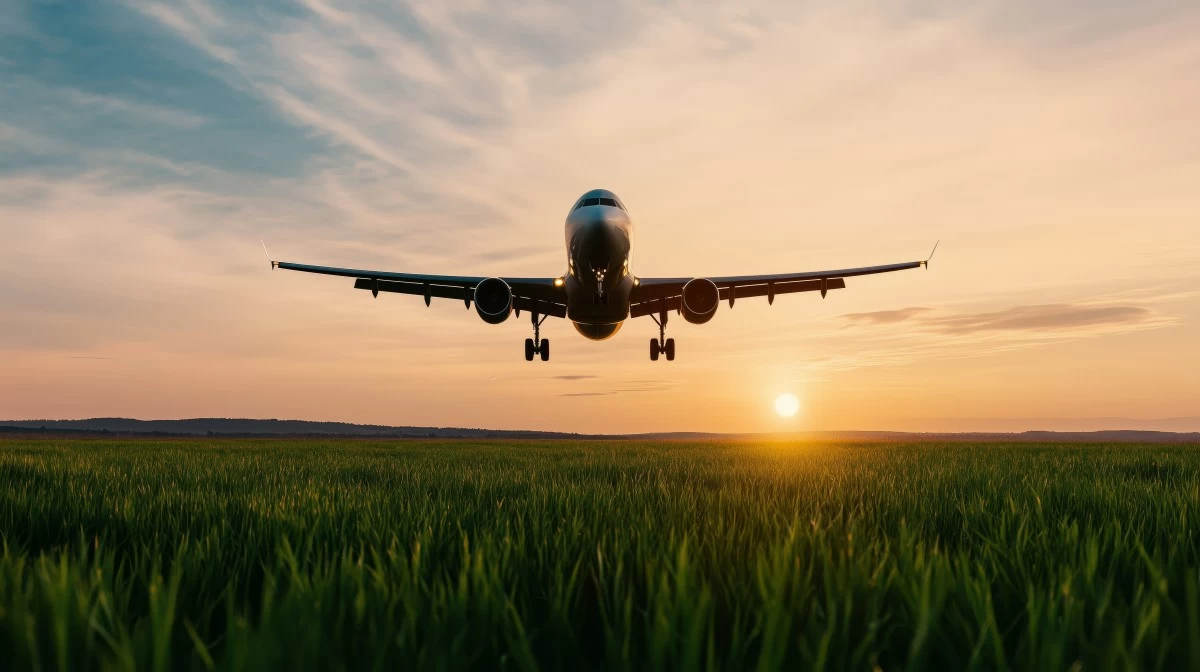
sustainable aviation fuel concept. passenger plane flying over green field

The Philippines could emerge as an important exporter of sustainable aviation fuel (SAF) produced from agricultural and forestry waste, even as it remains exposed to the ongoing Middle East fuel crisis, according to the Association of Southeast Asian Nations (ASEAN) 2050 SAF Outlook Report.

The findings will be presented at the 8th Philippine Airport Modernization and Expansion Summit to held on April 22 to 23 in Manila, where Sachin Narang, executive advisor for energy and infrastructure at GHD, will discuss the region’s long-term SAF supply outlook.
The report projects that the Philippines can produce 1.1 million barrels per day of SAF by 2030, increasing to 1.3 million barrels per day by 2050 under supportive policy and investment conditions.

SAF is defined as a renewable or waste-derived aviation fuel that can be used as a “drop in” replacement alongside conventional jet fuel, making it one of the more immediately deployable options for reducing aviation emissions.

The Philippines is seen as well-positioned for SAF development due to strong aviation demand, abundant agricultural residues, and emerging policy support, which together could support both domestic supply and potential exports.

The ASEAN 2050 SAF Outlook Report examined SAF supply and demand scenarios across ASEAN member states, including the Philippines, Cambodia, Indonesia, Laos, Malaysia, Thailand, and Vietnam, as well as key import markets such as Japan, Singapore, and South Korea.

It found that SAF supply potential from agricultural and sustainable forestry biomass across ASEAN could reach around 7.5 million barrels per day in 2030 and rise to as much as 8.5 million barrels per day by 2050.

Within this outlook, the Philippines is identified among countries with the greatest potential surpluses after meeting domestic demand, indicating possible future export capacity.

The study also highlighted key feedstock sources in the Philippines, including coconut, cassava, corn, rice, and sugarcane residues. However, it noted logistical challenges associated with archipelagic geography, emphasizing the need for improved aggregation and consolidation of biomass resources to strengthen supply chains and reduce costs.

It further identified the Port of Cebu as one of ASEAN’s potential SAF export hubs.

On the policy front, the Philippines is beginning to develop frameworks to support SAF adoption and reduce reliance on imported fuels. The Department of Energy (DOE) has convened a SAF policy development workshop and formed a multi-agency working group involving the Civil Aviation Authority of the Philippines (CAAP) and other stakeholders.

“SAF is one of the few near term options that can cut aviation emissions using today’s aircraft and fuelling systems. The Philippines has strong underlying drivers, including growing aviation demand and access to agricultural residues, but converting that potential into real supply will depend on practical steps across the value chain, from feedstock aggregation and logistics through to investment frameworks and policy settings,” said Narang.

The ASEAN 2050 SAF Outlook Report was developed by GHD with support from Global Affairs Canada through the Canadian Trade and Investment Facility for Development (CTIF), implemented by Cowater International in association with the Institute of Public Administrators of Canada (IPAC), with Boeing as knowledge partner supporting the ASEAN Secretariat.

GHD is a global professional services company operating in transportation, water, energy and resources, environment, property, and buildings.

ADVERTISEMENT
.most-popular .layout-ratio{ padding-bottom: 79.13%; } @media (min-width: 768px) and (max-width: 1024px) { .widget-title { font-size: 15px !important; } }

{{ articles_filter_1561_widget.title }}

.most-popular .layout-ratio{ padding-bottom: 79.13%; } @media (min-width: 768px) and (max-width: 1024px) { .widget-title { font-size: 15px !important; } }

{{ articles_filter_1562_widget.title }}

.most-popular .layout-ratio{ padding-bottom: 79.13%; } @media (min-width: 768px) and (max-width: 1024px) { .widget-title { font-size: 15px !important; } }

{{ articles_filter_1563_widget.title }}

{{ articles_filter_1564_widget.title }}

.mb-article-details { position: relative; } .mb-article-details .article-body-preview, .mb-article-details .article-body-summary{ font-size: 17px; line-height: 30px; font-family: "Libre Caslon Text", serif; color: #000; } .mb-article-details .article-body-preview iframe , .mb-article-details .article-body-summary iframe{ width: 100%; margin: auto; } .read-more-background { background: linear-gradient(180deg, color(display-p3 1.000 1.000 1.000 / 0) 13.75%, color(display-p3 1.000 1.000 1.000 / 0.8) 30.79%, color(display-p3 1.000 1.000 1.000) 72.5%); position: absolute; height: 200px; width: 100%; bottom: 0; display: flex; justify-content: center; align-items: center; padding: 0; } .read-more-background a{ color: #000; } .read-more-btn { padding: 17px 45px; font-family: Inter; font-weight: 700; font-size: 18px; line-height: 16px; text-align: center; vertical-align: middle; border: 1px solid black; background-color: white; } .hidden { display: none; }
function initializeAllSwipers() { // Get all hidden inputs with cms_article_id document.querySelectorAll('[id^="cms_article_id_"]').forEach(function (input) { const cmsArticleId = input.value; const articleSelector = '#article-' + cmsArticleId + ' .body_images'; const swiperElement = document.querySelector(articleSelector); if (swiperElement && !swiperElement.classList.contains('swiper-initialized')) { new Swiper(articleSelector, { loop: true, pagination: false, navigation: { nextEl: '#article-' + cmsArticleId + ' .swiper-button-next', prevEl: '#article-' + cmsArticleId + ' .swiper-button-prev', }, }); } }); } setTimeout(initializeAllSwipers, 3000); const intersectionObserver = new IntersectionObserver( (entries) => { entries.forEach((entry) => { if (entry.isIntersecting) { const newUrl = entry.target.getAttribute("data-url"); if (newUrl) { history.pushState(null, null, newUrl); let article = entry.target; // Extract metadata const author = article.querySelector('.author-section').textContent.replace('By', '').trim(); const section = article.querySelector('.section-info ').textContent.replace(' ', ' '); const title = article.querySelector('.article-title h1').textContent; // Parse URL for Chartbeat path format const parsedUrl = new URL(newUrl, window.location.origin); const cleanUrl = parsedUrl.host + parsedUrl.pathname; // Update Chartbeat configuration if (typeof window._sf_async_config !== 'undefined') { window._sf_async_config.path = cleanUrl; window._sf_async_config.sections = section; window._sf_async_config.authors = author; } // Track virtual page view with Chartbeat if (typeof pSUPERFLY !== 'undefined' && typeof pSUPERFLY.virtualPage === 'function') { try { pSUPERFLY.virtualPage({ path: cleanUrl, title: title, sections: section, authors: author }); } catch (error) { console.error('ping error', error); } } // Optional: Update document title if (title && title !== document.title) { document.title = title; } } } }); }, { threshold: 0.1 } ); function showArticleBody(button) { const article = button.closest("article"); const summary = article.querySelector(".article-body-summary"); const body = article.querySelector(".article-body-preview"); const readMoreSection = article.querySelector(".read-more-background"); // Hide summary and read-more section summary.style.display = "none"; readMoreSection.style.display = "none"; // Show the full article body body.classList.remove("hidden"); } document.addEventListener("DOMContentLoaded", () => { let loadCount = 0; // Track how many times articles are loaded const offset = [1, 2, 3, 4, 5, 6, 7, 8, 9, 10]; // Offset values const currentUrl = window.location.pathname.substring(1); let isLoading = false; // Prevent multiple calls if (!currentUrl) { console.log("Current URL is invalid."); return; } const sentinel = document.getElementById("load-more-sentinel"); if (!sentinel) { console.log("Sentinel element not found."); return; } function isSentinelVisible() { const rect = sentinel.getBoundingClientRect(); return ( rect.top < window.innerHeight && rect.bottom >= 0 ); } function onScroll() { if (isLoading) return; if (isSentinelVisible()) { if (loadCount >= offset.length) { console.log("Maximum load attempts reached."); window.removeEventListener("scroll", onScroll); return; } isLoading = true; const currentOffset = offset[loadCount]; window.loadMoreItems().then(() => { let article = document.querySelector('#widget_1690 > div:nth-last-of-type(2) article'); intersectionObserver.observe(article) loadCount++; }).catch(error => { console.error("Error loading more items:", error); }).finally(() => { isLoading = false; }); } } window.addEventListener("scroll", onScroll); });

Sign up by email to receive news.