






Manila Bulletin
 Philippines
National
Exercise Balikatan: What drills to expect in 'most expansive' version of PH-US annual war games
Philippines
National
Exercise Balikatan: What drills to expect in 'most expansive' version of PH-US annual war games
Philippines
National
Exercise Balikatan: What drills to expect in 'most expansive' version of PH-US annual war games
Exercise Balikatan: What drills to expect in 'most expansive' version of PH-US annual war games
Published Apr 21, 2026 03:11 pm


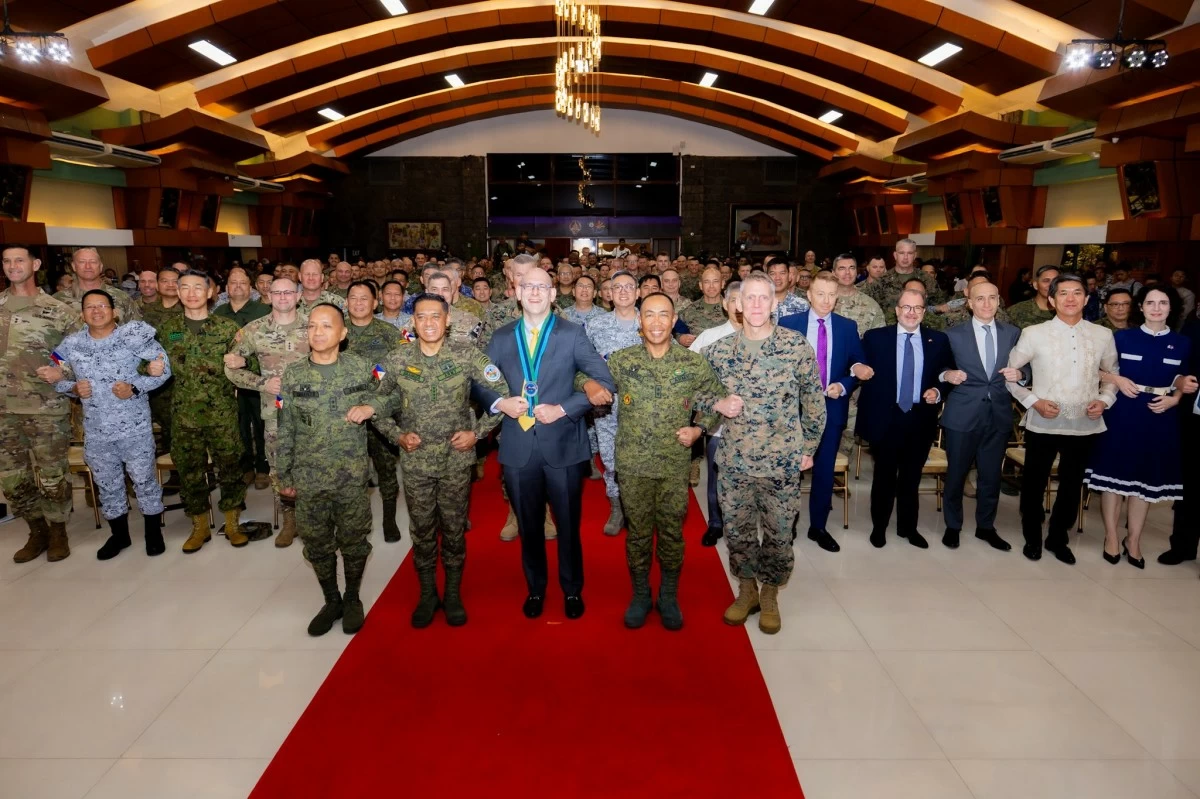
(Photo: US Embassy in Manila)
The 41st iteration of Exercise Balikatan officially kicked off this week, touted as the largest and most complex version of the Philippines-United States annual war games to date.
Running from April 20 to May 8, the exercise features more than 17,000 soldiers from the Armed Forces of the Philippines (AFP), United States Armed Forces, and partner nations such as Australia, Canada, France, Japan, New Zealand, and the United Kingdom.
Maritime Key Terrain Security Operations
The centerpiece activities begin in the country’s northernmost islands as the Maritime Key Terrain Security Operations (MKTSO) will be held from April 20 to May 7 in Batanes and Babuyan Island Group, where troops will train on securing and defending strategically important islands and coastal areas.
The MKTSO focuses on rapid deployment of troops to remote islands, securing beaches, ports, and high ground; establishing temporary defense positions, and coordinating surveillance and maritime monitoring.
“The activity involves deployment of forces to secure key terrain, protect sea lines of communication, and deny adversary access,” the AFP said.
It will be conducted as regional security concerns grow over Taiwan Strait given that northern Luzon is the Philippines’ closest landmass to Taiwan, which China seeks to bring under its control or influence.
Maritime Strike
A more targeted operation called Maritime Strike will follow on April 24 in Itbayat Island in Batanes, which will showcase combined naval firepower and coordinated maritime defense operations.
The AFP said the drill highlights speed and flexibility, and simulates responses to high-value threats. It will focus on joint maritime combat readiness, including coordinated air, sea, and land-based strikes against simulated hostile naval targets.
“It involves small, highly trained units conducting targeted operations in coastal and littoral environments,” the AFP added.
The scope expands on May 6 with the Joint Task Force Maritime Strike (JTF MARSTRIKE) in Paoay, Ilocos Norte, which integrates multi-domain capabilities to conduct coordinated maritime strike operations. It involves synchronizing air, land, and sea-based assets to “demonstrate the ability to deliver decisive effects through joint and combined operations.”
Multinational Maritime Events
At sea, multinational naval forces will converge for the Maritime Multinational Events (MME) from April 26 to May 1 in the joint operational area of the Northern Luzon Command (NOLCOM) to strengthen naval cooperation and improve joint response capabilities.
The Philippine Navy and counterparts from the US, Canada, and Japan will conduct maneuvering drills to “ensure forces can operate together effectively in safeguarding shared waters.”
The drills include coordinated ship movements, communication exercises, and maritime domain awareness operations. “It enhances interoperability and cooperation at sea, ensuring forces can operate together effectively in safeguarding shared waters,” the AFP said.
The drills will take place amid continuing tensions in the West Philippine Sea (WPS), where Manila has reported repeated incidents involving Chinese vessels within its exclusive economic zone (EEZ).
Integrated Air and Missile Defense
Simultaneously, participating forces will conduct an Integrated Air and Missile Defense (IAMD) drill from April 26 to 29 at the Naval Station Leovigildo Gantioqui (NSLG) in Zambales, which will focus on detecting and neutralizing aerial and missile threats.
The IAMD exercise aims to link radar systems, command centers, and missile defenses so participating forces can quickly detect, track, and respond to simulated attacks, including incoming missiles and drones.
The drills involve real-world scenarios designed to test coordination and interoperability among allied units.
“It integrates sensors, command-and-control systems, and air defense platforms to enable real-time information sharing and decision-making,” the AFP said.
Joint Pacific Multinational Readiness Center – Exportable
Command and control will then take center stage during the Joint Pacific Multinational Readiness Center-Exportable from May 1 to 7 at Fort Magsaysay in Nueva Ecija. This phase replicates real-world combat scenarios.
“It focuses on command and control, decision-making, and coordination in complex and dynamic conditions,” the AFP said.
Counter Landing Live Fire Exercise
One of the most anticipated events is the Counter Landing Live Fire Exercise which will take place on May 4 at the La Paz Sand Dunes in Laoag, Ilocos Norte, which simulates the defense of Philippine coastlines against a mock amphibious invasion.
The drill seeks to test the ability of allied forces to detect, intercept, and repel hostile landing forces using coordinated land, sea, and air firepower.
“It demonstrates coordinated use of combined arms capabilities to engage targets in littoral zones,” the AFP said.
The exercise will simulate a scenario in which an amphibious enemy force attempts to land on Philippine shores. Participating forces will execute maritime interdiction of simulated hostile vessels, coastal defense using artillery and infantry units, integrated live-fire strikes from multiple platforms, and coordinated targeting between Philippine and US forces.
The drill features a robust mix of air, land, and maritime assets, including the newly integrated missile capabilities of the AFP and the US’ highly mobile rocket artillery and advanced air defense systems.
International Observer’s Program
Between major exercises, the International Observer’s Program (IOP) will run from May 2 to 8 where delegations from 14 countries will observe the key drills.
The IOP highlights the positive impacts of joint and combined training, providing a platform for observers and participants to exchange knowledge on operations and interoperability. This program reflects the AFP’s commitment to credible defense, alliance cooperation, and adherence to international law.
Armed Forces from Brunei, Cambodia, Czech Republic, Germany, Indonesia, South Korea, Malaysia, Netherlands, Poland, Spain, Sweden, Thailand, and Vietnam will join the IOP.
Their participation underscores the growing multilateral cooperation in the Indo-Pacific, complementing the broader Exercise Balikatan which already includes Australia, Canada, France, Japan, and New Zealand.