ADVERTISEMENT

APEC Summit eyed as platform to bridge US-China trade rift

Published Apr 21, 2026 07:37 am
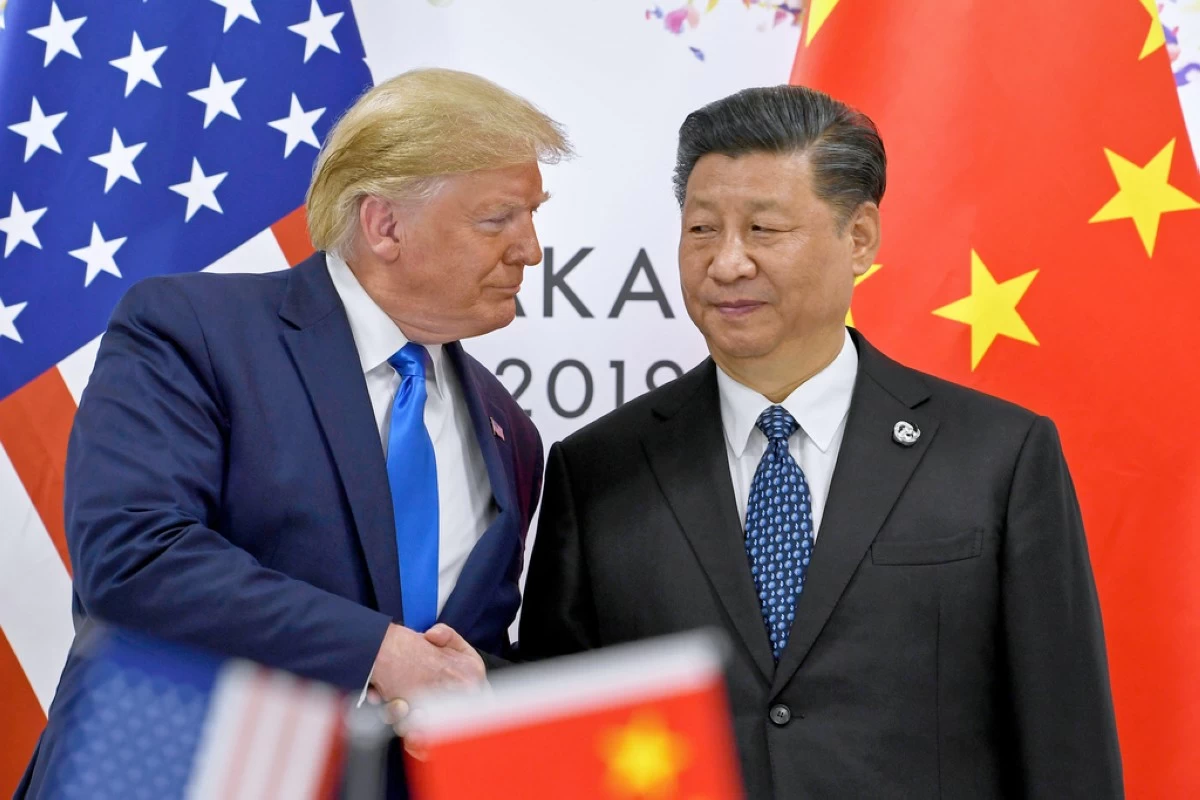
FILE - U.S. President Donald Trump, left, shakes hands with Chinese President Xi Jinping during a meeting on the sidelines of the G-20 summit in Osaka, western Japan,  June 29, 2019. (AP Photo/Susan Walsh, File)
FILE - U.S. President Donald Trump, left, shakes hands with Chinese President Xi Jinping during a meeting on the sidelines of the G-20 summit in Osaka, western Japan, June 29, 2019. (AP Photo/Susan Walsh, File)

BEIJING, China — The Asia-Pacific Economic Cooperation (APEC) Summit this year is expected to help settle differences between the economic powerhouses of China and the United States (US), as the regional bloc works to affirm an open trade policy, according to China National Committee for Pacific Economic Cooperation (PECC China).

PECC China secretary-general Liu Feitao said the upcoming APEC Summit is an appropriate venue for Beijing and Washington to stabilize their trade relationship amid an ongoing tit-for-tat standoff.

“The US needs China. And to my understanding, China needs the US,” Liu said in a media forum at China Institute of International Studies here.

Since assuming his second term early last year, US President Donald Trump has pivoted America’s trade policy toward protectionism as he seeks to shield domestic industries from trade relationships he deems unfair.

Through his so-called reciprocal tariffs, Trump moved to impose higher taxes on foreign goods, affecting the majority of the US’ trading partners, including the Philippines.

Building on the trade war during Trump’s first term, China was slapped with these tariffs, in addition to other measures that explicitly targeted trade with the Asian giant to address trade imbalances.

China, in response, imposed its own set of tariffs and market restrictions targeting American products.

A study by the US Congress estimated that the US’ average tariff rates on Chinese goods were about 34 percent, while China implemented around 31 percent tariffs on American goods as of Feb. 20.

As both China and the US work to find common ground, highlighted by next month’s meeting between Trump and Chinese President Xi Jinping, the APEC Summit in November is expected to serve as a key platform to push and implement these potential shifts.

PECC China deputy director He Xilin said APEC is one of the few major global groups where the US and China can directly interact and cooperate to promote common goals and address both bilateral and multilateral concerns.

“I think the economies of this region mainly want China and US to cooperate with each other,” said He.

“We want to cooperate with the US to settle all the issues. It is good for China and US to cooperate for the two countries themselves, also the region and also the world,” she added.

The push to address differences between the world’s two largest economies comes as China advances an open trade policy within the APEC region.

To achieve this, China is aiming to make significant progress on the long-awaited Free Trade Area of the Asia-Pacific (FTAAP), which seeks to liberalize trade among the 21 member economies of APEC.

Meanwhile, Xu Kaiyang of China Foreign Affairs University (CFAU) said APEC can also serve as a venue for countries affected by US tariff policies to directly express their concerns in hopes of finding appropriate solutions.

To ensure every concern is heard, Xu said China is open to acting as a mediator to help establish consensus between developing countries and the US.

Related Tags

Asia-Pacific Economic Cooperation (APEC) Xi Jinping Donald Trump United States (US) tariffs Free Trade Area of the Asia Pacific (FTAAP)
ADVERTISEMENT
.most-popular .layout-ratio{ padding-bottom: 79.13%; } @media (min-width: 768px) and (max-width: 1024px) { .widget-title { font-size: 15px !important; } }

{{ articles_filter_1561_widget.title }}

.most-popular .layout-ratio{ padding-bottom: 79.13%; } @media (min-width: 768px) and (max-width: 1024px) { .widget-title { font-size: 15px !important; } }

{{ articles_filter_1562_widget.title }}

.most-popular .layout-ratio{ padding-bottom: 79.13%; } @media (min-width: 768px) and (max-width: 1024px) { .widget-title { font-size: 15px !important; } }

{{ articles_filter_1563_widget.title }}

{{ articles_filter_1564_widget.title }}

.mb-article-details { position: relative; } .mb-article-details .article-body-preview, .mb-article-details .article-body-summary{ font-size: 17px; line-height: 30px; font-family: "Libre Caslon Text", serif; color: #000; } .mb-article-details .article-body-preview iframe , .mb-article-details .article-body-summary iframe{ width: 100%; margin: auto; } .read-more-background { background: linear-gradient(180deg, color(display-p3 1.000 1.000 1.000 / 0) 13.75%, color(display-p3 1.000 1.000 1.000 / 0.8) 30.79%, color(display-p3 1.000 1.000 1.000) 72.5%); position: absolute; height: 200px; width: 100%; bottom: 0; display: flex; justify-content: center; align-items: center; padding: 0; } .read-more-background a{ color: #000; } .read-more-btn { padding: 17px 45px; font-family: Inter; font-weight: 700; font-size: 18px; line-height: 16px; text-align: center; vertical-align: middle; border: 1px solid black; background-color: white; } .hidden { display: none; }
function initializeAllSwipers() { // Get all hidden inputs with cms_article_id document.querySelectorAll('[id^="cms_article_id_"]').forEach(function (input) { const cmsArticleId = input.value; const articleSelector = '#article-' + cmsArticleId + ' .body_images'; const swiperElement = document.querySelector(articleSelector); if (swiperElement && !swiperElement.classList.contains('swiper-initialized')) { new Swiper(articleSelector, { loop: true, pagination: false, navigation: { nextEl: '#article-' + cmsArticleId + ' .swiper-button-next', prevEl: '#article-' + cmsArticleId + ' .swiper-button-prev', }, }); } }); } setTimeout(initializeAllSwipers, 3000); const intersectionObserver = new IntersectionObserver( (entries) => { entries.forEach((entry) => { if (entry.isIntersecting) { const newUrl = entry.target.getAttribute("data-url"); if (newUrl) { history.pushState(null, null, newUrl); let article = entry.target; // Extract metadata const author = article.querySelector('.author-section').textContent.replace('By', '').trim(); const section = article.querySelector('.section-info ').textContent.replace(' ', ' '); const title = article.querySelector('.article-title h1').textContent; // Parse URL for Chartbeat path format const parsedUrl = new URL(newUrl, window.location.origin); const cleanUrl = parsedUrl.host + parsedUrl.pathname; // Update Chartbeat configuration if (typeof window._sf_async_config !== 'undefined') { window._sf_async_config.path = cleanUrl; window._sf_async_config.sections = section; window._sf_async_config.authors = author; } // Track virtual page view with Chartbeat if (typeof pSUPERFLY !== 'undefined' && typeof pSUPERFLY.virtualPage === 'function') { try { pSUPERFLY.virtualPage({ path: cleanUrl, title: title, sections: section, authors: author }); } catch (error) { console.error('ping error', error); } } // Optional: Update document title if (title && title !== document.title) { document.title = title; } } } }); }, { threshold: 0.1 } ); function showArticleBody(button) { const article = button.closest("article"); const summary = article.querySelector(".article-body-summary"); const body = article.querySelector(".article-body-preview"); const readMoreSection = article.querySelector(".read-more-background"); // Hide summary and read-more section summary.style.display = "none"; readMoreSection.style.display = "none"; // Show the full article body body.classList.remove("hidden"); } document.addEventListener("DOMContentLoaded", () => { let loadCount = 0; // Track how many times articles are loaded const offset = [1, 2, 3, 4, 5, 6, 7, 8, 9, 10]; // Offset values const currentUrl = window.location.pathname.substring(1); let isLoading = false; // Prevent multiple calls if (!currentUrl) { console.log("Current URL is invalid."); return; } const sentinel = document.getElementById("load-more-sentinel"); if (!sentinel) { console.log("Sentinel element not found."); return; } function isSentinelVisible() { const rect = sentinel.getBoundingClientRect(); return ( rect.top < window.innerHeight && rect.bottom >= 0 ); } function onScroll() { if (isLoading) return; if (isSentinelVisible()) { if (loadCount >= offset.length) { console.log("Maximum load attempts reached."); window.removeEventListener("scroll", onScroll); return; } isLoading = true; const currentOffset = offset[loadCount]; window.loadMoreItems().then(() => { let article = document.querySelector('#widget_1690 > div:nth-last-of-type(2) article'); intersectionObserver.observe(article) loadCount++; }).catch(error => { console.error("Error loading more items:", error); }).finally(() => { isLoading = false; }); } } window.addEventListener("scroll", onScroll); });

Sign up by email to receive news.