







US, Philippines pick New Clark City for 4,000-acre tech zone
By Derco Rosal
Published Apr 20, 2026 03:30 pm


At A Glance
- New Clark City in Tarlac has been identified by the United States (US) and the Philippines as the site for a planned 4,000-acre technology economic zone aimed at enhancing American and global supply chains, Manila Bulletin has learned from a top economic official.
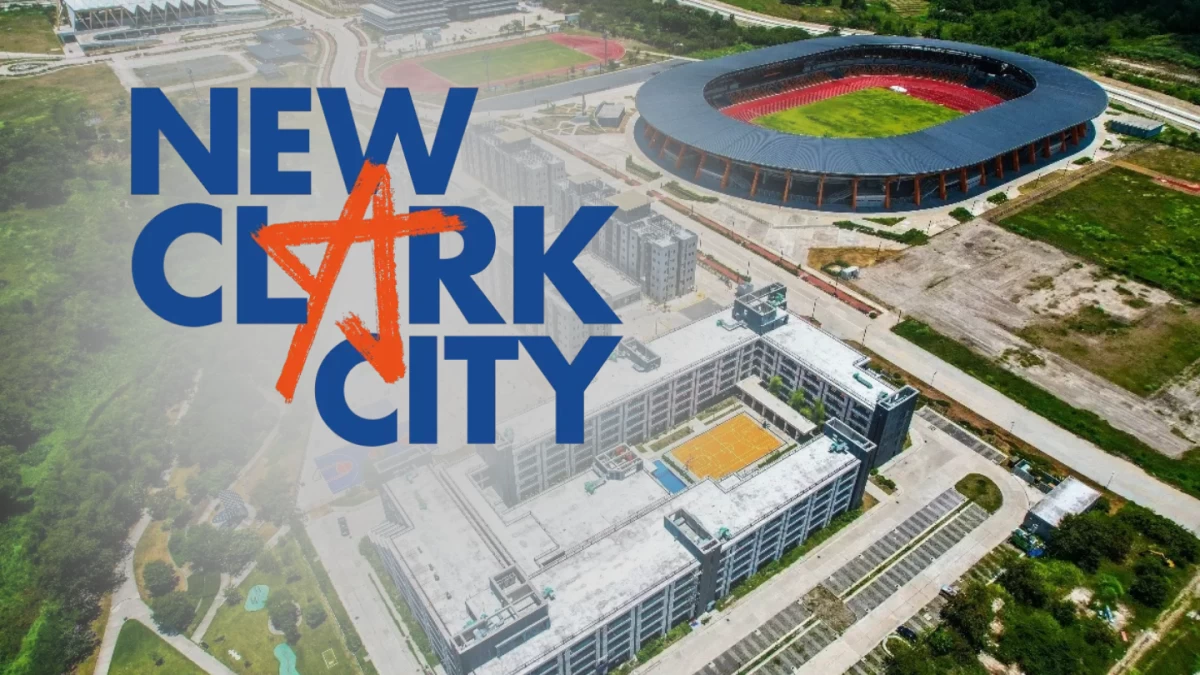
The United States (US) and the Philippines have selected New Clark City in Tarlac as the site for a 4,000-acre technology economic zone in efforts to rewire global supply chains away from Chinese dominance.
Frederick D. Go, who also serves as the country’s investment czar, told Manila Bulletin on Monday, April 20, that the first AI-native industrial acceleration hub under the landmark US–Philippines deal will soon be established in New Clark City within the Luzon Economic Corridor.
Developed under the Pax Silica Initiative, the hub will host industrial facilities for critical minerals processing, semiconductors, advanced manufacturing, and AI.
The Pax Silica Initiative is a network of trusted partners that aims to establish a transparent global governance framework for secure, resilient, and innovation-driven silicon supply chains, covering critical minerals, semiconductors, advanced manufacturing, and artificial intelligence.
This initiative also seeks to build “a genuine system capable of competing with—and ultimately displacing—the concentrated supply chains on which the world currently depends.”
In an April 20 statement, Go described the deal as a major step toward elevating the Philippines’ role in global trade and technology ecosystems.
“The Philippines is ensuring that our mineral resources and strategic location are not simply supporting global industries from the margins but are actively harnessed to build the industries of the future,” he said.
Similarly, Trade and Industry Secretary Ma. Cristina A. Roque said the planned hub will bolster the country’s semiconductor and electronics roadmap by linking its critical minerals advantage with existing industry strengths and opening opportunities for higher-value, advanced manufacturing.
Roque noted that the Philippines is “already a vital player in the global electronics and semiconductor value chain.” As such, the project would be a significant accelerator of the country’s exports, in volume, value, and relevance.
Additionally, Bases Conversion and Development Authority (BCDA) President and Chief Executive Officer (CEO) Joshua M. Bingcang noted that the hub's central focus is the Filipino workforce.
“We will put the Philippines at the center of the global AI supply chain, not at its edges,” Bingcang said.
As reported by the Manila Bulletin last Friday, this bilateral initiative mirrors a “growing geopolitical consensus that economic security is national security and national security is economic security.”
Apart from securing inputs “vital to American and global supply chains,” the tech zone is also designed to serve as a “staging point for a purpose-built platform for allied manufacturing.”
Moreover, the hub was said to form part of Washington’s plan to “reduce reliance on China-dominated supply chains” and give US firms access to critical inputs “outside Beijing’s control.”
According to the US State Department, the site will leverage the Philippines’ reserves of key minerals, including nickel, copper, chromite, and cobalt, which are increasingly critical to global supply chains.
It added that the Luzon hub is intended to be the first in a wider network of Economic Security Zones across several continents, linking manufacturing sites, logistics routes, and financing tools among partner economies.
Such joint governance frameworks are aimed at ensuring firm “sovereign alignment and shared upside as it scales.”
In 2024, the Philippines accounted for more than a quarter of global nickel exports, supported by reserves estimated at 444 million metric tons.
Further, the country’s mineral exports climbed from $6.20 billion in 2024 to $7.62 billion in 2025. The hub is expected to support further domestic processing and value addition of these resources.
According to the Board of Investments (BOI), the country’s appeal as an investment destination would increase with this initiative. The US was the top source of foreign direct investments (FDI) as of end-October 2025, with inflows surging 91 percent to $162.9 million.