






 Philippines
National
PBBM inspects service contracting rollout in Cubao, backs continued transport aid
Philippines
National
PBBM inspects service contracting rollout in Cubao, backs continued transport aid
PBBM inspects service contracting rollout in Cubao, backs continued transport aid


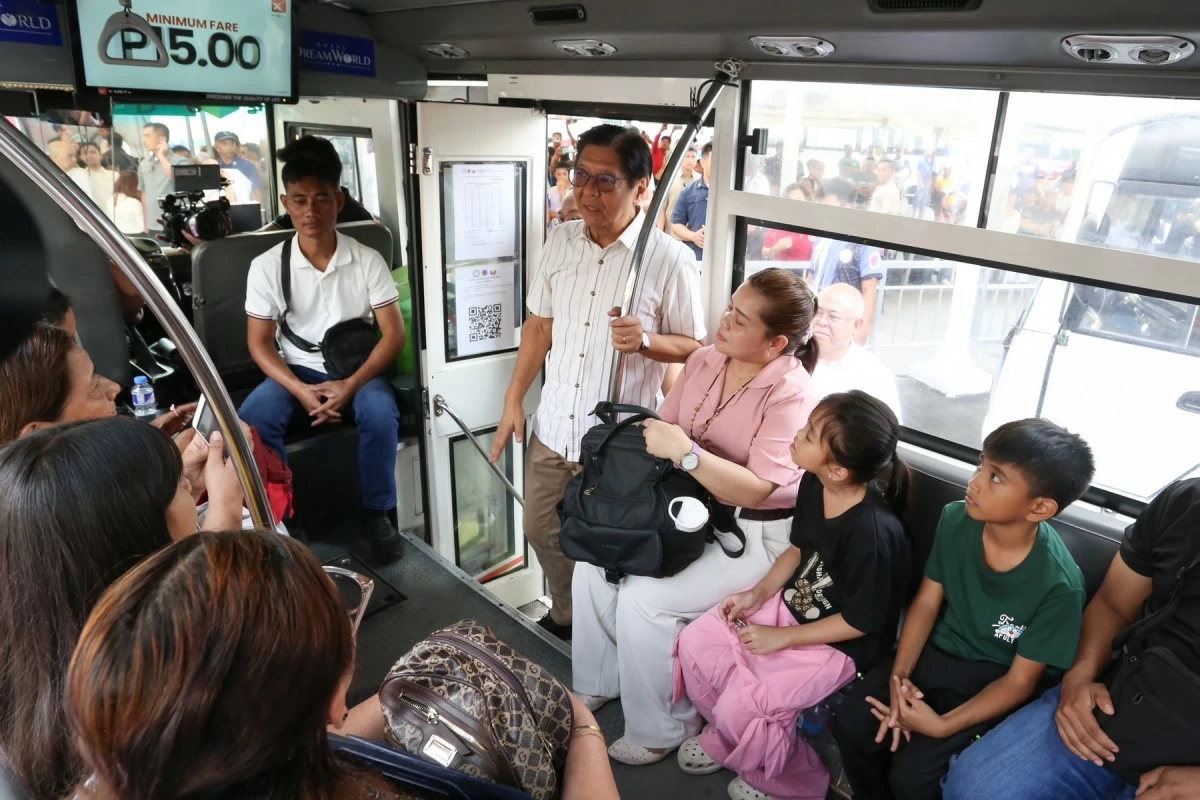
President Marcos inspected the implementation of the government’s service contracting program for public transport in Cubao, Quezon City, as he reaffirmed continued assistance for both drivers and commuters amid high fuel prices.
The President, on Monday, April 20, visited the Araneta Center Bus Terminal to check the rollout of the Department of Transportation’s (DOTr) Service Contracting Program (SCP).
“’Yung mga operator, ‘yung mga driver, pati na ‘yung mga pasahero… patuloy ang tulong ng pamahalaan (Operators, drivers, and passengers… government assistance will continue),” he said in an interview following the inspection.
Marcos said the program is designed to help transport operators and drivers cope with rising fuel costs while easing the burden on passengers through fare discounts.
He stressed that both sides of the transport sector must be supported.
During the visit, Marcos was briefed by DOTr Acting Secretary Giovanni Lopez and Land Transportation Franchising and Regulatory Board Chairman Vigor Mendoza II.
He inspected electronic jeepneys enrolled in the program and checked compliance requirements such as fare matrices and program markings.
The President also interacted with passengers benefiting from discounted fares.
Preventing transport disruption
The President noted that high fuel prices have reduced drivers’ income, forcing some to stop operating.
“Kung hindi na sila kumikita… hindi na sila lalabas (If they are no longer earning… they will stop operating),” he said.
He warned that this could lead to fewer vehicles on the road and inconvenience for commuters.
Ordered solutions
Marcos directed the DOTr to find ways to sustain public utility vehicle (PUV) operations while protecting commuters from fare increases.
He also ordered agencies to expedite financial assistance for affected transport workers.
How SCP works
Under the program, operators and drivers are paid based on kilometers traveled, regardless of passenger load.
The initiative is part of the broader Public Utility Vehicle Modernization Program (PUVMP).
It aims to ensure stable income for drivers, maintain transport availability, and provide fare discounts.
The SCP covers hundreds of routes nationwide, including major corridors in Metro Manila and nearby provinces, as well as routes in Metro Davao and Cagayan de Oro.
It also supports feeder routes connected to rail systems and high-demand transport corridors.
The program is currently funded with P800 million under the 2026 national budget and is set to run for about two weeks.
The DOTr is seeking an additional P5 billion to extend the program’s implementation until July.
Response to oil crisis
The rollout comes as the transport sector faces challenges from rising fuel prices linked to the Middle East conflict.
These include reduced earnings for drivers, fewer operating vehicles, and the risk of higher fares.
Marcos said the government will continue to monitor the program’s implementation to ensure that assistance reaches intended beneficiaries.
He reiterated that sustaining transport operations while protecting commuters remains a priority amid the ongoing oil crisis.