ADVERTISEMENT

Oil prices rise anew after a US-Iran standoff in the Strait of Hormuz strands tankers

Published Apr 20, 2026 06:29 am
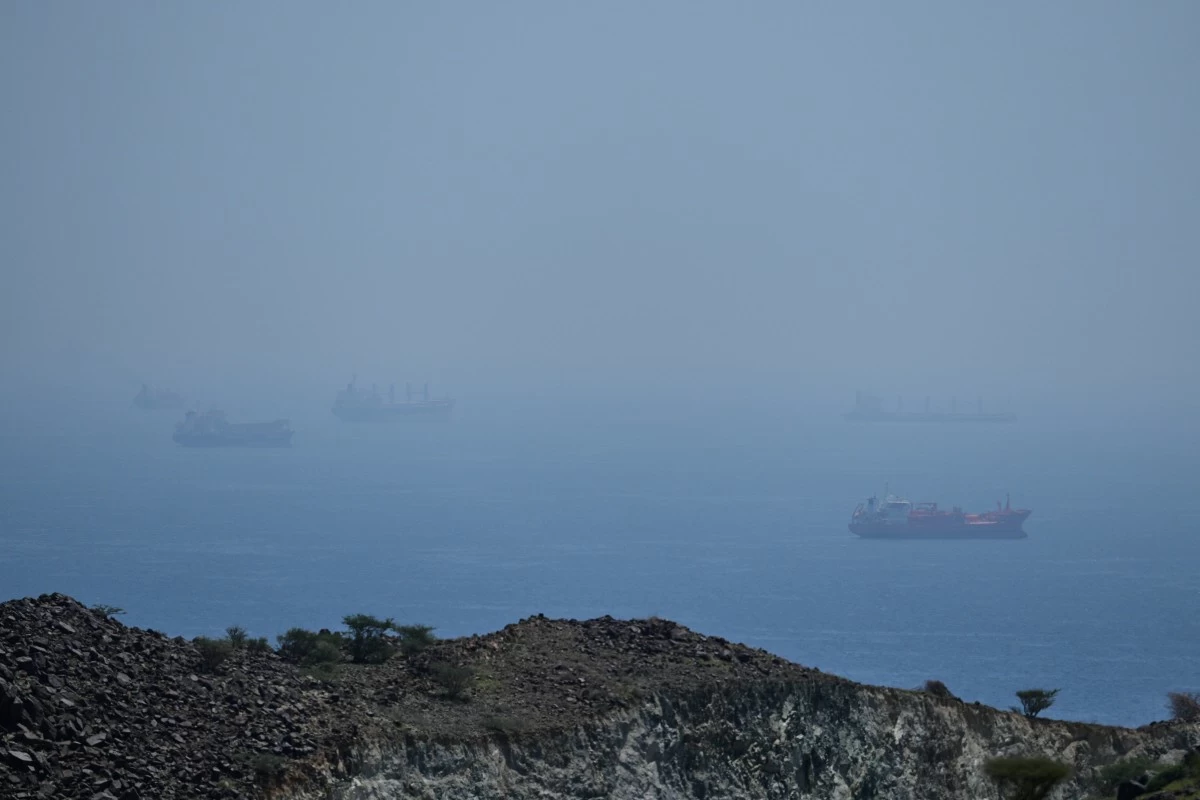
Tankers and bulk carriers anchored in the Strait of Hormuz, Saturday, April 18, 2026. (AP Photo)
NEW YORK (AP) — Oil prices rose in early trading Sunday as a standoff between Iran and the U.S. prevented tankers from using the Strait of Hormuz, the Persian Gulf waterway that is crucial to global energy supplies.
The price of U.S. crude oil increased 6.4% to $87.88 per barrel after trading resumed on the Chicago Mercantile Exchange. The price of Brent crude, the international standard, climbed 6.5% to $96.25 per barrel.
The market reaction followed more than two days of growing hopes and dashed expectations involving the strait. Iran, which effectively controls the passage, said Friday that it would fully reopen the passage off its coast to commercial traffic. Crude prices plunged more than 9% on the news.
Tehran reversed its decision on Saturday, after President Donald Trump said a U.S. Navy blockade of Iranian ports would remain in effect. Over the weekend, Iran’s Revolutionary Guard fired on several vessels. Trump reported the forcible seizure of an Iranian-flagged cargo ship that tried to get around the blockade.
The US-Israeli war against Iran, now in its eighth week, has created one of the worst global energy crises in decades. Countries in Asia and Europe that import much of their oil from the Middle East have felt the most impact of halted supplies and production cuts, although rapidly rising gasoline, diesel and jet fuel prices are affecting businesses and consumers worldwide.
Asked when he thought U.S. motorists would again see gas cost less than $3 a gallon on average, Energy Secretary Chris Wright said prices at the pump might not go down that much until next year.
“But prices have likely peaked, and they’ll start going down,” Wright told CNN’s “State of the Union” on Sunday.
The price of crude oil — the main ingredient in gasoline — has fluctated dramatically since the U.S. and Israel attacked Iran on Feb. 28, and as Iran retaliated with airstrikes on other Gulf states. Crude traded at roughly $70 a barrel before the conflict, spiked to more than $119 at times, and previously closed Friday at $82.59 for U.S. oil and $90.38 for Brent.
Industry analysts have repeatedly warned that the longer the strait is closed, the worse prices could get.
A fragile, two-week ceasefire between the U.S. and Iran is set to expire Wednesday, while escalating tensions in the Strait of Hormuz puts the fate of new talks to end the war into question.
Even if a lasting deal to reopen the Strait of Hormuz emerges, analysts say it could take months for oil shipments to return to normal levels and for fuel prices to go down. Backed-up tanker traffic, shipowners concerned about another sudden escalation, and energy infrastructure damaged during the war are factors that could impede production and shipment volumes from returning to pre-war levels.
A gallon of regular gas cost an average of nearly $4.05 a gallon in the U.S. on Sunday, according to motor club federation AAA. That’s about 8 cents lower than a week ago, but far higher than $2.98 before the war.

Related Tags

world news Iran war OIL CRISIS
ADVERTISEMENT
.most-popular .layout-ratio{ padding-bottom: 79.13%; } @media (min-width: 768px) and (max-width: 1024px) { .widget-title { font-size: 15px !important; } }

{{ articles_filter_1561_widget.title }}

.most-popular .layout-ratio{ padding-bottom: 79.13%; } @media (min-width: 768px) and (max-width: 1024px) { .widget-title { font-size: 15px !important; } }

{{ articles_filter_1562_widget.title }}

.most-popular .layout-ratio{ padding-bottom: 79.13%; } @media (min-width: 768px) and (max-width: 1024px) { .widget-title { font-size: 15px !important; } }

{{ articles_filter_1563_widget.title }}

{{ articles_filter_1564_widget.title }}

.mb-article-details { position: relative; } .mb-article-details .article-body-preview, .mb-article-details .article-body-summary{ font-size: 17px; line-height: 30px; font-family: "Libre Caslon Text", serif; color: #000; } .mb-article-details .article-body-preview iframe , .mb-article-details .article-body-summary iframe{ width: 100%; margin: auto; } .read-more-background { background: linear-gradient(180deg, color(display-p3 1.000 1.000 1.000 / 0) 13.75%, color(display-p3 1.000 1.000 1.000 / 0.8) 30.79%, color(display-p3 1.000 1.000 1.000) 72.5%); position: absolute; height: 200px; width: 100%; bottom: 0; display: flex; justify-content: center; align-items: center; padding: 0; } .read-more-background a{ color: #000; } .read-more-btn { padding: 17px 45px; font-family: Inter; font-weight: 700; font-size: 18px; line-height: 16px; text-align: center; vertical-align: middle; border: 1px solid black; background-color: white; } .hidden { display: none; }
function initializeAllSwipers() { // Get all hidden inputs with cms_article_id document.querySelectorAll('[id^="cms_article_id_"]').forEach(function (input) { const cmsArticleId = input.value; const articleSelector = '#article-' + cmsArticleId + ' .body_images'; const swiperElement = document.querySelector(articleSelector); if (swiperElement && !swiperElement.classList.contains('swiper-initialized')) { new Swiper(articleSelector, { loop: true, pagination: false, navigation: { nextEl: '#article-' + cmsArticleId + ' .swiper-button-next', prevEl: '#article-' + cmsArticleId + ' .swiper-button-prev', }, }); } }); } setTimeout(initializeAllSwipers, 3000); const intersectionObserver = new IntersectionObserver( (entries) => { entries.forEach((entry) => { if (entry.isIntersecting) { const newUrl = entry.target.getAttribute("data-url"); if (newUrl) { history.pushState(null, null, newUrl); let article = entry.target; // Extract metadata const author = article.querySelector('.author-section').textContent.replace('By', '').trim(); const section = article.querySelector('.section-info ').textContent.replace(' ', ' '); const title = article.querySelector('.article-title h1').textContent; // Parse URL for Chartbeat path format const parsedUrl = new URL(newUrl, window.location.origin); const cleanUrl = parsedUrl.host + parsedUrl.pathname; // Update Chartbeat configuration if (typeof window._sf_async_config !== 'undefined') { window._sf_async_config.path = cleanUrl; window._sf_async_config.sections = section; window._sf_async_config.authors = author; } // Track virtual page view with Chartbeat if (typeof pSUPERFLY !== 'undefined' && typeof pSUPERFLY.virtualPage === 'function') { try { pSUPERFLY.virtualPage({ path: cleanUrl, title: title, sections: section, authors: author }); } catch (error) { console.error('ping error', error); } } // Optional: Update document title if (title && title !== document.title) { document.title = title; } } } }); }, { threshold: 0.1 } ); function showArticleBody(button) { const article = button.closest("article"); const summary = article.querySelector(".article-body-summary"); const body = article.querySelector(".article-body-preview"); const readMoreSection = article.querySelector(".read-more-background"); // Hide summary and read-more section summary.style.display = "none"; readMoreSection.style.display = "none"; // Show the full article body body.classList.remove("hidden"); } document.addEventListener("DOMContentLoaded", () => { let loadCount = 0; // Track how many times articles are loaded const offset = [1, 2, 3, 4, 5, 6, 7, 8, 9, 10]; // Offset values const currentUrl = window.location.pathname.substring(1); let isLoading = false; // Prevent multiple calls if (!currentUrl) { console.log("Current URL is invalid."); return; } const sentinel = document.getElementById("load-more-sentinel"); if (!sentinel) { console.log("Sentinel element not found."); return; } function isSentinelVisible() { const rect = sentinel.getBoundingClientRect(); return ( rect.top < window.innerHeight && rect.bottom >= 0 ); } function onScroll() { if (isLoading) return; if (isSentinelVisible()) { if (loadCount >= offset.length) { console.log("Maximum load attempts reached."); window.removeEventListener("scroll", onScroll); return; } isLoading = true; const currentOffset = offset[loadCount]; window.loadMoreItems().then(() => { let article = document.querySelector('#widget_1690 > div:nth-last-of-type(2) article'); intersectionObserver.observe(article) loadCount++; }).catch(error => { console.error("Error loading more items:", error); }).finally(() => { isLoading = false; }); } } window.addEventListener("scroll", onScroll); });

Sign up by email to receive news.