ADVERTISEMENT

Multilateral development banks push critical minerals cooperation

Published Apr 20, 2026 12:00 am  |  Updated Apr 18, 2026 01:35 pm
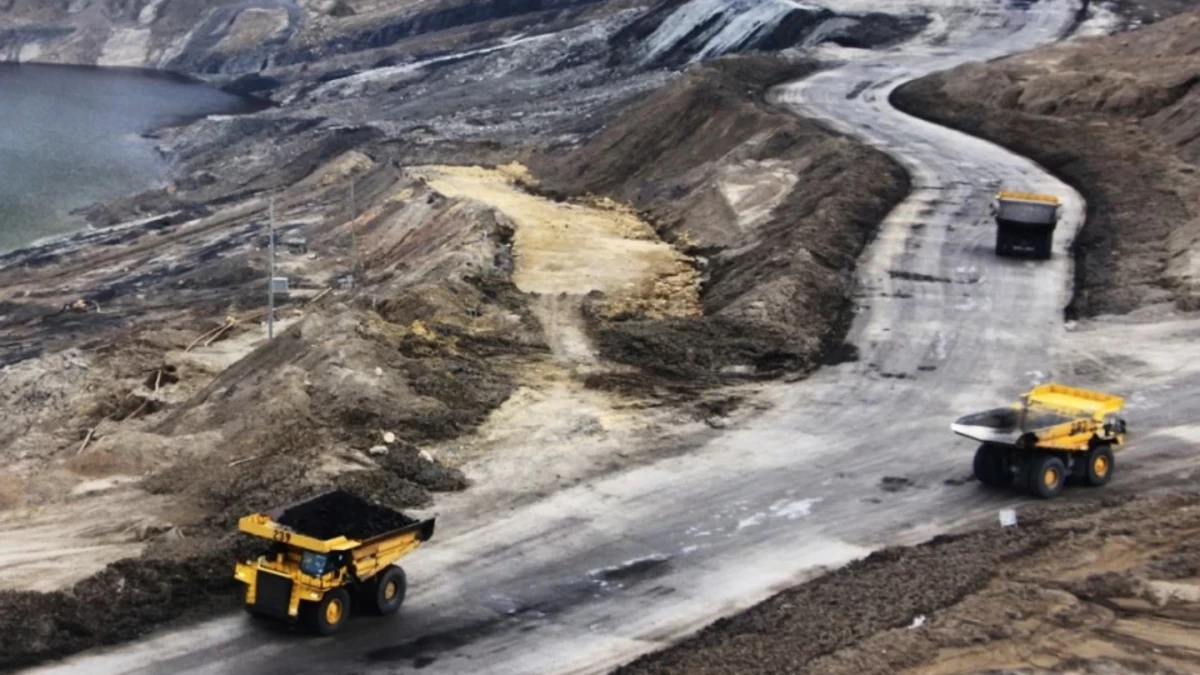
One of the coal pits of Semirara Mining and Power Corp. (SMPC), the country’s largest coal producer, is in Caluya town, Antique province. (Tara Yap I Manila Bulletin)

Six multilateral development banks (MDBs) have launched a coordinated push to develop critical mineral value chains, seeking to move resource-rich economies beyond raw material exports and into higher-value manufacturing as part of efforts to strengthen supply chain resilience.

In an April 17 joint statement, the six MDBs said they would deepen cooperation under a Joint Collaboration Framework to support “diversified, resilient, and responsible critical minerals to manufacturing value chains” across developing countries.

The initiative brings together the African Development Bank Group (AfDB), the Manila-based Asian Development Bank (ADB), the European Bank for Reconstruction and Development (EBRD), the European Investment Bank (EIB), the Inter-American Development Bank (IDB) Group, and the Washington-based World Bank Group (WBG).

Critical minerals are essential raw materials—such as nickel, cobalt, and lithium—used in clean energy technologies, electronics, and advanced manufacturing, whose supply is often vulnerable to disruption due to geographic concentration and rising global demand.
Nickel is one of the Philippines’ key mineral exports, with the country consistently ranking as the world’s second-largest producer after Indonesia and serving as a major supplier for global stainless steel and battery supply chains.

The six MDBs said they will work with governments, private-sector players, and communities to promote transparent, standards-based markets, expand processing and manufacturing capacity, and mobilize capital for projects aligned with environmental, social, and governance (ESG) standards.

Under the framework, the six MDBs will coordinate support in policy and regulatory reforms, infrastructure development, and capital mobilization, while exploring joint operations such as co-financing and shared diagnostics. Priority areas include strengthening legal and fiscal regimes, building transport and energy infrastructure linked to mineral corridors, and expanding value chains into processing, manufacturing, and recycling.

In a speech delivered the same day in Washington, DC, ADB president Masato Kanda highlighted the risks of concentrated supply chains and the need to capture greater economic value from mineral resources.

“Global vulnerability is exposed when the production of essential goods is concentrated. We see this clearly with critical minerals. They drive our clean energy and digital futures, yet these critical mineral supply chains remain fragile,” Kanda said.

He noted that developing economies often export raw materials without benefiting from downstream industries. “Too often, mineral-rich developing countries simply export raw ore, while missing opportunities for value addition, skilled employment, and broad industrial growth,” he said.

The six MDBs aim to address this gap by supporting integrated value chains spanning exploration, processing, manufacturing, recycling, and circularity, while helping countries attract investment and diversify supply sources.

Kanda said the six MDBs would focus on strengthening ESG standards, building regional processing ecosystems, and mobilizing financing at scale. “To build true supply chain resilience, we need competitive regional ecosystems that refine, recycle, and manufacture... Mineral wealth must foster long-term economic health, not just short-term exports,” he said.

He noted that private investors remain wary of critical mineral investments, prompting MDBs to reduce risks through a mix of concessional and commercial financing, guarantees, and strategic partnerships. Our shared goal is simple: We must turn national strategies into bankable projects.

He added that the six MDBs are working to scale up cooperation through the new framework. “Under the Heads of MDBs Working Group, we are developing a Joint Collaboration Framework to be completed by late 2026. We are embedding shared standards and deepening coordination to deliver tangible lighthouse projects,” Kanda said.

The six MDBs said they would pursue “urgent and results-focused engagement” with client countries and partners to accelerate the development of critical minerals value chains, with an emphasis on job creation, inclusive growth, and broader economic transformation.

Related Tags

Asian Development Bank (ADB) Masato Kanda World Bank Group (WBG) critical minerals
ADVERTISEMENT
.most-popular .layout-ratio{ padding-bottom: 79.13%; } @media (min-width: 768px) and (max-width: 1024px) { .widget-title { font-size: 15px !important; } }

{{ articles_filter_1561_widget.title }}

.most-popular .layout-ratio{ padding-bottom: 79.13%; } @media (min-width: 768px) and (max-width: 1024px) { .widget-title { font-size: 15px !important; } }

{{ articles_filter_1562_widget.title }}

.most-popular .layout-ratio{ padding-bottom: 79.13%; } @media (min-width: 768px) and (max-width: 1024px) { .widget-title { font-size: 15px !important; } }

{{ articles_filter_1563_widget.title }}

{{ articles_filter_1564_widget.title }}

.mb-article-details { position: relative; } .mb-article-details .article-body-preview, .mb-article-details .article-body-summary{ font-size: 17px; line-height: 30px; font-family: "Libre Caslon Text", serif; color: #000; } .mb-article-details .article-body-preview iframe , .mb-article-details .article-body-summary iframe{ width: 100%; margin: auto; } .read-more-background { background: linear-gradient(180deg, color(display-p3 1.000 1.000 1.000 / 0) 13.75%, color(display-p3 1.000 1.000 1.000 / 0.8) 30.79%, color(display-p3 1.000 1.000 1.000) 72.5%); position: absolute; height: 200px; width: 100%; bottom: 0; display: flex; justify-content: center; align-items: center; padding: 0; } .read-more-background a{ color: #000; } .read-more-btn { padding: 17px 45px; font-family: Inter; font-weight: 700; font-size: 18px; line-height: 16px; text-align: center; vertical-align: middle; border: 1px solid black; background-color: white; } .hidden { display: none; }
function initializeAllSwipers() { // Get all hidden inputs with cms_article_id document.querySelectorAll('[id^="cms_article_id_"]').forEach(function (input) { const cmsArticleId = input.value; const articleSelector = '#article-' + cmsArticleId + ' .body_images'; const swiperElement = document.querySelector(articleSelector); if (swiperElement && !swiperElement.classList.contains('swiper-initialized')) { new Swiper(articleSelector, { loop: true, pagination: false, navigation: { nextEl: '#article-' + cmsArticleId + ' .swiper-button-next', prevEl: '#article-' + cmsArticleId + ' .swiper-button-prev', }, }); } }); } setTimeout(initializeAllSwipers, 3000); const intersectionObserver = new IntersectionObserver( (entries) => { entries.forEach((entry) => { if (entry.isIntersecting) { const newUrl = entry.target.getAttribute("data-url"); if (newUrl) { history.pushState(null, null, newUrl); let article = entry.target; // Extract metadata const author = article.querySelector('.author-section').textContent.replace('By', '').trim(); const section = article.querySelector('.section-info ').textContent.replace(' ', ' '); const title = article.querySelector('.article-title h1').textContent; // Parse URL for Chartbeat path format const parsedUrl = new URL(newUrl, window.location.origin); const cleanUrl = parsedUrl.host + parsedUrl.pathname; // Update Chartbeat configuration if (typeof window._sf_async_config !== 'undefined') { window._sf_async_config.path = cleanUrl; window._sf_async_config.sections = section; window._sf_async_config.authors = author; } // Track virtual page view with Chartbeat if (typeof pSUPERFLY !== 'undefined' && typeof pSUPERFLY.virtualPage === 'function') { try { pSUPERFLY.virtualPage({ path: cleanUrl, title: title, sections: section, authors: author }); } catch (error) { console.error('ping error', error); } } // Optional: Update document title if (title && title !== document.title) { document.title = title; } } } }); }, { threshold: 0.1 } ); function showArticleBody(button) { const article = button.closest("article"); const summary = article.querySelector(".article-body-summary"); const body = article.querySelector(".article-body-preview"); const readMoreSection = article.querySelector(".read-more-background"); // Hide summary and read-more section summary.style.display = "none"; readMoreSection.style.display = "none"; // Show the full article body body.classList.remove("hidden"); } document.addEventListener("DOMContentLoaded", () => { let loadCount = 0; // Track how many times articles are loaded const offset = [1, 2, 3, 4, 5, 6, 7, 8, 9, 10]; // Offset values const currentUrl = window.location.pathname.substring(1); let isLoading = false; // Prevent multiple calls if (!currentUrl) { console.log("Current URL is invalid."); return; } const sentinel = document.getElementById("load-more-sentinel"); if (!sentinel) { console.log("Sentinel element not found."); return; } function isSentinelVisible() { const rect = sentinel.getBoundingClientRect(); return ( rect.top < window.innerHeight && rect.bottom >= 0 ); } function onScroll() { if (isLoading) return; if (isSentinelVisible()) { if (loadCount >= offset.length) { console.log("Maximum load attempts reached."); window.removeEventListener("scroll", onScroll); return; } isLoading = true; const currentOffset = offset[loadCount]; window.loadMoreItems().then(() => { let article = document.querySelector('#widget_1690 > div:nth-last-of-type(2) article'); intersectionObserver.observe(article) loadCount++; }).catch(error => { console.error("Error loading more items:", error); }).finally(() => { isLoading = false; }); } } window.addEventListener("scroll", onScroll); });

Sign up by email to receive news.