







LNI program: Community-driven peace and development
Published Apr 20, 2026 12:05 am
|
Updated Apr 19, 2026 03:56 pm


PEACE BY PEACE
Years ago, Basilan was a place I would have to think twice before sending our troops to battle. The threats from lawless elements were so high at that time that even our most experienced soldiers had to employ the strictest security protocols and countermeasures.
As a military commander stationed in the province, I was in the middle of this volatile situation. But amidst the intense firefights we were engaged in, I didn’t lose hope that someday, peace would dawn on this beautiful island-province.
On April 15, former Moro Islamic Liberation Front (MILF) combatants gathered at the Brgy. Matahalang Sampinit Complex to participate in a tree-planting activity and receive livelihood assistance to help rebuild their lives and support their families. This scene is a far cry from the past; historically, the Sampinit Complex was regarded as one of the deadliest environments for Philippine military forces due to the presence of the notorious Abu Sayyaf Group.
Holding seedlings in one hand and shovels in the other, these once grizzled fighters are a testament to the remarkable transformation that is taking place in Basilan, a realization of the long-time dream that I and the resilient people of this province had been yearning for.
However, this transformation did not come easy and happen overnight. It was the result of a long and painstaking process wherein local stakeholders had to make an iron-clad resolve to shed off the province’s conflict-ridden image and pursue the path of peace.
Through the Office of the Presidential Adviser on Peace, Reconciliation and Unity’s Localizing Normalization Implementation (LNI) Program, the government wants to ensure that peace and development interventions in Basilan are long-lasting and community-driven.
Under the LNI Program, the OPAPRU transferred a total of P9.4 million in funds to the Provincial Local Government of Basilan in 2025 to support the normalization process of 530 decommissioned MILF combatants and their next-of-kin.
To date, the program has provided P6,750,000 in livelihood support and P1,200,000 in emergency employment assistance to these former MILF combatants who are now making the transition as peaceful and productive members of their communities.
Aside from these, decommissioned combatants have already received P100,000 in immediate cash assistance. They were also given P50,000 in scholarship funds under the OPAPRU’s annual Educational Assistance Program (EAP) for their next-of-kin.
At the core of the LNI is its main objective to empower PLGUs to take the lead in the implementation of the program, as this is the most efficient and effective way to localize the Bangsamoro peace process, wherein no one is left behind.
Basilan Governor Mujiv Hataman, who was also the former regional governor of the then Autonomous Region in Muslim Mindanao (ARMM), clearly understands that development “must be sustained and not transactional.”
By this, the good governor means that government initiatives must be free from the trappings of politics, and ensure that the provision of support to former combatants is not a one-shot deal but should be a continuous, sustainable effort.
I have worked closely with Gov. Hataman during my days as a military officer and now as peace adviser, and I can say that he is among our local executives who best epitomizes the spirit of the LNI Program.
As the ex-governor of the ARMM and now the incumbent governor of Basilan, he has a firm grasp of the Bangsamoro region’s socio-economic dynamics, as well as his province’s socio-political landscape.
Gov. Hataman knew how to navigate the system, giving him and his team an advantage when the province signed a Memorandum of Agreement (MOA) in 2004 to become a pioneering adaptor of the LNI Program.
At the ceremony, Ariel Hernandez, Chairperson of the GPH-MILF Joint Normalization Committee, emphasized that the benefits of peace are felt the most when they are delivered directly to the heart of once conflict-affected areas.
“LNI’s interventions become more meaningful when they are done in the field, especially in former battlefields. This is not just symbolism but concrete action that reinforces the idea that transformation should begin in the areas where violent conflict began,” Hernandez said.
Today, the LNI has not only enabled the government to provide more focused livelihood initiatives to former MILF combatants, their families and communities, but it is also helping to write a new chapter in the lives of Basilan’s people.
The Basilan of today is now a far cry from what it was years ago. The province is now humming with business activity, as business establishments line the streets, new infrastructure is being built, and residents can walk the streets freely and safely.
But what is more evident is the transformation that is happening in the lives of former combatants. Giving up their rifles for ploughshares, fishnets and calculators, they are now living peaceful and productive lives, and building a better future for their families.
This is the promise of the Bangsamoro peace process that is now coming into fruition. May Basilan continue to serve as a shining example that a province has the power to re-write and chart the course of its history.
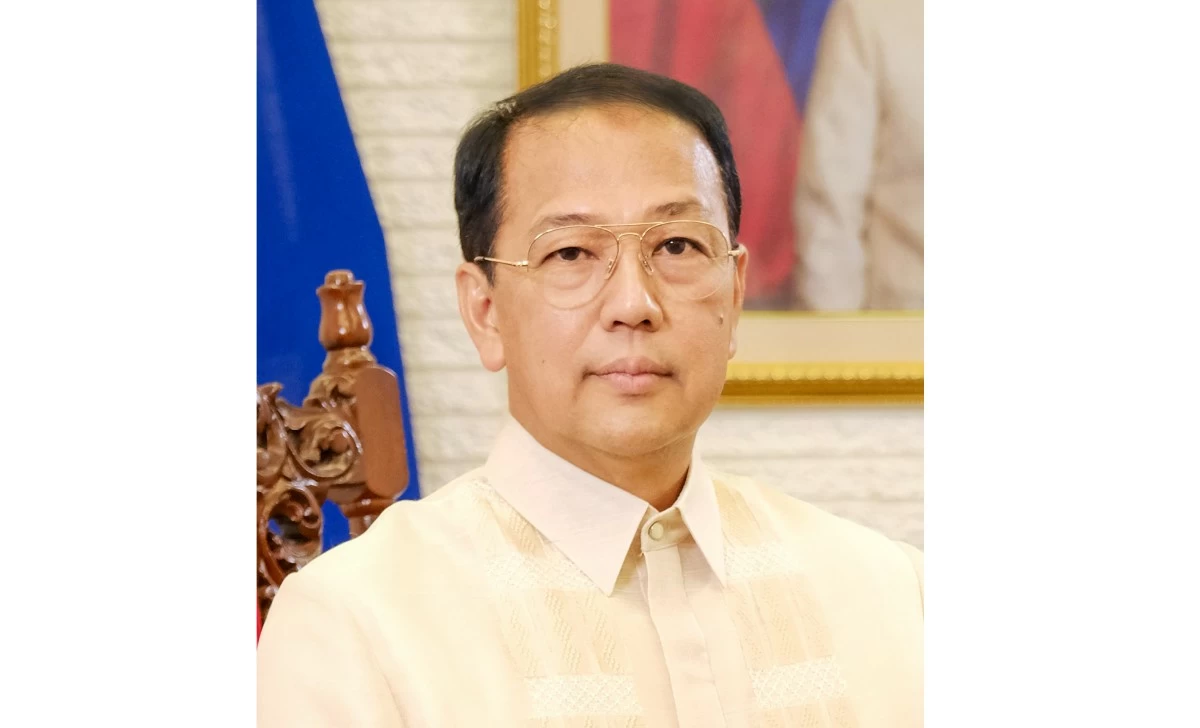
(Secretary Carlito G. Galvez, Jr. is the presidential adviser on peace, reconciliation, and unity.)