






Manila Bulletin
 Philippines
National
'Huwag magpaloko': VP Sara warns public vs messaging app impostor, urges vigilance against scammers
Philippines
National
'Huwag magpaloko': VP Sara warns public vs messaging app impostor, urges vigilance against scammers
Philippines
National
'Huwag magpaloko': VP Sara warns public vs messaging app impostor, urges vigilance against scammers
'Huwag magpaloko': VP Sara warns public vs messaging app impostor, urges vigilance against scammers
Duterte issues public alert after identity impersonation resurfaces online
Published Apr 20, 2026 02:40 pm


Vice President Sara Duterte warns the public against impostors using her identity on messaging apps and urges vigilance against online scams. (Photo from Inday Sara Duterte / Facebook)
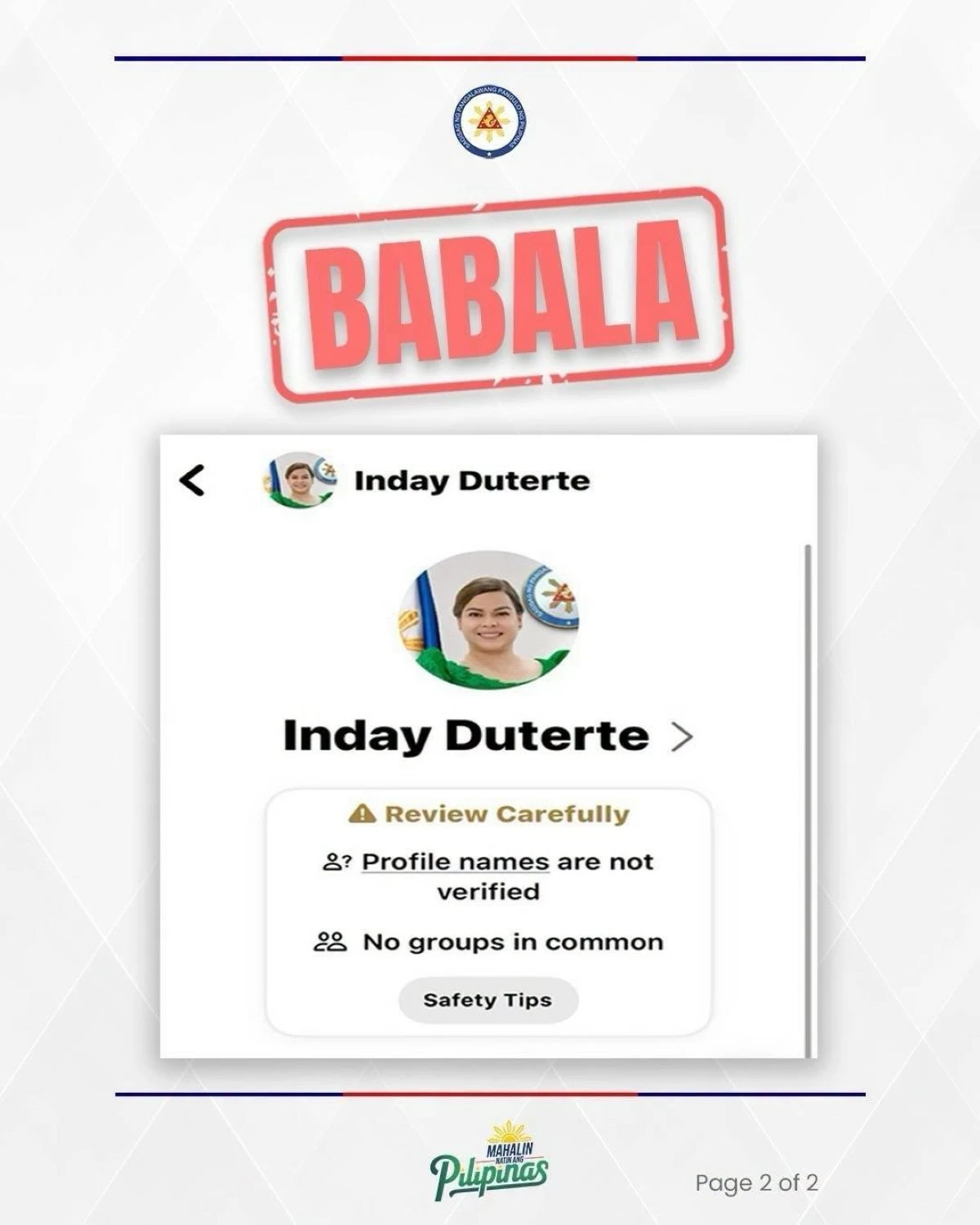
Vice President Sara Duterte has issued a fresh warning to the public after reports surfaced of an individual impersonating her on a messaging application, raising concerns over potential scams and identity fraud.
In a brief advisory dated April 18, Duterte said an impostor has once again emerged pretending to be her on a messaging platform, prompting renewed calls for vigilance among the public.
“Mayroon na namang lumutang na isang indibidwal na nagpapakilala bilang ako sa isang messaging app (Once again, an individual has surfaced on a messaging app, claiming to be me),” Duterte said.
Following this, the Vice President urged Filipinos to exercise caution when communicating via messaging apps and to avoid sharing personal or sensitive information with unverified contacts.
“Muli, pinapaalalahanan ko ang publiko na maging maingat sa mga kausap sa anumang messaging app at huwag basta-basta magbigay ng mga impormasyon. (Once again, I remind the public to be cautious when engaging with anyone on any messaging app and to avoid giving out personal information carelessly),” she said.
Duterte also issued a direct warning against falling victim to fraudulent schemes, emphasizing the continued threat posed by online scammers.
“Huwag magpaloko sa mga scammer (Do not be deceived by scammers),” she added.
Rising threat of online impersonation
The latest warning underscores the growing prevalence of impersonation scams in the Philippines, where fraudsters exploit the identities of public officials and well-known personalities to deceive victims.
Cybersecurity experts have long cautioned that scammers often use fake profiles on messaging platforms to solicit money, personal data, or access to financial accounts. These schemes typically rely on urgency, authority, or familiarity to manipulate targets.
Authorities continue to remind the public to verify identities through official channels and report suspicious accounts to platform administrators or law enforcement agencies.