







How past CGPAs built a modern army
Published Apr 20, 2026 12:05 am
|
Updated Apr 19, 2026 04:07 pm


BARRACKS AND STRATEGY
In March 2026, the Philippine Army marked its 129th Founding Anniversary with a fellowship night at Ricarte Hall, where the Commanding General, Philippine Army (CGPA) delivered remarks that were both reflective and forward-leaning—honoring the institution’s living history while sharpening the Army’s direction toward a more modern, externally oriented defense posture.
A day earlier, on March 26, 2026, the Philippine Army formally commemorated its 129th Founding Anniversary with President Ferdinand R. Marcos Jr. as guest of honor and speaker. The occasion also highlighted institutional excellence, as distinguished and outstanding Army personnel received awards from the commander-in-chief himself. More than a ceremonial appearance, the President’s physical presence projected strength, energy, and confidence, reinforcing the importance of the event and the Army’s continuing role in national defense.
When the Philippine Army speaks today of becoming “world-class, multi-mission ready, cross-domain capable,” it is not speaking from ambition alone; it is speaking from inheritance. The most durable foundations of a modern Army were laid by past Commanding Generals of the Philippine Army (CGPAs)—leaders who steered the institution through shifting demands, difficult transitions, and the long work of professionalization, until the Army could stand credible not only in internal security tasks but also in the broader requirements of national defense. As the CGPA acknowledged in his anniversary remarks, former CGPAs are the “architects” who formed the building blocks of the modern Philippine Army and guided it across changing operational environments.
What made that legacy exceptional was not merely a list of reforms, but the quality of leadership that enabled those reforms to endure. The remarks highlight a leadership tradition anchored in character, mission focus, and the ability to inspire unwavering loyalty—qualities that translate into disciplined units, resilient organizations, and soldiers motivated by trust in their commanders. In a time when the information environment can amplify doubt as quickly as it amplifies achievement, that kind of leadership is strategic capital: it protects cohesion, strengthens institutional credibility, and reassures the public that the Army remains aligned with service to the Filipino people.
That continuity is also reflected in the leadership of the incumbent CGPA, Lieutenant General Antonio Nafarrete, whose professionalism and excellent leadership help sustain the standards set by his predecessors while guiding the Army through present demands. His steady command presence, disciplined example, and clear sense of mission project confidence across the organization, reinforcing a culture of accountability, competence, and service. In this sense, his leadership does not stand apart from the Army’s institutional legacy; it represents its living expression—showing how professional leadership remains essential to modernization, operational readiness, and public trust.
That same speech also makes clear that the Army’s center of gravity is shifting toward external defense realities, and that Public Affairs (PA)—often misunderstood as a purely “communications” function—now carries an operational burden in that shift. At least three major issues in the remarks point directly to PA’s expanding role in external defense.
First, the Army’s move into multi-domain and cross-domain thinking is not just a tactical evolution; it is also a public narrative challenge. The CGPA notes that today’s Army is “venturing into the realms of multi-domain operations,” a clear signal that external defense scenarios will be contested not only in physical spaces but also in perception, legitimacy, and public confidence. For PA, this means explaining complex defense activities in a way that ordinary Filipinos can understand and trust, so readiness is seen as protection, not provocation.
Second, the explicit emphasis on strengthening the territorial defense posture underscores that external defense is no longer abstract or distant. The speech states that the Army is “strengthening our territorial defense posture,” which elevates PA’s responsibility to communicate why posture, presence, and preparedness matter to people’s safety and daily life—especially in periods of tension when adversaries may attempt to frame defensive measures as escalatory. In external defense, the story is not simply one of “military activity,” but of community security: protecting sovereignty, safeguarding mobility and commerce, and preserving the conditions for normal life.
Third, the CGPA’s description of an environment where adversaries operate “within, along, and out of bounds” points to a modern threat picture in which influence, deception, and gray-zone pressure are persistent features. In such a landscape, PA becomes part of defense by helping the institution maintain coherence under stress—keeping messaging anchored in lawful conduct, professionalism, and the Army’s enduring values even as new technologies and strategies are adopted. The CGPA’s insistence that modernization remains anchored in honor, patriotism, and duty reinforces what PA must consistently project: that adaptation does not mean abandoning principle.
In the end, the anniversary remarks captured a quiet continuity: past CGPAs built an Army that can transform without losing itself. Their excellence is visible in an institution confident enough to modernize, and disciplined enough to stay rooted in values. As the Army moves deeper into external defense, Public Affairs becomes one of the bridges between capability and credibility—ensuring that national defense is not only carried out, but also understood, trusted, and supported by the people it exists to protect.
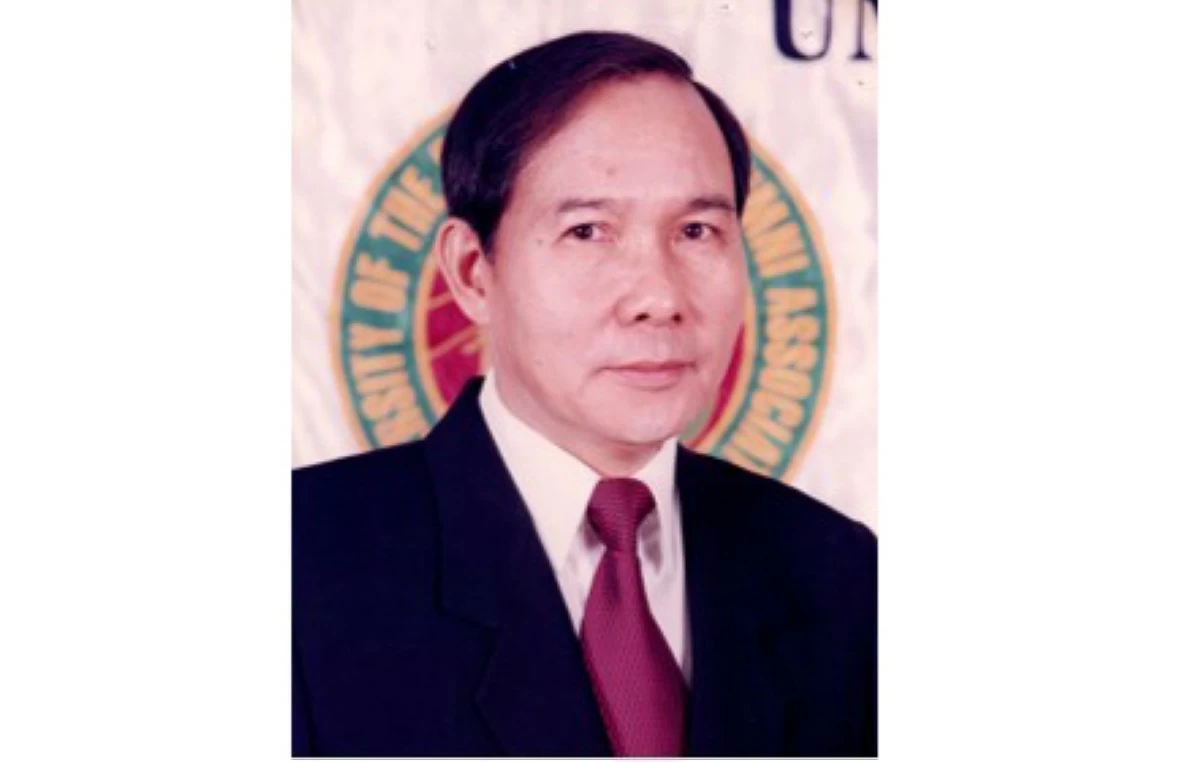
(Lt. Gen. Jaime S. de los Santos served with distinction as a military professional, 42nd Commanding Gen. Philippine Army, 1st Force Commander, UN Multi-National Peacekeeping Force in East Timor, former member, UP Board of Regents and Professorial Lecturer II (part-time), UP-Diliman.)