

ADVERTISEMENT

Fitch warns of potential Philippine credit rating downgrade

Published Apr 20, 2026 10:20 pm

At A Glance

  • Stalling public investments, compounded by vulnerability to the escalating impacts of the ongoing global energy shock, prompted Fitch Ratings to downgrade its 'stable' outlook for the Philippines' investment-grade status to 'negative.'
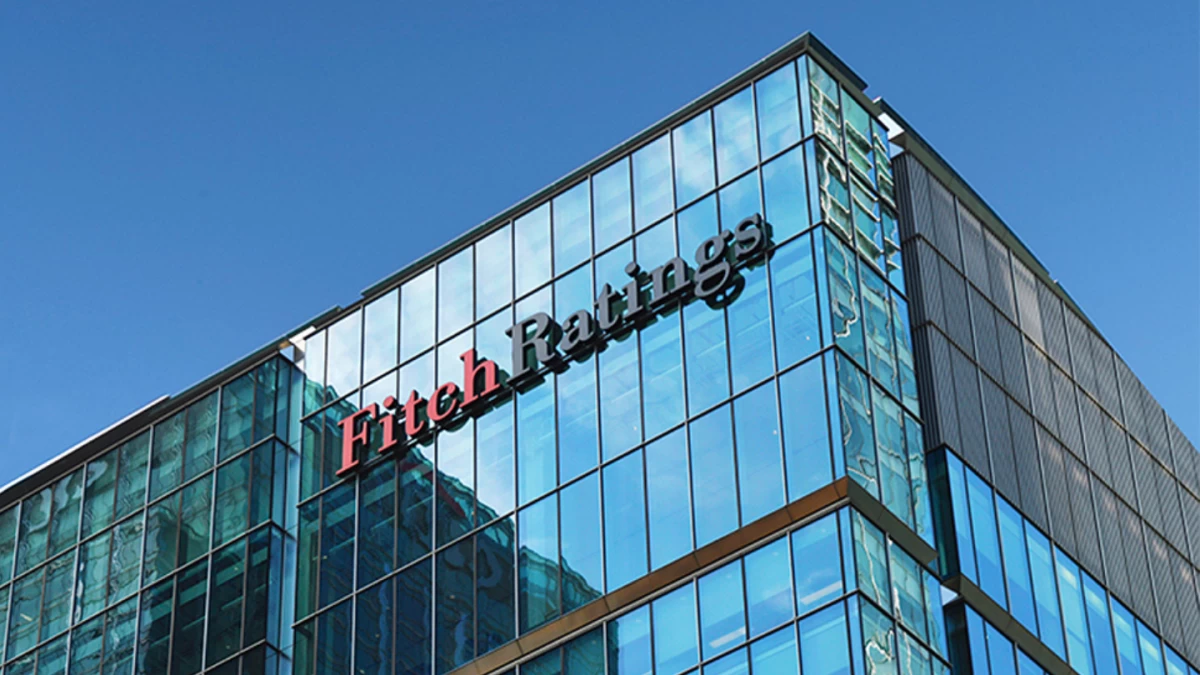
(Fitch Rating photo)

Stalling public investments, compounded by vulnerability to the escalating impacts of the ongoing global energy shock, prompted global debt watcher Fitch Ratings to downgrade its outlook on the Philippines’ investment-grade status from ‘stable’ to ‘negative.’

This shift in outlook places the Philippines at risk of a potential credit rating downgrade. For Fitch, a ‘negative’ outlook means there is a higher likelihood of a downgrade over a one- to two-year horizon if underlying risks persist or worsen.

If materialized, a rating downgrade would interrupt the Philippines' 20-year run of credit resilience. It would be the first such decline since 2005, a year defined by the fiscal instability and political turmoil of the Gloria Macapagal-Arroyo administration.
Since Fitch first elevated the Philippines to investment-grade status in 2013, the sovereign has utilized its ‘BBB’ rating to lower its international borrowing costs and secure steady influx of foreign investment.
Maintaining the ‘BBB’ rating tier is also considered vital for the government’s ability to fund large-scale infrastructure and social programs without incurring prohibitive debt-servicing expenses.

According to a rating action statement released on Monday, April 20, Fitch adopted a more cautious stance while maintaining the country’s ‘BBB’ investment-grade rating.

Fitch said it revised its outlook as, despite having favorable medium-term growth prospects, the Philippines faces mounting risks from “recent disruptions to public investment, exacerbated in the near term by elevated exposure to the ongoing global energy shock.”

The country’s exposure to the Middle East conflict has been linked to its near-total reliance on oil imports.

Meanwhile, Bangko Sentral ng Pilipinas (BSP) Governor Eli M. Remolona Jr., in a statement released on Monday night, said the economy “remains in a good position because growth is strong and banks are in good shape.”

He added that the BSP is closely monitoring the impact of elevated oil prices and Middle East tensions on consumer prices and the broader economy.

Fitch projected 2026 Philippine gross domestic product (GDP) growth at 4.6 percent, below its potential and government’s downscaled five- to six-percent target.

In 2025, Philippine economic growth slowed to 4.4 percent, a sharp easing from 5.7 percent in 2024. This moderation was largely driven by a collapse in infrastructure spending during the second half of 2025, following a probe into alleged graft linked to flood-control projects.

These disruptions have raised concerns that the “multipliers” typically generated by infrastructure spending will fade, as the government works to implement stricter, albeit slower, governance reforms.

Apart from import-related pressures, the Philippines also faces a potential decline in remittances from Filipinos in the region affected by the war, the credit rating agency said.

A tipping point in the ongoing crisis came in March, when the government declared a national energy emergency and rolled out urgent measures, including subsidies for public transport drivers, farmers, and vulnerable communities.

Even with these efforts, the economic toll is mounting. Fitch has forecast inflation to rise to 4.1 percent in 2026, a sharp increase from the below-target 1.7 percent in 2025. This price pressure is expected to weigh on private consumption, further dampening growth prospects.

“Consumers are absorbing the bulk of energy price increases, with the government providing targeted subsidies to vulnerable sectors. As such, effects on the credit profile are likely to come through lower GDP growth, higher inflation, and a rising current account deficit, with modest risks to public finances,” Fitch said.

Fitch also flagged the deteriorating external position, forecasting that the Philippines will become a net foreign debtor in 2026.

“Sustained current account deficits, especially since 2021, are being financed through long-term borrowing and FDI [foreign direct investments], but are gradually eroding the country’s external position, making it a net external debtor in 2026,” Fitch said.

This is expected even as the country’s foreign exchange (forex) reserves, in United States (US) dollar terms, remain sufficient to cover nearly seven months of external payments.

Fitch projected the Philippines’ current account deficit to widen to 3.8 percent of GDP from 3.3 percent last year, citing rising costs of goods imports.

On the fiscal side, Fitch warned that social pressures to increase spending amid the energy crisis could slow the government’s consolidation efforts.

Further, “charged domestic politics” adds a layer of uncertainty to the already unpredictable situation facing the Philippines. For one, the Marcos-Duterte political rift has been stirring the domestic market.

Vice President Sara Duterte currently faces an impeachment hearing after her 2025 impeachment was overturned on technical grounds.

While policy continuity has historically remained solid across administrations, Fitch said the current political friction and the deepening probe into fund misallocations pose risks to the economic environment.

To regain its ‘stable’ outlook, the Philippines must navigate a narrow path, requiring stronger confidence in medium-term growth, continued adherence to sound macroeconomic policies, and visible improvements in governance standards.

For now, the country faces the challenge of managing mounting fiscal and political pressures to avoid further strain on its credit profile.

Related Tags

Credit rating investments Energy crisis GDP Inflation fiscal consolidation
ADVERTISEMENT
.most-popular .layout-ratio{ padding-bottom: 79.13%; } @media (min-width: 768px) and (max-width: 1024px) { .widget-title { font-size: 15px !important; } }

{{ articles_filter_1561_widget.title }}

.most-popular .layout-ratio{ padding-bottom: 79.13%; } @media (min-width: 768px) and (max-width: 1024px) { .widget-title { font-size: 15px !important; } }

{{ articles_filter_1562_widget.title }}

.most-popular .layout-ratio{ padding-bottom: 79.13%; } @media (min-width: 768px) and (max-width: 1024px) { .widget-title { font-size: 15px !important; } }

{{ articles_filter_1563_widget.title }}

{{ articles_filter_1564_widget.title }}

.mb-article-details { position: relative; } .mb-article-details .article-body-preview, .mb-article-details .article-body-summary{ font-size: 17px; line-height: 30px; font-family: "Libre Caslon Text", serif; color: #000; } .mb-article-details .article-body-preview iframe , .mb-article-details .article-body-summary iframe{ width: 100%; margin: auto; } .read-more-background { background: linear-gradient(180deg, color(display-p3 1.000 1.000 1.000 / 0) 13.75%, color(display-p3 1.000 1.000 1.000 / 0.8) 30.79%, color(display-p3 1.000 1.000 1.000) 72.5%); position: absolute; height: 200px; width: 100%; bottom: 0; display: flex; justify-content: center; align-items: center; padding: 0; } .read-more-background a{ color: #000; } .read-more-btn { padding: 17px 45px; font-family: Inter; font-weight: 700; font-size: 18px; line-height: 16px; text-align: center; vertical-align: middle; border: 1px solid black; background-color: white; } .hidden { display: none; }
function initializeAllSwipers() { // Get all hidden inputs with cms_article_id document.querySelectorAll('[id^="cms_article_id_"]').forEach(function (input) { const cmsArticleId = input.value; const articleSelector = '#article-' + cmsArticleId + ' .body_images'; const swiperElement = document.querySelector(articleSelector); if (swiperElement && !swiperElement.classList.contains('swiper-initialized')) { new Swiper(articleSelector, { loop: true, pagination: false, navigation: { nextEl: '#article-' + cmsArticleId + ' .swiper-button-next', prevEl: '#article-' + cmsArticleId + ' .swiper-button-prev', }, }); } }); } setTimeout(initializeAllSwipers, 3000); const intersectionObserver = new IntersectionObserver( (entries) => { entries.forEach((entry) => { if (entry.isIntersecting) { const newUrl = entry.target.getAttribute("data-url"); if (newUrl) { history.pushState(null, null, newUrl); let article = entry.target; // Extract metadata const author = article.querySelector('.author-section').textContent.replace('By', '').trim(); const section = article.querySelector('.section-info ').textContent.replace(' ', ' '); const title = article.querySelector('.article-title h1').textContent; // Parse URL for Chartbeat path format const parsedUrl = new URL(newUrl, window.location.origin); const cleanUrl = parsedUrl.host + parsedUrl.pathname; // Update Chartbeat configuration if (typeof window._sf_async_config !== 'undefined') { window._sf_async_config.path = cleanUrl; window._sf_async_config.sections = section; window._sf_async_config.authors = author; } // Track virtual page view with Chartbeat if (typeof pSUPERFLY !== 'undefined' && typeof pSUPERFLY.virtualPage === 'function') { try { pSUPERFLY.virtualPage({ path: cleanUrl, title: title, sections: section, authors: author }); } catch (error) { console.error('ping error', error); } } // Optional: Update document title if (title && title !== document.title) { document.title = title; } } } }); }, { threshold: 0.1 } ); function showArticleBody(button) { const article = button.closest("article"); const summary = article.querySelector(".article-body-summary"); const body = article.querySelector(".article-body-preview"); const readMoreSection = article.querySelector(".read-more-background"); // Hide summary and read-more section summary.style.display = "none"; readMoreSection.style.display = "none"; // Show the full article body body.classList.remove("hidden"); } document.addEventListener("DOMContentLoaded", () => { let loadCount = 0; // Track how many times articles are loaded const offset = [1, 2, 3, 4, 5, 6, 7, 8, 9, 10]; // Offset values const currentUrl = window.location.pathname.substring(1); let isLoading = false; // Prevent multiple calls if (!currentUrl) { console.log("Current URL is invalid."); return; } const sentinel = document.getElementById("load-more-sentinel"); if (!sentinel) { console.log("Sentinel element not found."); return; } function isSentinelVisible() { const rect = sentinel.getBoundingClientRect(); return ( rect.top < window.innerHeight && rect.bottom >= 0 ); } function onScroll() { if (isLoading) return; if (isSentinelVisible()) { if (loadCount >= offset.length) { console.log("Maximum load attempts reached."); window.removeEventListener("scroll", onScroll); return; } isLoading = true; const currentOffset = offset[loadCount]; window.loadMoreItems().then(() => { let article = document.querySelector('#widget_1690 > div:nth-last-of-type(2) article'); intersectionObserver.observe(article) loadCount++; }).catch(error => { console.error("Error loading more items:", error); }).finally(() => { isLoading = false; }); } } window.addEventListener("scroll", onScroll); });

Sign up by email to receive news.