






Manila Bulletin
 Business
The Economy
DOF: Philippines needs flexible IMF-WB backstops as risks mount
Business
The Economy
DOF: Philippines needs flexible IMF-WB backstops as risks mount
Business
The Economy
DOF: Philippines needs flexible IMF-WB backstops as risks mount
DOF: Philippines needs flexible IMF-WB backstops as risks mount
By Derco Rosal
Published Apr 20, 2026 10:22 am


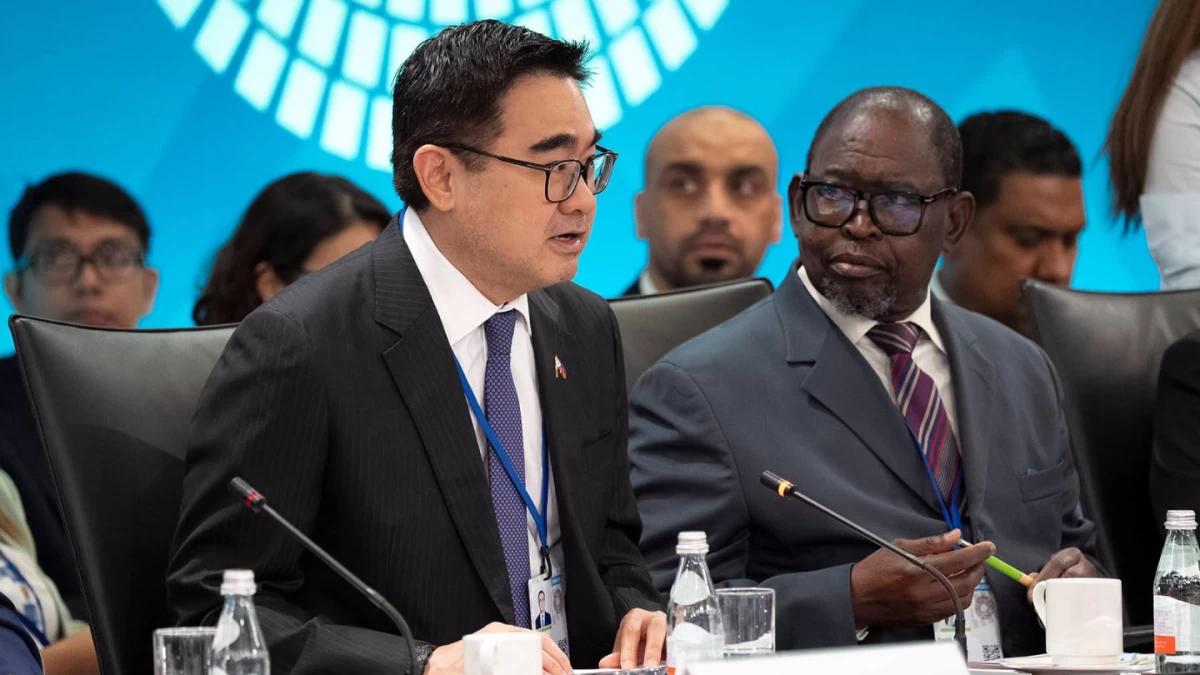
Finance Secretary Frederick D. Go
President Marcos’ chief economic manager is pressing global financial institutions for enhanced budgetary support and emergency financing, warning that escalating Middle East tensions and climate-driven crises are severely narrowing the fiscal maneuvering room for emerging economies.
Speaking at the Intergovernmental Group of Twenty-Four (G-24) Ministers’ and Governors’ Meeting last week, Finance Secretary Frederick D. Go said that overlapping global challenges and climate-related crises are straining developing nations' ability to respond, particularly as fiscal space becomes more limited.
He noted that international support is important for protecting domestic jobs and maintaining economic momentum in the face of these persistent pressures. He stressed “the need for scaled-up and more flexible financing, including budget support and emergency funding tools.”
These mechanisms are intended to help the Philippines and similar economies absorb external shocks while continuing to fund the social services and development programs that support Filipino families.
Go also advocated for deeper mobilization of private capital to attract investments capable of generating quality jobs, particularly in infrastructure, digital services, and the energy transition.
Economic reforms, he said, must be paired with sustained support for human capital to ensure that growth results in better livelihoods for the workforce.
Go further called for support for disaster and climate resilience. As a climate-vulnerable nation, the Philippines is seeking “easier access to climate financing and technical assistance for disaster preparedness and climate-smart infrastructure.”
BPO, chips, renewables to lead job creation
The business process outsourcing (BPO) industry, the semiconductor and electronics manufacturing sector, and renewable energy are expected to lead in job creation for Filipinos, given their rapid expansion.
During the International Monetary Fund (IMF)- World Bank Spring Meetings held last week, Go identified these three sectors as the primary engines driving the Philippines' next wave of employment.
He noted that the Marcos administration’s main priority is creating high-quality jobs, and that every economic reform is designed with the singular purpose of providing livelihoods.
As per the government’s assessment, the BPO industry is evolving beyond basic functions into higher-value services, such as artificial intelligence, data analytics, and IT-enabled services.
On the manufacturing front, the Philippines is seeing continued expansion from global firms like Samsung, which are increasing investments in advanced semiconductor and electronics manufacturing.
Simultaneously, the government is turning environmental challenges into economic opportunities by harnessing wind, solar, and geothermal power.
“Our weakness is our strength. We get hit by many typhoons, so we need to harness wind power. We get a lot of sun, we need to harness solar power. And third, we’re also a volcanic country, we need to find ways to keep harnessing geothermal energy,” Go said.
To support this growth, the government is focusing on a stable and predictable business environment through key reforms like the CREATE MORE Act and the Public-Private Partnership (PPP) Code.
These initiatives are paired with investments in education and skills training to ensure the Filipino workforce is prepared for the technical demands of these emerging industries.
While the Philippines’ fast-growing working-age population presents a significant opportunity, experts from the International Finance Corporation (IFC) noted that it also poses a challenge that requires constant innovation, infrastructure development, and effective labor matching to ensure that growth translates into real opportunities.