






Manila Bulletin
 Business
Trade & Industry
China reanimates mega-trade pact to counter global protectionism
Business
Trade & Industry
China reanimates mega-trade pact to counter global protectionism
Business
Trade & Industry
China reanimates mega-trade pact to counter global protectionism
China reanimates mega-trade pact to counter global protectionism
Published Apr 20, 2026 12:01 am
|
Updated Apr 18, 2026 01:52 pm


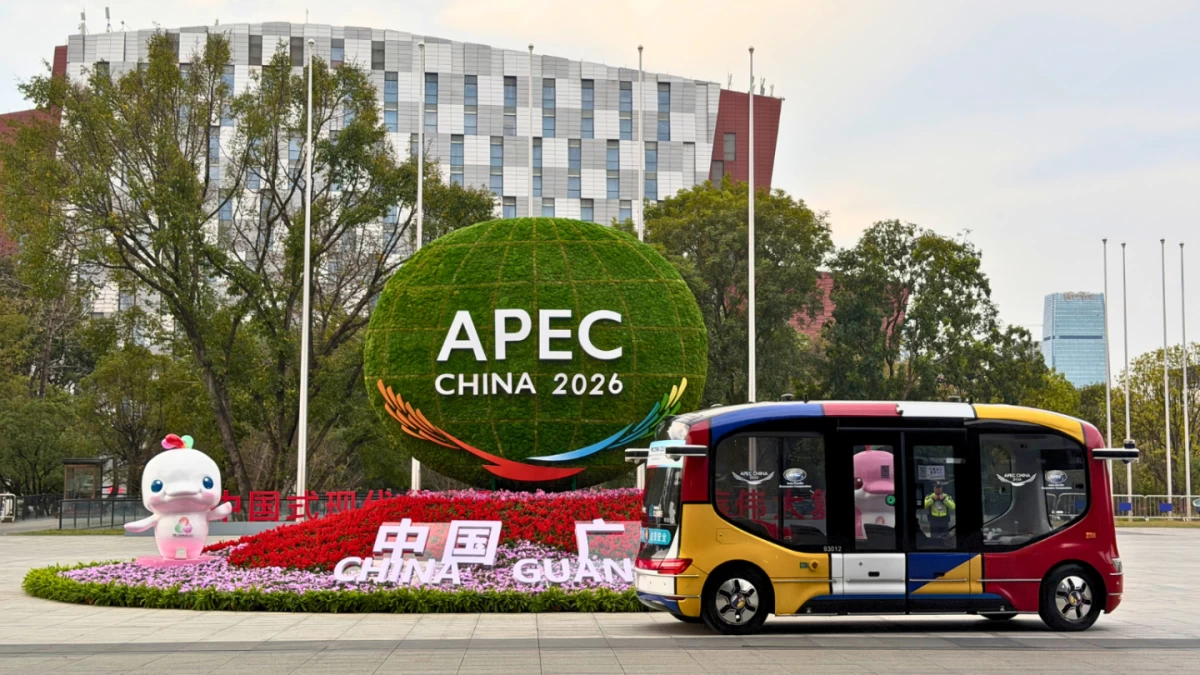
Guangzhou, People's Republic of China
BEIJING, China — Beijing is leveraging its role as host of this year’s Asia-Pacific Economic Cooperation (APEC) forum to revive momentum for a massive regional free trade zone, seeking to counter a global tide of protectionism and fragmented commerce.
In a discussion paper released Friday, April 17, China identified regional economic integration as a cornerstone of its agenda for the APEC summit, scheduled for November in the southern tech hub of Shenzhen.
The world’s second-largest economy is pushing for “collective action” to realize the Free Trade Area of the Asia-Pacific (FTAAP), a long-stalled proposal that would encompass all 21 member economies of the bloc.
The FTAAP aims to deepen economic integration by removing barriers to trade, such as tariffs.
For more than two decades, APEC members have pushed for the implementation of the FTAAP, yet it remains a mere aspiration amid conflicting trade agendas and the regional bloc’s non-binding principles.
While trade facilitating measures within the APEC region remain active, China noted that the FTAAP is a necessary response against the “continued build-up in restrictive actions and remedies reflects deepening trade frictions.”
“Though trade in the region has strengthened in 2025, sustaining momentum in 2026 will be challenging as temporary drivers fade and policy uncertainty persists,” the statement read.
Against the backdrop of an ongoing war in the Middle East and the imposition of protectionist policies, China expects the FTAAP to be a critical countermeasure that would help economies in the region remain on track for economic growth.
“Based on previous consensus, and fully utilizing the current policy dialogues, information sharing, and capacity building mechanisms, APEC 2026 will endeavor to drive collective actions towards FTAAP and explore practical ways to promote progress in related areas,” it said.
As it stands, the APEC region remains a major engine of the global economy, accounting for 61 percent of global gross domestic product (GDP), as well as 46 percent of global trade in goods and services.
“This demonstrates not only the resilience of APEC member economies, but also the importance of APEC in bringing us together as a community to jointly address economic challenges and maximize growth and prosperity for all,” the statement read.
Throughout the year, China will help advance progress toward the FTAAP by convening the Ministers Responsible for Trade Meeting (MRT) and other activities, including high-level forums to explore ways forward.
These efforts will be supported by China’s push to strengthen connectivity within APEC, particularly through the pillars of physical, institutional, and people-to-people connectivity.
As chair of the regional organization, China will lead the exploration of new programs to guide APEC’s future work on connectivity, including taking advantage of digital connectivity and supply chain connectivity.
“Strengthened commitments and concrete actions by APEC member economies will provide a strong ballast of predictability for the regional and global economy, and contribute to the building of an open economic environment in the region and beyond,” it said.
Apart from China, APEC members include the Philippines, Australia, Brunei Darussalam, Canada, Chile, Hong Kong, Indonesia, Japan, South Korea, Malaysia, Mexico, New Zealand, Papua New Guinea, Peru, Russia, Singapore, Chinese Taipei, Thailand, the United States, and Vietnam.