ADVERTISEMENT

More cruise ships arrive in PH; PPA eyes boosting port infra investments to sustain tourism gains

Published Apr 19, 2026 10:47 am  |  Updated Apr 19, 2026 02:11 pm
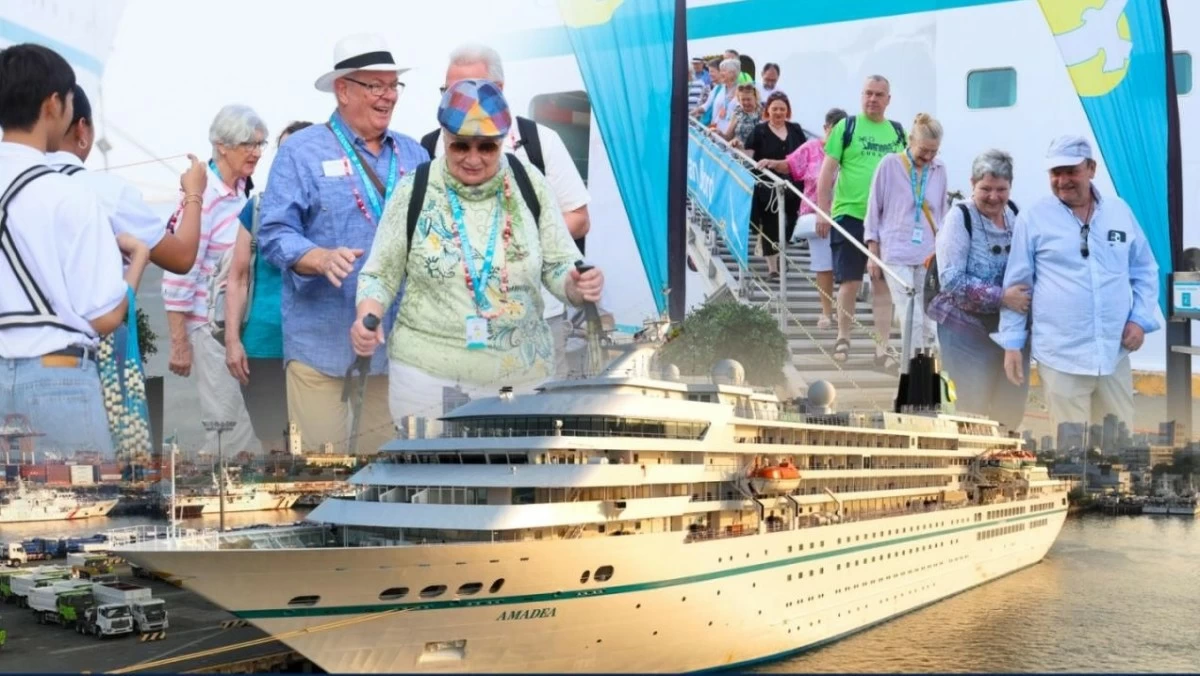
The Philippines continues to encourage more international cruise ship companies to include the country in their travel itinerary as revealed by the data in the first two months of the year, the Philippine Ports Authority (PPA) disclosed on Sunday, April 19.
PPA General Manager Jay Daniel Santiago said 26 cruise calls were recorded from January to February this year involving 76,188 cruise passengers across key ports nationwide.
The data for March and the first two weeks of April are still being validated but Santiago said the figures manifested sustained appeal among international cruise operators and highlighted the Philippines’ growing role as a cruise hub in Asia.
With the available data, the big news, according to Santiago, is that cruise ships arriving on Philippine shores are no longer just making brief stopovers but are now beginning and ending in the country.
“This signals a shift in how global travelers experience local destinations and this reflects growing confidence among cruise lines in the country’s capability to serve as a homeport,” said Santiago.
He said a key highlight this year is the significant increase in turnaround cruise calls, particularly at the Eva Macapagal Cruise Terminal in Manila, wherein the terminal has already recorded six turnaround calls.
The figure was substantially higher than the two turnaround calls last year, where passengers both embark and disembark in Manila.
The Manila cruise terminal continues to accommodate medium to large vessels, each carrying approximately 1,000 to 3,000 passengers of various nationalities including passengers from China, Europe, and the United States.
Cruise passenger arrivals have likewise shown strong growth in recent years. From 88,080 passengers in 2023, arrivals increased to 150,903 in 2024 and further surged to 226,247 in 2025, surpassing pre-pandemic levels recorded in 2019 at 213,765 passengers.
More destinations
Beyond Manila, several other PPA-managed ports have consistently welcomed cruise ships, including the Ports of Currimao, Salomague, Coron, and Puerto Princesa.
Santiago said the readiness of these ports to accommodate cruise ships have been helping expand tourism opportunities across key destinations.
Support system
To support the increasing volume, the PPA has prioritized enhancements in passenger experience through infrastructure upgrades such as covered walkways, improved gangways, clean restrooms, and world-class port facilities.
“Beyond increasing cruise calls, our focus is on delivering a seamless and memorable experience for every passenger who arrives in the Philippines,” said Santiago.
“We are actively upgrading our ports and expanding our capabilities to support the growing demands of cruise tourism. From improving passenger facilities to developing more cruise-ready ports, the PPA remains committed to continuously improve port infrastructure and passenger services to meet the evolving standards of global cruise tourism,” he added.
The PPA is also advancing the development of additional cruise ports to support increasing demand. These include the Port of Coron in Palawan, Port of Alegria in Buruanga, Aklan, Port of Catagbacan in Loon, Bohol, and Port of Balbagon in Mambajao, Camiguin.
Sustainability
In line with this growth, Santiago said PPA and its terminal operators continue to invest in port modernization and strengthen coordination with other government agencies to ensure safe, efficient, and passenger-friendly operations.
“Even before the recent surge in global oil prices, the agency had already begun implementing sustainability initiatives, including the gradual adoption of electric-powered equipment in ports and the use of solar lighting to improve operational efficiency and reduce environmental impact,” said Santiago.
Complementing these efforts is the PPA’s tourism campaign, “PPAsyal Tayo,” which promotes destinations near ports and encourages cruise passengers to explore local communities, further boosting regional tourism and economic activity.
“With sustained investments and strategic initiatives, the PPA remains optimistic about further strengthening the Philippines’ foothold in the global cruise tourism market,” said Santiago.

Related Tags

PPA cruise ship cruise tourism
ADVERTISEMENT
.most-popular .layout-ratio{ padding-bottom: 79.13%; } @media (min-width: 768px) and (max-width: 1024px) { .widget-title { font-size: 15px !important; } }

{{ articles_filter_1561_widget.title }}

.most-popular .layout-ratio{ padding-bottom: 79.13%; } @media (min-width: 768px) and (max-width: 1024px) { .widget-title { font-size: 15px !important; } }

{{ articles_filter_1562_widget.title }}

.most-popular .layout-ratio{ padding-bottom: 79.13%; } @media (min-width: 768px) and (max-width: 1024px) { .widget-title { font-size: 15px !important; } }

{{ articles_filter_1563_widget.title }}

{{ articles_filter_1564_widget.title }}

.mb-article-details { position: relative; } .mb-article-details .article-body-preview, .mb-article-details .article-body-summary{ font-size: 17px; line-height: 30px; font-family: "Libre Caslon Text", serif; color: #000; } .mb-article-details .article-body-preview iframe , .mb-article-details .article-body-summary iframe{ width: 100%; margin: auto; } .read-more-background { background: linear-gradient(180deg, color(display-p3 1.000 1.000 1.000 / 0) 13.75%, color(display-p3 1.000 1.000 1.000 / 0.8) 30.79%, color(display-p3 1.000 1.000 1.000) 72.5%); position: absolute; height: 200px; width: 100%; bottom: 0; display: flex; justify-content: center; align-items: center; padding: 0; } .read-more-background a{ color: #000; } .read-more-btn { padding: 17px 45px; font-family: Inter; font-weight: 700; font-size: 18px; line-height: 16px; text-align: center; vertical-align: middle; border: 1px solid black; background-color: white; } .hidden { display: none; }
function initializeAllSwipers() { // Get all hidden inputs with cms_article_id document.querySelectorAll('[id^="cms_article_id_"]').forEach(function (input) { const cmsArticleId = input.value; const articleSelector = '#article-' + cmsArticleId + ' .body_images'; const swiperElement = document.querySelector(articleSelector); if (swiperElement && !swiperElement.classList.contains('swiper-initialized')) { new Swiper(articleSelector, { loop: true, pagination: false, navigation: { nextEl: '#article-' + cmsArticleId + ' .swiper-button-next', prevEl: '#article-' + cmsArticleId + ' .swiper-button-prev', }, }); } }); } setTimeout(initializeAllSwipers, 3000); const intersectionObserver = new IntersectionObserver( (entries) => { entries.forEach((entry) => { if (entry.isIntersecting) { const newUrl = entry.target.getAttribute("data-url"); if (newUrl) { history.pushState(null, null, newUrl); let article = entry.target; // Extract metadata const author = article.querySelector('.author-section').textContent.replace('By', '').trim(); const section = article.querySelector('.section-info ').textContent.replace(' ', ' '); const title = article.querySelector('.article-title h1').textContent; // Parse URL for Chartbeat path format const parsedUrl = new URL(newUrl, window.location.origin); const cleanUrl = parsedUrl.host + parsedUrl.pathname; // Update Chartbeat configuration if (typeof window._sf_async_config !== 'undefined') { window._sf_async_config.path = cleanUrl; window._sf_async_config.sections = section; window._sf_async_config.authors = author; } // Track virtual page view with Chartbeat if (typeof pSUPERFLY !== 'undefined' && typeof pSUPERFLY.virtualPage === 'function') { try { pSUPERFLY.virtualPage({ path: cleanUrl, title: title, sections: section, authors: author }); } catch (error) { console.error('ping error', error); } } // Optional: Update document title if (title && title !== document.title) { document.title = title; } } } }); }, { threshold: 0.1 } ); function showArticleBody(button) { const article = button.closest("article"); const summary = article.querySelector(".article-body-summary"); const body = article.querySelector(".article-body-preview"); const readMoreSection = article.querySelector(".read-more-background"); // Hide summary and read-more section summary.style.display = "none"; readMoreSection.style.display = "none"; // Show the full article body body.classList.remove("hidden"); } document.addEventListener("DOMContentLoaded", () => { let loadCount = 0; // Track how many times articles are loaded const offset = [1, 2, 3, 4, 5, 6, 7, 8, 9, 10]; // Offset values const currentUrl = window.location.pathname.substring(1); let isLoading = false; // Prevent multiple calls if (!currentUrl) { console.log("Current URL is invalid."); return; } const sentinel = document.getElementById("load-more-sentinel"); if (!sentinel) { console.log("Sentinel element not found."); return; } function isSentinelVisible() { const rect = sentinel.getBoundingClientRect(); return ( rect.top < window.innerHeight && rect.bottom >= 0 ); } function onScroll() { if (isLoading) return; if (isSentinelVisible()) { if (loadCount >= offset.length) { console.log("Maximum load attempts reached."); window.removeEventListener("scroll", onScroll); return; } isLoading = true; const currentOffset = offset[loadCount]; window.loadMoreItems().then(() => { let article = document.querySelector('#widget_1690 > div:nth-last-of-type(2) article'); intersectionObserver.observe(article) loadCount++; }).catch(error => { console.error("Error loading more items:", error); }).finally(() => { isLoading = false; }); } } window.addEventListener("scroll", onScroll); });

Sign up by email to receive news.