






Manila Bulletin
 Philippines
National
'Let the games begin!' Biggest Balikatan drills commence April 20
Philippines
National
'Let the games begin!' Biggest Balikatan drills commence April 20
Philippines
National
'Let the games begin!' Biggest Balikatan drills commence April 20
'Let the games begin!' Biggest Balikatan drills commence April 20
Think tank says PH should expand military ties with allies, activist groups to hold protest
Published Apr 19, 2026 02:45 pm


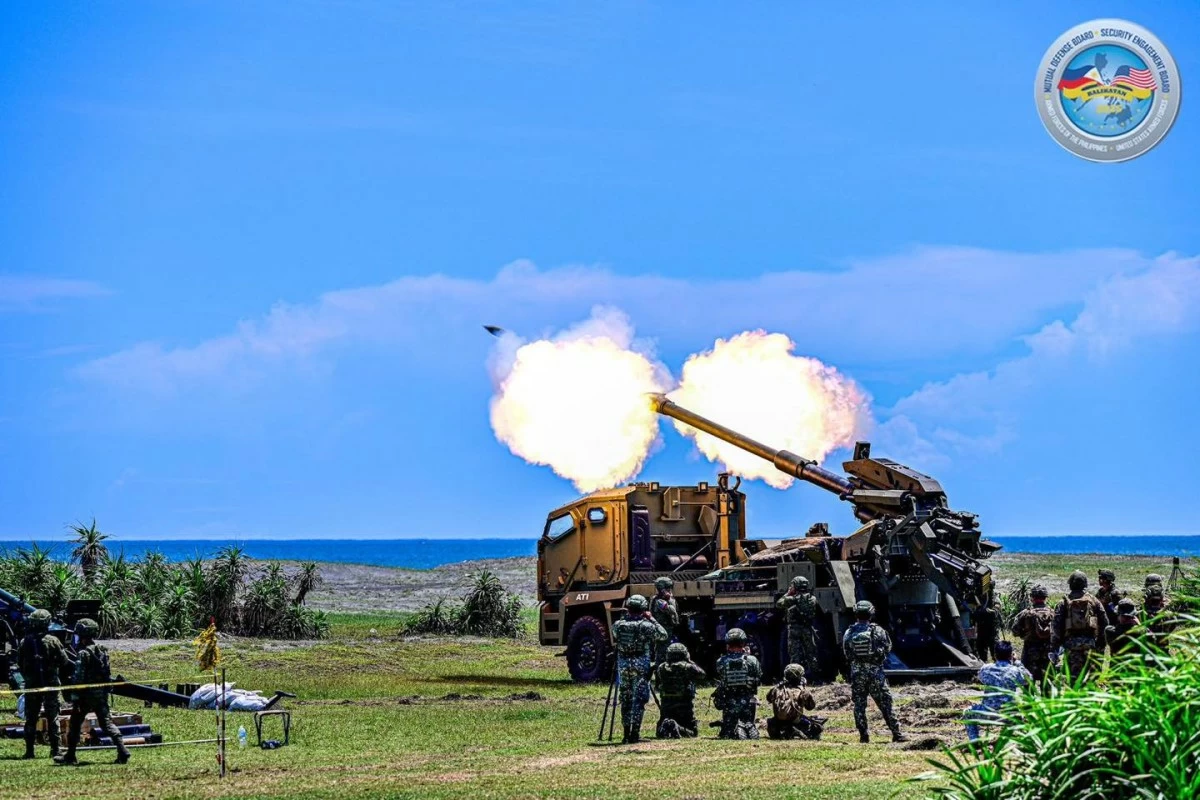
The largest iteration of Exercise Balikatan will kick off on Monday, April 20, with around 17,000 troops from the Armed Forces of the Philippines (AFP) and counterparts from the United States and five other nations taking part in an “expanded” set of war games designed to test modern defense capabilities across land, air, sea, and cyberspace.
The opening ceremony is scheduled at Camp Aguinaldo in Quezon City and AFP spokesperson Colonel Francel Margareth Padilla said this year’s exercises mark a significant shift from traditional drills to “joint all-domain operations.”
The maneuvers will involve participants from Japan, Australia, Canada, New Zealand, and France. Observers from 17 other nations will also take part in the 41st iteration of the annual exercise.
“This opens on April 20 until May 8,” Padilla said. “It expands from kinetic to non-kinetic. So we have [drills] over land, air, sea, and cyber. We're looking at missile defense exercises and live fire exercises.”
“Basically it shows the strong alliance between the Philippines and the US, and this year there will be more countries joining in. It shows that more and more nations have been really showing that we are all working towards a common goal – that is to maintain a free and open Indo-Pacific,” she added.
Col. Robert Bunn, the Balikatan spokesperson for the US side, noted that the training is designed to solve technical and human barriers.
“What I mean is sometimes our communication systems, our computer systems need to be able to talk to each other. But also as human beings, there's always a natural barrier sometimes due to cultural reasons or due to language reasons that we are able to work through every year,” he said.
“There's a wide range of operations. We call them joint all domain operations. And what I mean by that? We talk about space, cyber to include our traditional domains such as maritime domain, the land domain, and in the air domain. So it's always been pleasing to work with our Filipino allies in professionalism and just the friendship that we have together as nations,” he added.
Among the highlights of the exercise includes a sinking exercise (SINKEX) where Filipino, American, and Japanese troops will integrate their firepower from air, land, and sea units to sink BRP Quezon (PS-70), a decommissioned Philippine Navy vessel, as a target during a joint maritime strike.
The Japan Self-Defense Force (JSDF) is expected to carry out a live ground-to-surface missile firing. Japanese forces will launch a Type 88 missile to hit one of the designated target vessels in a counter-live fire drill. Japanese radar systems previously supplied to the AFP will also be used to support both air and maritime defense operations.
Further, missile systems like the Tomahawk and the Navy-Marine Expeditionary Ship Interdiction System (NMESIS) may be used during the exercise.
Other activities lined up include multinational maritime exercises in Northern Luzon from April 23 to May 1. There will also be integrated air and missile defense drills in Subic, Zambales from April 26 to 29. A maritime strike exercise is set in Paoay, Ilocos Norte on May 6.
The expanded nature of the games came amid heightened tension in the West Philippine Sea (WPS) and while the AFP maintains that the Philippines is a “defensive nation,” the scale of the drills serves as a clear signal of regional alignment.
The exercise coincides with the 10th anniversary of the 2016 arbitral ruling that invalidated China's expansive claims in the South China Sea, and Padilla linked the military drills directly to the protection of Manila’s sovereign rights.
"Our battle cry is still 'Our seas, our rights, and our future.’ Let us learn about them, defend them, and support them. This is not just for the AFP or the [Philippine] Coast Guard, this is for every Filipino,” Padilla stated.
‘Correct path forward’
Meanwhile, a think tank expressed support for the Exercise Balikatan, saying it is the “correct path forward as the Philippines should fully strengthen its defense posture and expand military cooperation with allies amid rising tensions in the WPS.
“It represents a clear and unambiguous message: that the Philippines and its partners are prepared to defend the rules-based international order against coercion, intimidation, and unlawful claims,” Stratbase Institute president and CEO Victor Andres “Dindo” Manhit said.
He added that the Philippines is not isolated and remains anchored on alliances with countries that support a “free and open Indo-Pacific.”
Manhit also raised concern over renewed discussions on possible joint energy exploration with China, saying such proposals could compromise sovereign rights. He warned that these initiatives are “strategically unsound” and may weaken the Philippines’ legal position.
“Public trust in engagements with China remains low because experience has repeatedly validated caution,” he said. “The Philippines must not bargain away its sovereign rights for promises that carry neither credibility nor accountability.”
Protests
On the other hand, activist groups called for the cancellation of the Balikatan drills, raising concerns over national sovereignty, public spending, and the impact of large-scale military drills on local communities. Several stakeholders announced that a protest will be held in front of Camp Aguinaldo around 9 a.m. on April 20, coinciding with the opening of the Balikatan.
In a statement, the Bagong Alyansang Makabayan (Bayan) criticized the reported use of roll-on/roll-off (RoRo) and commercial barges by US military forces in transporting equipment across the Philippines for Balikatan exercises, calling it proof of an expanding foreign military presence in the country.
Bayan said US forces recently unloaded a military truck at Macabalan port in Cagayan de Oro and transported it to Subic Bay using commercial barges. The group said the movement highlights unrestricted access of US troops to Philippine facilities.
“This clearly demonstrated that US military forces are free to roam the country and access various facilities for its military operations,” the group said.
The League of Filipino Students (LFS), for its part, argued that Balikatan supports foreign military interests in the region and increases geopolitical risks for the Philippines.
They claimed that expanding defense cooperation with the United States under the Enhanced Defense Cooperation Agreement (EDCA) and related military facilities could turn the country into a forward operating base for potential conflicts in the Asia-Pacific.
It said this development places the Philippines at risk of becoming a “target zone of war,” which could endanger civilian populations.
The group also raised concerns about government spending, saying funds used for Balikatan should instead be allocated to social services such as food subsidies, utilities, and disaster response amid rising living costs.
Community impact was also cited, particularly for farmers, fisherfolk, and Indigenous peoples near training areas. The groups warned that live-fire drills and large-scale exercises could disrupt livelihoods and cause psychological stress among residents.