







Chinese envoy touts hybrid rice gains in Laguna visit


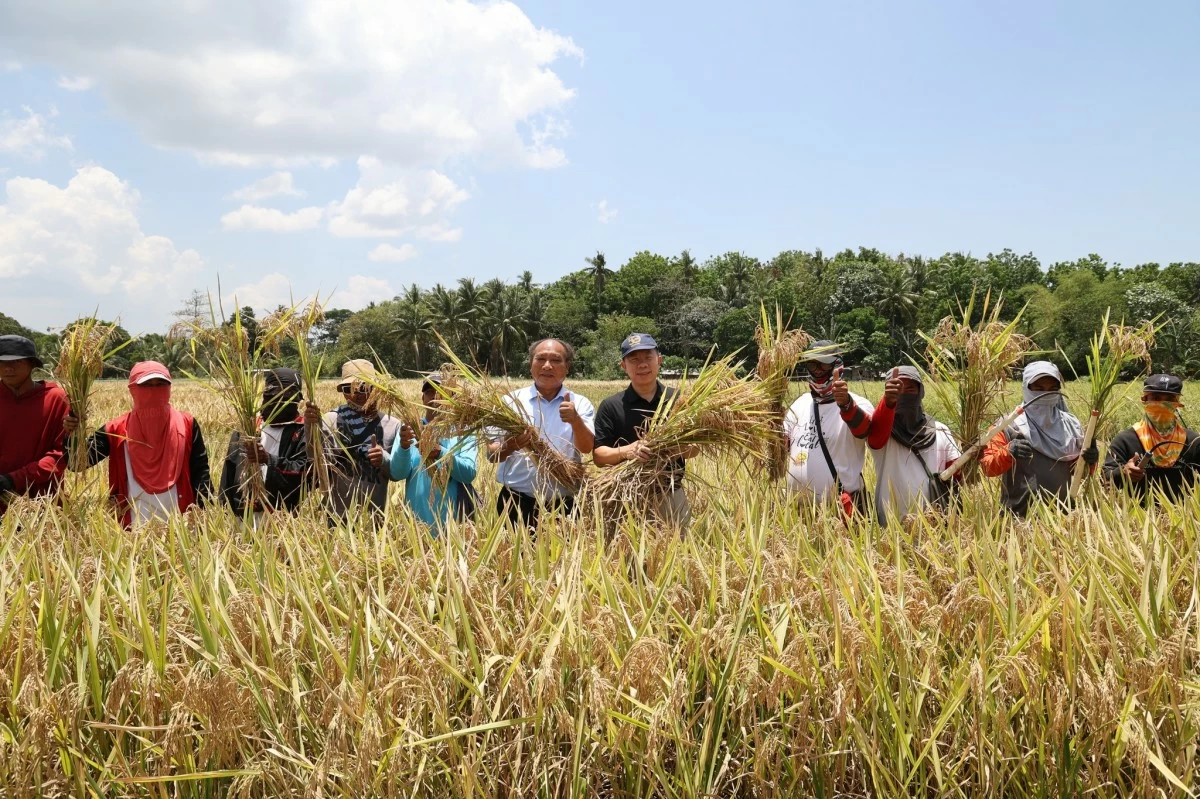
The Chinese Embassy in Manila lauded what it described as the successful localization of Chinese hybrid rice technology in the Philippines, saying the efforts could boost farmers’ income and safeguard the country’s food security.
This developed as Chinese Ambassador to the Philippines Jing Quan joined farmers in Sta. Cruz, Laguna, during a harvest activity on April 16, to showcase the localized use of hybrid rice.
In a Facebook post, the embassy said the technology has significantly increased rice yields and farmers’ income.
“By boosting yields from 4–5 to 7–8 tons per hectare… [it] has driven a 50 percent surge in net income,” it said.
This translates to an additional P40,000 to P60,000 per hectare annually for farmers, according to the embassy.
The embassy said the technology also helps reduce reliance on imported rice.
“[It] also [curtails] import dependency and [safeguards] food security in the Philippines,” it said.
The visit comes as the government continues to implement measures to stabilize food supply amid the global energy situation, which has impacted production and transport costs.
What is hybrid rice
Hybrid rice technology involves crossbreeding different rice varieties to produce higher-yielding and more resilient crops.
Chinese hybrid rice technology, pioneered by Yuan Longping in the 1970s, utilizes "hybrid vigor" to produce high-yield rice, often yielding 20 to 30 percent more than conventional varieties.
In the Philippines, hybrid rice programs have been introduced through partnerships with foreign and local institutions to improve output and farmer income.
Strengthening cooperation
The Chinese Embassy said agricultural cooperation remains a key area of engagement between the Philippines and China.
“Hybrid rice cooperation has strengthened the bond between the two peoples, serving as a highlight of China-Philippines friendship,” it said.