







Your next 'co-worker' might be a smart robot
The machines are learning:
Published Apr 18, 2026 08:23 am


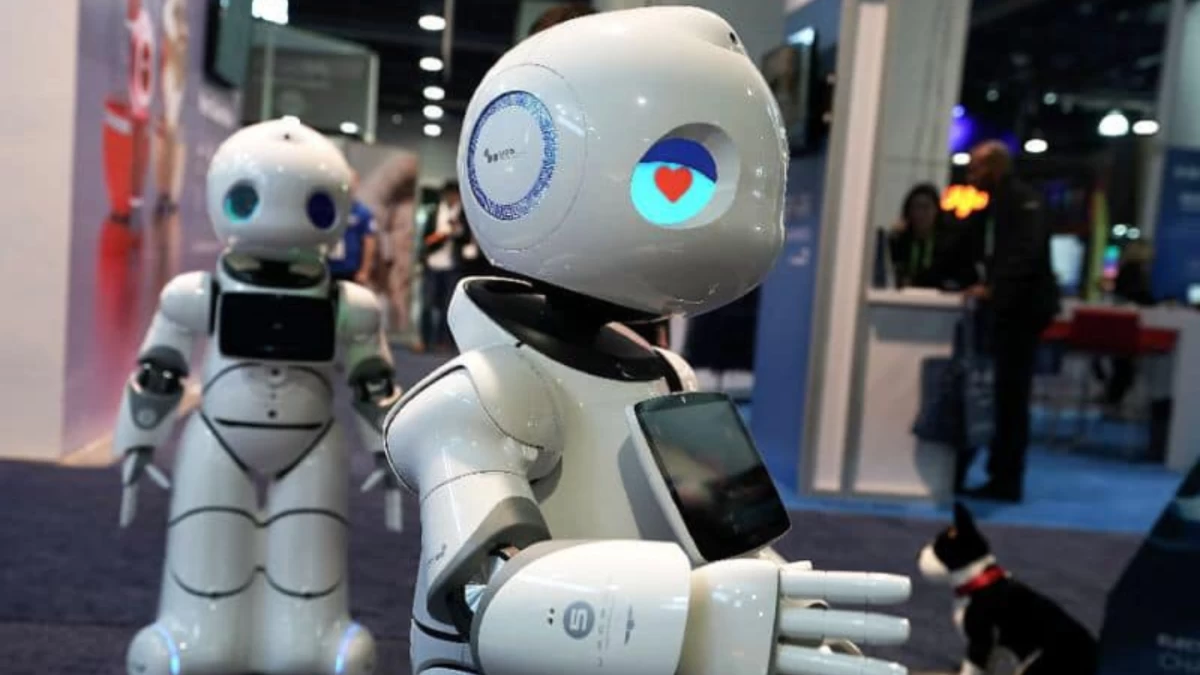
Industrial robots are moving beyond rigid programming. Experts predict that by 2035, over 1.3 billion robots will be working globally, using Physical AI to navigate the real world.
If you walk through a modern factory today, you’ll see plenty of robots, but they aren’t exactly “smart.” Most are still following rigid scripts: move to point A, pick up a part, move to point B, and repeat. They are fast and precise, but they are essentially blind to the world around them. If a part is slightly out of place or a person walks into their path, the machine usually just stops or fails.
This has been the standard for decades, but it is a model nearing its limit. A new report from Deloitte, “Physical AI: The moment of acceleration,” suggests that the industrial world is moving past this wall, entering an era where machines stop being programmed and start being taught.
The concept is called Physical AI, or PAI, a term that describes the moment AI stops being a brain in a box and starts inhabiting a physical body. This is a departure from the generative AI craze that has dominated headlines for the last few years.
While chatbots and image generators deal in pixels and text, Physical AI deals in torque, friction, and spatial awareness. It is the marriage of large-scale intelligence and physical systems, creating machines that can feel their way through a task, learn from their mistakes, and adapt to the messy, unpredictable environment of a warehouse, a hospital wing, or a deep-sea oil rig.
Right now, there is a big gap between the hype and the reality. Deloitte’s findings show that while nearly half of big companies have integrated traditional AI into their offices to handle emails or data analysis, only about five percent say Physical AI is actually changing the way they do business today. However, that number is deceptive. It represents the quiet phase before a major shift.
According to the data, 41 percent of business leaders expect this technology to be transformational within the next three years. They are already buying the hardware to back up that belief. Last year, half a million industrial robots were deployed globally. By 2035, some estimates suggest there will be 1.3 billion robots of all types working across various industries.
High stakes, the logistics of reality
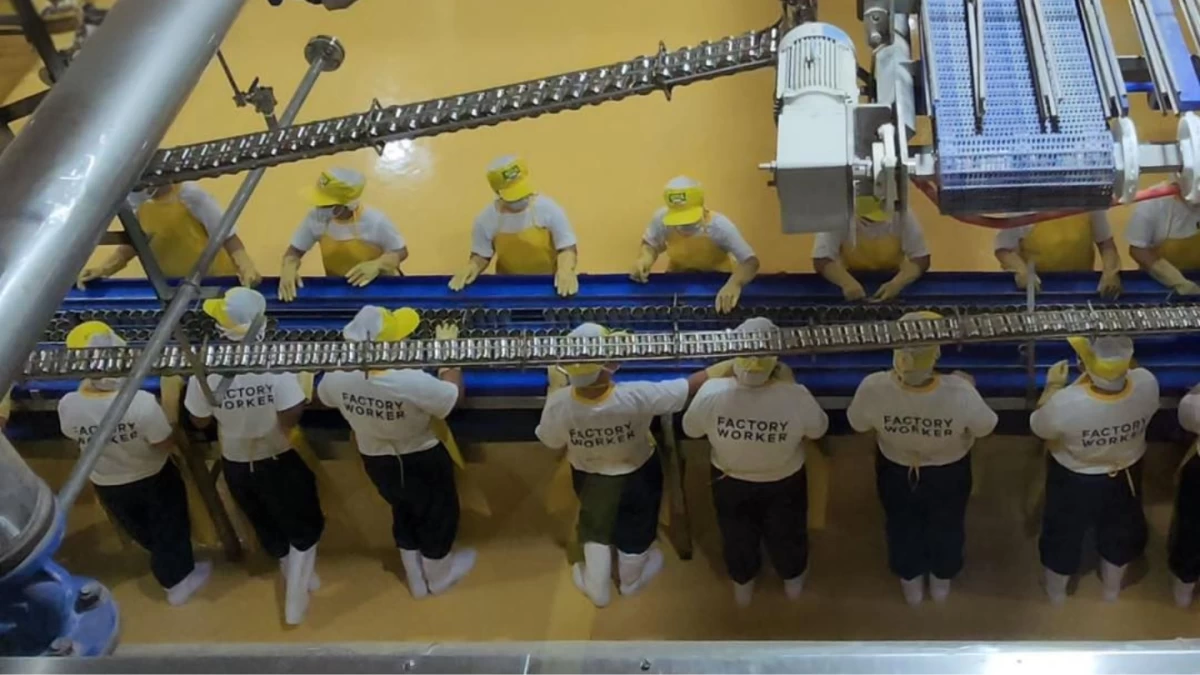
While 1.3 billion robots are expected to enter the global workforce by 2035, the “human architecture” remains the most vital part of a disciplined, data-driven factory culture.
The question for most boards is no longer whether the machines are coming, but whether their companies have the foundational maturity to actually use them. Chris Lewin, who leads AI for Deloitte in the Asia Pacific, suggests this is the moment intelligence moves off the screen and into the real world.
“Organisations that are acting now will shape the operating models, skills and standards that define industrial leadership for the next decade,” Lewin says. In his view, the organizations acting now will be the ones that define industrial leadership. The logic is straightforward. In the digital world, a company can fail fast and reboot. In the physical world, the stakes are physical. If a multi-billion-peso robotic arm crashes into a cooling system, there is no undo button.
This shift is why the work is moving toward high-fidelity simulation. Deloitte recently opened a Physical AI Center of Excellence in Shanghai to create “digital twins,” which are perfect virtual replicas of a factory floor. These environments allow companies to run a thousand simulations of a new AI process in a single morning, seeing exactly where the machine might fail.
“Shanghai sits at the intersection of advanced manufacturing, industrial robotics, and global supply chains, making it an ideal hub for our new Deloitte Asia Pacific Physical AI Centre of Excellence,” says Deloitte Asia Pacific CEO David Hill.
He notes that these centers are helping clients “move beyond pilots and proofs of concept to scaled deployments, using simulation, governance, and workforce transformation to unlock the full potential of Physical AI safely, responsibly, and at speed.”
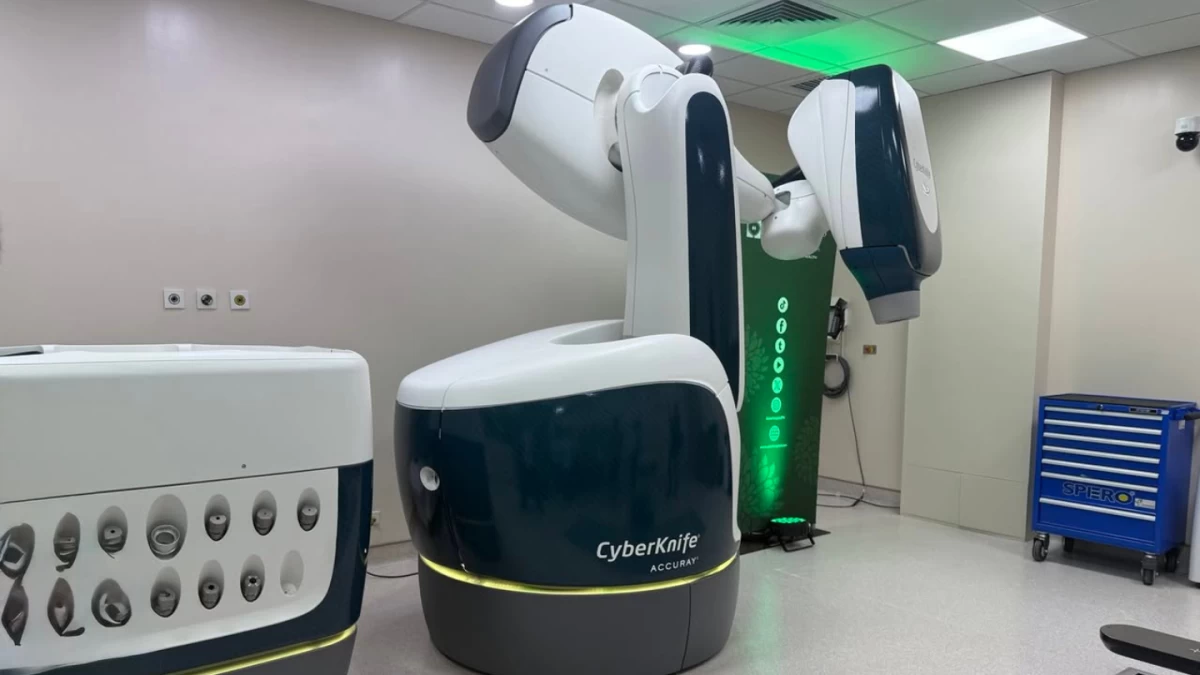
The CyberKnife System, the first and only robotic radiosurgery platform in the Philippines, is formally introduced at the Asian Hospital and Medical Center in July 2025. The medical innovation uses a flexible robotic arm to deliver pinpoint radiation to tumors, offering a non-invasive alternative to traditional surgery.
If the future is so clear, one might wonder why every firm hasn’t already made the leap. It turns out that teaching a machine to think is often the easy part. The hard part is the logistics of the physical world. The report highlights several hurdles keeping executives awake at night. Cost is the most obvious. About 41 percent of leaders are worried about the “cost and resource requirements” of the hardware and the specialized talent needed to run it.
Unlike a cloud-based AI subscription, PAI requires a heavy upfront investment in sensors, actuators, and high-performance computing on the factory floor.
Then there is the problem of clarity. Roughly 36 percent of leaders struggle with “challenges identifying use cases.” There is a danger of technology for technology’s sake, where a company spends millions to have an AI-powered robot sort packages when a simple, mechanical conveyor belt could have done the job just as well. Identifying the right use cases—the ones where a machine’s ability to learn and adapt actually saves money or improves safety—is a skill that many leadership teams are still developing.
Beyond the hardware and the strategy, there is the talent gap. About 33 percent of firms say they simply don’t have the “talent and skills” to maintain or work alongside these systems. This isn’t just about hiring more coders. It’s about a new kind of technician who understands both the mechanical world of hydraulics and the digital world of neural networks.
Furthermore, 31 percent of firms realize their current “technology or data availability” is too messy for an AI to make sense of. An AI is only as good as the information it receives, and many legacy factories still rely on analog systems or fragmented data that provide a blurry picture of reality.
Orchestrating the machine
One of the most interesting takeaways from the report is that PAI is not a plug-and-play tool. You do not just buy a smarter robot and walk away. It requires what the report calls a disciplined approach to operational maturity.
“Successful PAI implementation is as much about adapting as it is adopting,” Lewin notes. He adds that “There are internal readiness factors that determine how effectively businesses can deploy and scale any PAI solution, today or tomorrow and critically, they are in the organisation’s control.”
For a long time, the popular fear has been that AI will simply replace workers. But the reality for early adopters, particularly in healthcare and high-tech manufacturing, is more complex. These systems require people who can “orchestrate” them. The job moves from performing a manual, repetitive task to teaching the machine how to perform that task better.
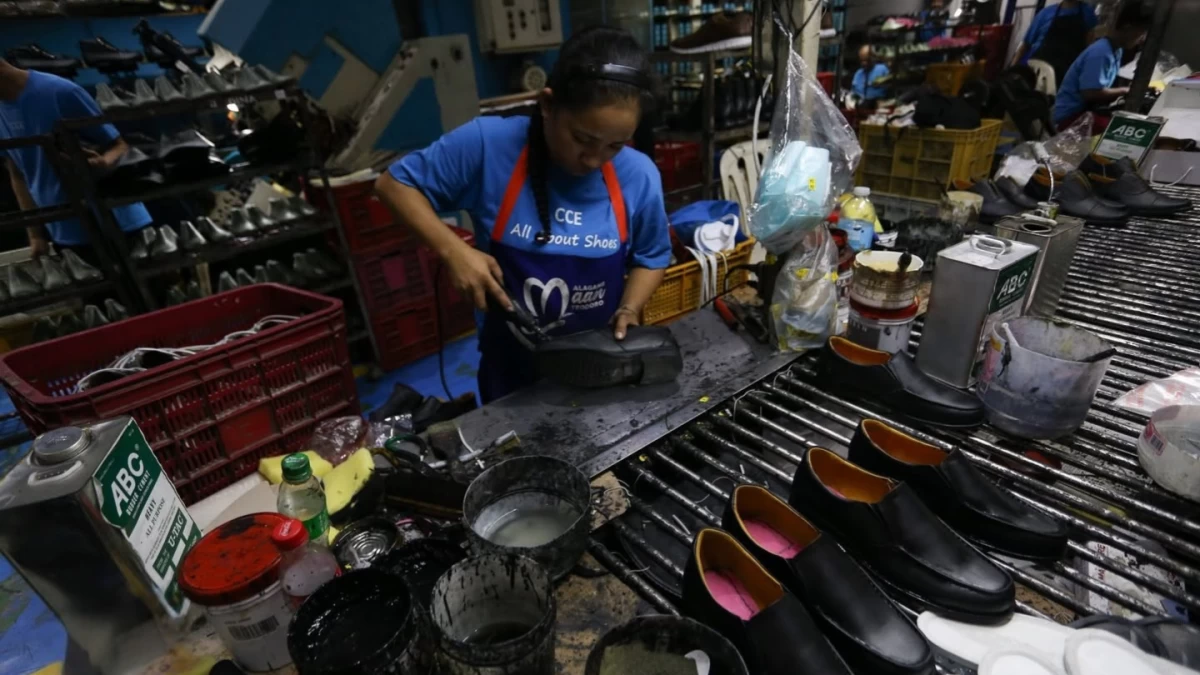
A shoe factory employee at work. A recent report highlights that 33 percent of firms lack the specialized talent needed to maintain Physical AI systems—creating a massive demand for workers who can bridge the gap between manual expertise and digital intelligence.
Leadership in the next decade will likely be defined by how well a company aligns its technology with its people. As the report points out, “Even the most sophisticated PAI system will deliver little value if deployed into an organisation lacking the foundational discipline, flow, and human architecture to absorb it.”
Physical AI acts as a mirror; it reflects the strengths and weaknesses of the organization it inhabits. If a company has a disciplined, data-driven culture, the AI will thrive. If the company is chaotic, the AI will only amplify that chaos.