






 World
Traffic and trepidation in the Persian Gulf could keep gasoline prices from dropping quickly
World
Traffic and trepidation in the Persian Gulf could keep gasoline prices from dropping quickly
Traffic and trepidation in the Persian Gulf could keep gasoline prices from dropping quickly


NEW YORK (AP) — After U.S. President Donald Trump and Iran’s foreign minister said the Strait of Hormuz was fully open to commercial vessels after almost seven weeks of war, oil prices plunged 10% and the stock market rallied Friday.
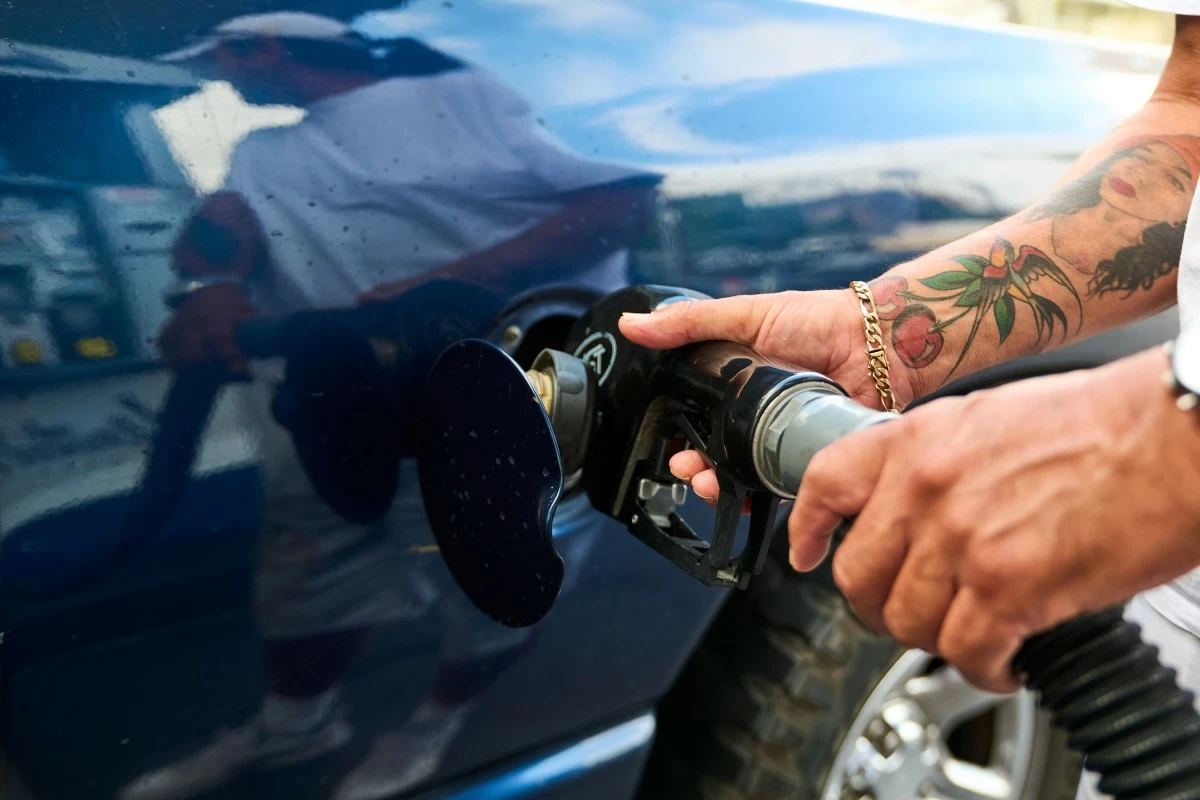
Motorists, hoping for relief at the pump, wondered how quickly gasoline prices might fall once oil tankers stuck in the Persian Gulf were moving again. A gallon of regular gasoline cost $4.08 on average in the U.S. Friday, which was 37% more than before U.S. and Israel attacked Iran but down a few cents from a week ago.
But when gas prices spike, they don’t typically drop as quickly as the cost of crude. Even if Iran keeps the waterway open in the face of a U.S. blockade of its vessels, it still could take months for fuel prices to return to levels resembling those enjoyed before the war began Feb. 28, energy experts said.
The slow speed at which oil tankers travel from ports to refineries, lingering security concerns, traffic in the strait and damage to energy infrastructure in the Middle East are all playing a role in the elevated price of gasoline.
“The historical observation is that gasoline prices rise quickly but fall slowly, regardless of the particular causes of the increase,” said Mark Barteau, a professor in the department of chemical engineering at Texas A&M University.
“In this case, one has to take into account the time it takes for the steps that have to happen once tankers sail through the straits – for example, sailing time to refineries on other continents, time to ramp up refinery operations, and time to transport some refined products by tanker to the continent where they will be used,” Barteau said. “There is also tendency to hedge bets because of doubts about whether and how quickly that restoration might occur, and whether further disruptions are possible along the way.”
Nevertheless, some energy analysts were optimistic that gas prices would gradually decline.
Hope for lower gasoline prices
Gasoline prices were already falling slightly after last week’s announcement of a two-week ceasefire between the U.S. and Iran, according to motor club federation AAA.
Following the Strait of Hormuz announcement, oil prices fell by $10 to $12 per barrel, which generally translates into a decrease of 25 or 30 cents per gallon of gas, said Michael Lynch, distinguished fellow at Energy Policy Research Foundation, a non-partisan research institution focused on energy and economics.
Traffic and trepidation
If an agreement to end the war is reached, it could take at least four months for shipping through the Strait of Hormuz to go back to normal, said Patrick Penfield, professor of supply chain practice at Syracuse University.
Ship owners would have to be convinced to trust the Americans and Iranians, "and that seems like it’s a hard hill to climb,” Lynch, of the Energy Policy Research Foundation, said. “I certainly wouldn’t want to do it. I wouldn’t wanna be the first ship through or even the first five ships through, but somebody will do it. There’s a lot of money on the table and somebody’s going to grab it.”
If the strait remains open, and ships loaded with oil leave the Persian Gulf, it could take weeks for those heavy, slow-moving ships to reach their destinations.
Damage to energy infrastructure in the Middle East
Many oil production facilities were damaged in the Middle East, including refineries in Saudi Arabia and Kuwait and oil tanker terminals in the United Arab Emirates and Iran. Some repairs has been made, but damage remains.
Once an oil well is turned off, the pressure within the well could change, and it can take time to restart the flow. But that might not be a problem in some Middle East oil fields, where production can be resumed quickly, Lynch said.