

ADVERTISEMENT

Men found racing in women's division at major South African marathon

Published Apr 18, 2026 10:35 am

At A Glance

  • JOHANNESBURG (AP) — Two male runners who were discovered fraudulently competing on behalf of female colleagues in a top South African marathon have been disqualified and could face two-year bans from the event, along with the two women.
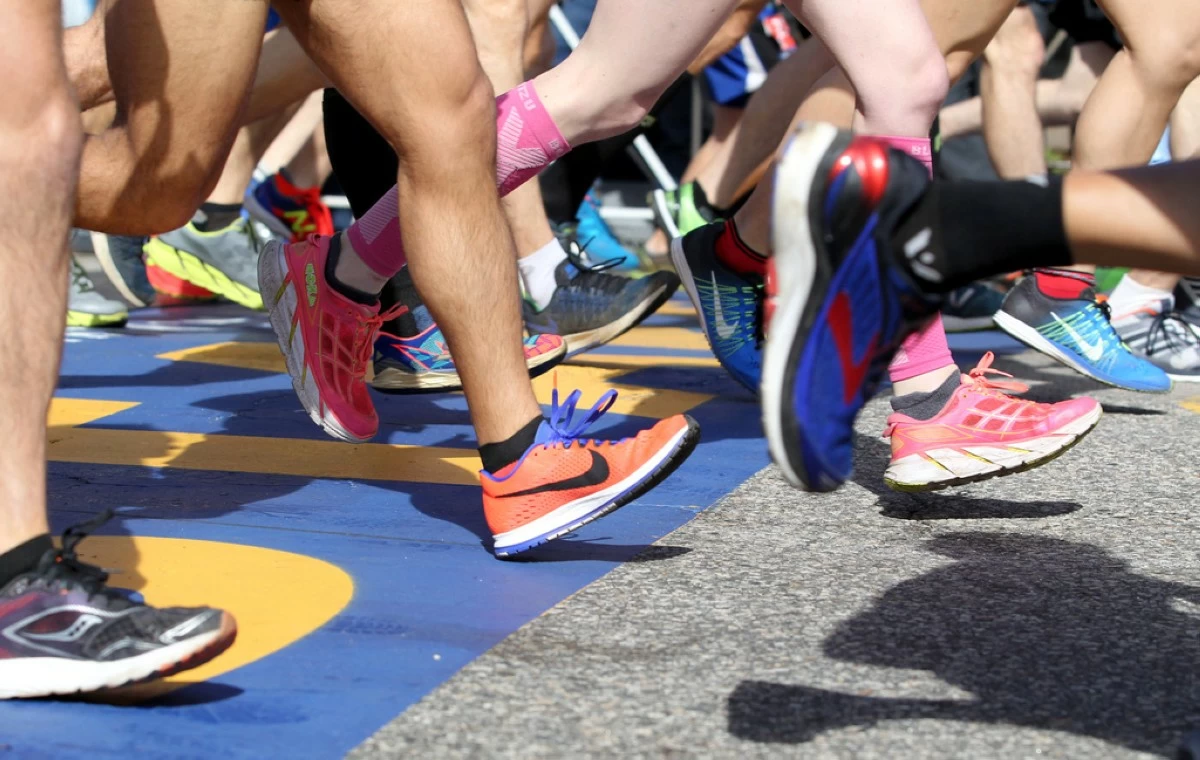
FILE - A colorful collection of shoes cross the starting line at the start of the 2017 Boston Marathon in Hopkinton, Mass., Monday, April 17, 2017. (AP Photo/Mary Schwalm, file)
JOHANNESBURG (AP) — Two male runners who were discovered fraudulently competing on behalf of female colleagues in a top South African marathon have been disqualified and could face two-year bans from the event, along with the two women.
The two women runners swapped their bibs with the two men, who both finished within the top 10 in the women’s half-marathon at the Two Oceans Marathon in Cape Town last Sunday, initially denying those slots to two female runners.
But the cheating was discovered by a marathon board member, and the men were disqualified from their 7th and 10th place finishes. Two women were belatedly recognized instead.
Larissa Parekh was accused of having Luke Jacobs run on her behalf, and Tegan Garvey was accused of having Nic Bradfield run on her behalf, marathon board member Stuart Mann said. All four runners face disciplinary action that could include two-year bans from the event, Mann said.
The annual Two Oceans race is one of South Africa’s iconic marathons and includes a 56-kilometer (34.7-mile) ultramarathon and a 21.1-kilometer (13.1-mile) half-marathon. The event attracts over 16,000 participants and finishing among the top 10 is a significant achievement for most runners.
Race board member calls swapping bibs unethical
Mann said exchanging bibs has become more common, and can be risky, “Not only is it considered unethical, but it also poses health and medicals risks in case of an emergency, as wrong medication may be administered to a wrong person,” Mann said.
Various motivations are at play, Mann explained. Some runners give their bib to a stand-in if they have a last-minute injury or some other unexpected reason why they can't run in a race they have registered for. Others do so to deceptively earn faster times than they otherwise could achieve, to qualify for future races, he said.
Online photos led to the discovery
Mann was tipped off to one of the swaps after Jacobs posted pictures of himself at the race on social media and people noticed that his bib displayed the name “Larissa.”
Jacobs said in a written apology: “I made an error in judgment and did not consider the consequences. I should not have taken part."
Parekh did not provide any clear explanation of how Jacobs ended up with her bib, Mann said. But Garvey admitted she gave hers to Bradfield, saying in a written statement that she had suffered a hip problem before the race.
“The day before, my hip gave in completely, leaving me unable to even walk. I felt bad as to give up my race entry so my friend ran in my place,” Garvey said.
Mann said both women have apologized.

Related Tags

Two Oceans Marathon South Africa
ADVERTISEMENT
.most-popular .layout-ratio{ padding-bottom: 79.13%; } @media (min-width: 768px) and (max-width: 1024px) { .widget-title { font-size: 15px !important; } }

{{ articles_filter_1561_widget.title }}

.most-popular .layout-ratio{ padding-bottom: 79.13%; } @media (min-width: 768px) and (max-width: 1024px) { .widget-title { font-size: 15px !important; } }

{{ articles_filter_1562_widget.title }}

.most-popular .layout-ratio{ padding-bottom: 79.13%; } @media (min-width: 768px) and (max-width: 1024px) { .widget-title { font-size: 15px !important; } }

{{ articles_filter_1563_widget.title }}

{{ articles_filter_1564_widget.title }}

.mb-article-details { position: relative; } .mb-article-details .article-body-preview, .mb-article-details .article-body-summary{ font-size: 17px; line-height: 30px; font-family: "Libre Caslon Text", serif; color: #000; } .mb-article-details .article-body-preview iframe , .mb-article-details .article-body-summary iframe{ width: 100%; margin: auto; } .read-more-background { background: linear-gradient(180deg, color(display-p3 1.000 1.000 1.000 / 0) 13.75%, color(display-p3 1.000 1.000 1.000 / 0.8) 30.79%, color(display-p3 1.000 1.000 1.000) 72.5%); position: absolute; height: 200px; width: 100%; bottom: 0; display: flex; justify-content: center; align-items: center; padding: 0; } .read-more-background a{ color: #000; } .read-more-btn { padding: 17px 45px; font-family: Inter; font-weight: 700; font-size: 18px; line-height: 16px; text-align: center; vertical-align: middle; border: 1px solid black; background-color: white; } .hidden { display: none; }
function initializeAllSwipers() { // Get all hidden inputs with cms_article_id document.querySelectorAll('[id^="cms_article_id_"]').forEach(function (input) { const cmsArticleId = input.value; const articleSelector = '#article-' + cmsArticleId + ' .body_images'; const swiperElement = document.querySelector(articleSelector); if (swiperElement && !swiperElement.classList.contains('swiper-initialized')) { new Swiper(articleSelector, { loop: true, pagination: false, navigation: { nextEl: '#article-' + cmsArticleId + ' .swiper-button-next', prevEl: '#article-' + cmsArticleId + ' .swiper-button-prev', }, }); } }); } setTimeout(initializeAllSwipers, 3000); const intersectionObserver = new IntersectionObserver( (entries) => { entries.forEach((entry) => { if (entry.isIntersecting) { const newUrl = entry.target.getAttribute("data-url"); if (newUrl) { history.pushState(null, null, newUrl); let article = entry.target; // Extract metadata const author = article.querySelector('.author-section').textContent.replace('By', '').trim(); const section = article.querySelector('.section-info ').textContent.replace(' ', ' '); const title = article.querySelector('.article-title h1').textContent; // Parse URL for Chartbeat path format const parsedUrl = new URL(newUrl, window.location.origin); const cleanUrl = parsedUrl.host + parsedUrl.pathname; // Update Chartbeat configuration if (typeof window._sf_async_config !== 'undefined') { window._sf_async_config.path = cleanUrl; window._sf_async_config.sections = section; window._sf_async_config.authors = author; } // Track virtual page view with Chartbeat if (typeof pSUPERFLY !== 'undefined' && typeof pSUPERFLY.virtualPage === 'function') { try { pSUPERFLY.virtualPage({ path: cleanUrl, title: title, sections: section, authors: author }); } catch (error) { console.error('ping error', error); } } // Optional: Update document title if (title && title !== document.title) { document.title = title; } } } }); }, { threshold: 0.1 } ); function showArticleBody(button) { const article = button.closest("article"); const summary = article.querySelector(".article-body-summary"); const body = article.querySelector(".article-body-preview"); const readMoreSection = article.querySelector(".read-more-background"); // Hide summary and read-more section summary.style.display = "none"; readMoreSection.style.display = "none"; // Show the full article body body.classList.remove("hidden"); } document.addEventListener("DOMContentLoaded", () => { let loadCount = 0; // Track how many times articles are loaded const offset = [1, 2, 3, 4, 5, 6, 7, 8, 9, 10]; // Offset values const currentUrl = window.location.pathname.substring(1); let isLoading = false; // Prevent multiple calls if (!currentUrl) { console.log("Current URL is invalid."); return; } const sentinel = document.getElementById("load-more-sentinel"); if (!sentinel) { console.log("Sentinel element not found."); return; } function isSentinelVisible() { const rect = sentinel.getBoundingClientRect(); return ( rect.top < window.innerHeight && rect.bottom >= 0 ); } function onScroll() { if (isLoading) return; if (isSentinelVisible()) { if (loadCount >= offset.length) { console.log("Maximum load attempts reached."); window.removeEventListener("scroll", onScroll); return; } isLoading = true; const currentOffset = offset[loadCount]; window.loadMoreItems().then(() => { let article = document.querySelector('#widget_1690 > div:nth-last-of-type(2) article'); intersectionObserver.observe(article) loadCount++; }).catch(error => { console.error("Error loading more items:", error); }).finally(() => { isLoading = false; }); } } window.addEventListener("scroll", onScroll); });

Sign up by email to receive news.