






 Business
Banking & Finance
Global lenders unite as Middle East crisis pressures mount
Business
Banking & Finance
Global lenders unite as Middle East crisis pressures mount
Global lenders unite as Middle East crisis pressures mount


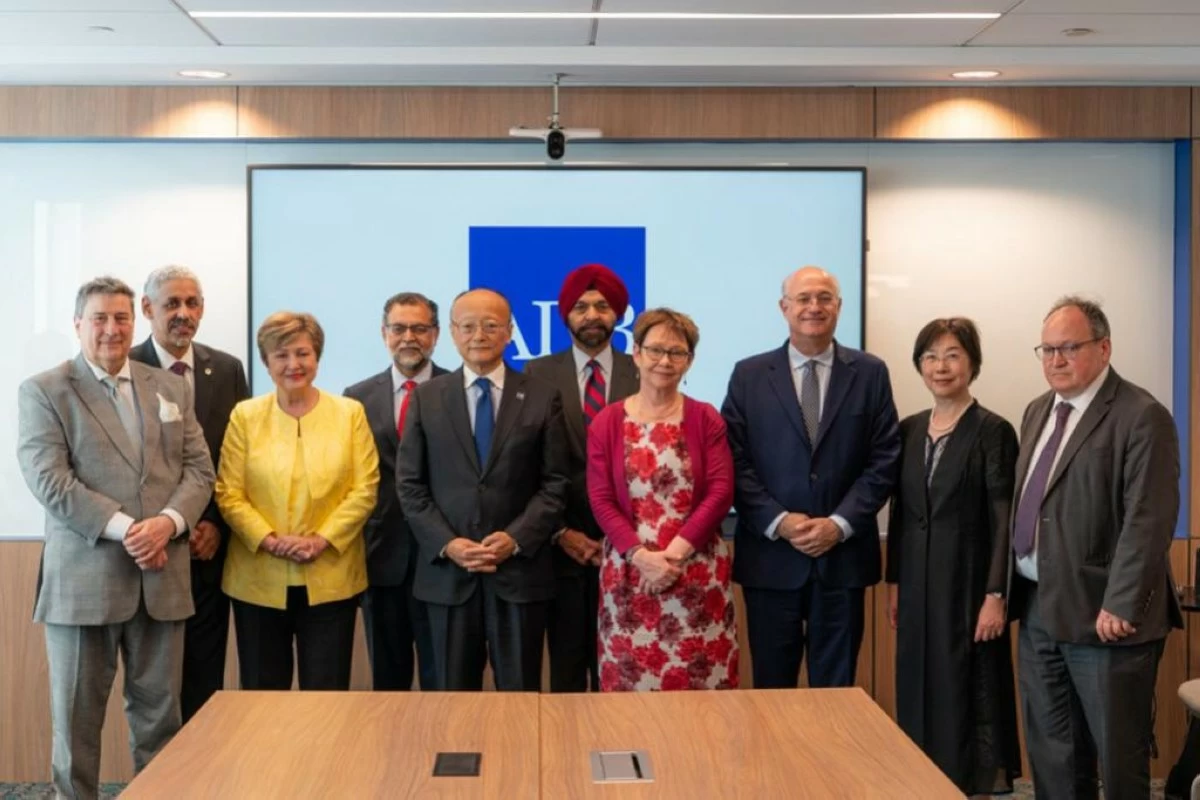
Multilateral development banks (MDBs) are stepping up coordination to cushion economies from the spillover effects of the Middle East conflict, citing rising energy costs, supply chain disruptions, and tighter financial conditions as immediate risks to growth and stability.
In an April 17 joint statement issued on the sidelines of the spring meetings of the World Bank Group (WBG) and the International Monetary Fund (IMF) in Washington, DC, the MDB heads group said closer cooperation is needed to safeguard development gains and support vulnerable economies.
“MDBs are working more closely than ever to support our members and clients through a complex and evolving global environment. By combining our financial strength, knowledge, and partnerships, we are helping countries manage immediate pressures while building resilience for the future,” said Masato Kanda, president of the Manila-based Asian Development Bank (ADB) and current chair of the MDB heads group.
The group said current global developments are already feeding through to higher energy prices and disrupted supply chains, prompting MDBs to stand ready with “timely and effective support” to help countries manage risks, maintain macroeconomic stability, and protect vulnerable populations.
MDB leaders reaffirmed their commitment to scaling up collaboration, with a focus on mobilizing private capital, generating employment, and financing infrastructure to support long-term growth. They agreed to form a working group to expand financing capacity, including through originate-to-distribute or share approaches aimed at creating bankable projects and attracting private investment.
They also highlighted efforts to improve credit risk transparency in emerging markets through the Global Emerging Markets (GEMs) consortium, expand local currency financing to mitigate exchange rate risks, and promote the disciplined use of blended finance. MDBs are also working toward a common framework to measure job creation impacts from their operations.
In parallel, the institutions are strengthening cooperation in sectors seen as critical to resilience and growth, including supply chains for critical minerals, which they said are essential for energy security, digital transformation, and industrial development. The group also launched “Water Forward,” a global initiative aimed at scaling up investment in water systems to support food security, jobs, and climate resilience.
MDBs further agreed to deepen joint work in emerging areas such as artificial intelligence, while enhancing operational efficiency across institutions. This includes adopting a common “Value for Money” procurement framework to improve the quality and sustainability of projects, alongside expanding mutual reliance mechanisms to streamline co-financing arrangements.
The MDB heads group includes the African Development Bank Group (AfDB), the ADB, the Beijing-based Asian Infrastructure Investment Bank (AIIB), the Council of Europe Development Bank (CEB), the European Bank for Reconstruction and Development (EBRD), the European Investment Bank (EIB), the Inter-American Development Bank (IDB) Group, the Islamic Development Bank (IsDB), the New Development Bank (NDB), and the WBG, with the IMF participating in the discussions.