







Counting steps in the Mountain City of Chongqing


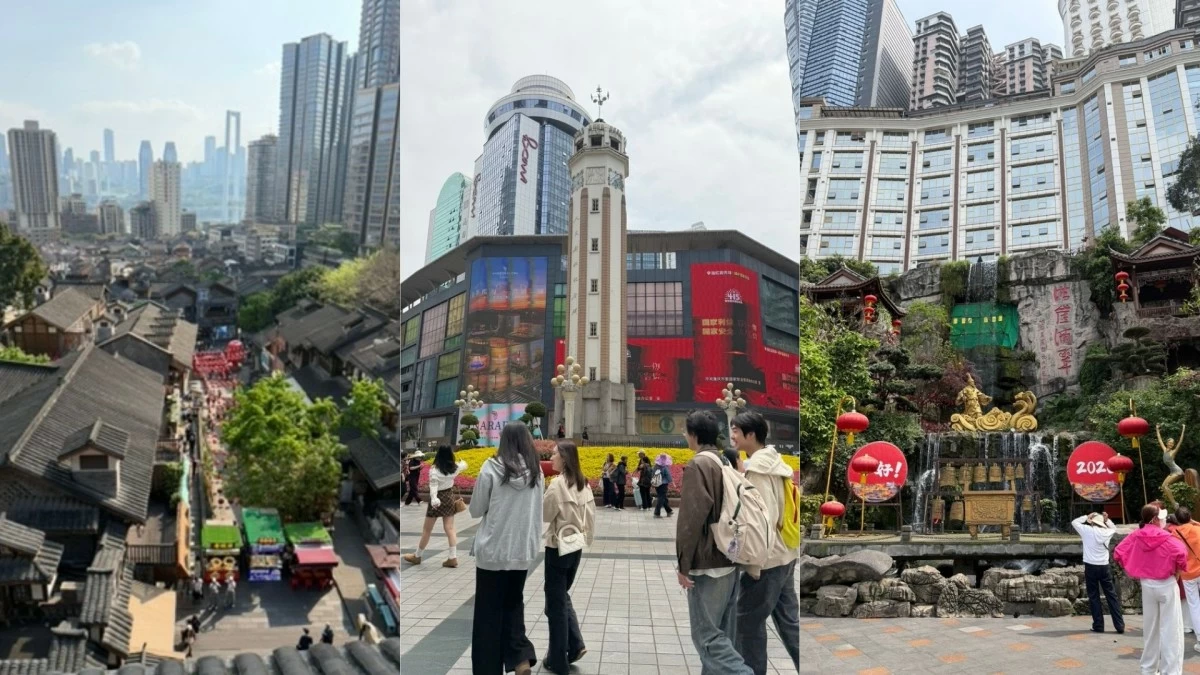
By the time we left for Chongqing, I had stopped counting the stories I needed to write and started counting something else entirely: steps.
Not the metaphorical kind, but the literal ones — the kind that make your legs question your life choices.
Chongqing is called the “Mountain City,” and after five days of going up and down what felt like an endless series of stairs, escalators, bridges, and “ground floors” that weren’t really ground floors, I understood why.
Day 1: A preview of what’s to come.
"You have a passport, right?"
"Yes, Sir."
"Do you have a Schengen visa?"
"No, Sir."
"Good. You won't need it. We're sending you to China."
This was how one of my senior editors, Mr. Rocky Nazareno, told me — in a one-minute phone call on a Friday afternoon — that I would be joining a team from Manila Bulletin on a trip to China.
It didn’t quite sink in at first, especially since I had just gotten home from a week-long trip to Tokyo, but when I got added to a Viber group named “Team CHONGQING,” the excitement started creeping in.
I’ve been to China before, but not to Chongqing. What I did know about it came mostly from TikTok — videos of people joking about how the city has multiple ground floors and a lifetime’s worth of stairs.
It looked exhausting.
It also made me want to go even more.
Our group of eight flew out on April 7: Isabel de Leon, our senior news editor; Aurora Tan, senior vice president; Bernadette Cunanan, public relations manager; Chino Leyco, business editor; Rey Ilagan, lifestyle editor; Yvette Tan, agriculture and Spotlight editor; AJ Sison, social media manager — and me.
With no direct flights yet, we had to pass through Guangzhou before landing in Chongqing past 8 p.m.
The advice to wear comfortable shoes was useful almost immediately. We hadn’t even left Chongqing’s airport, and we were already past 6,000 steps.
We were greeted by Mr. Guo Bosi — “Boss,” as we called him — a 26-year-old (same as AJ, the youngest in our group) diplomat from China’s Ministry of Foreign Affairs, along with Nora, our feisty and efficient tour guide who honed her English skills by binge-watching American shows.
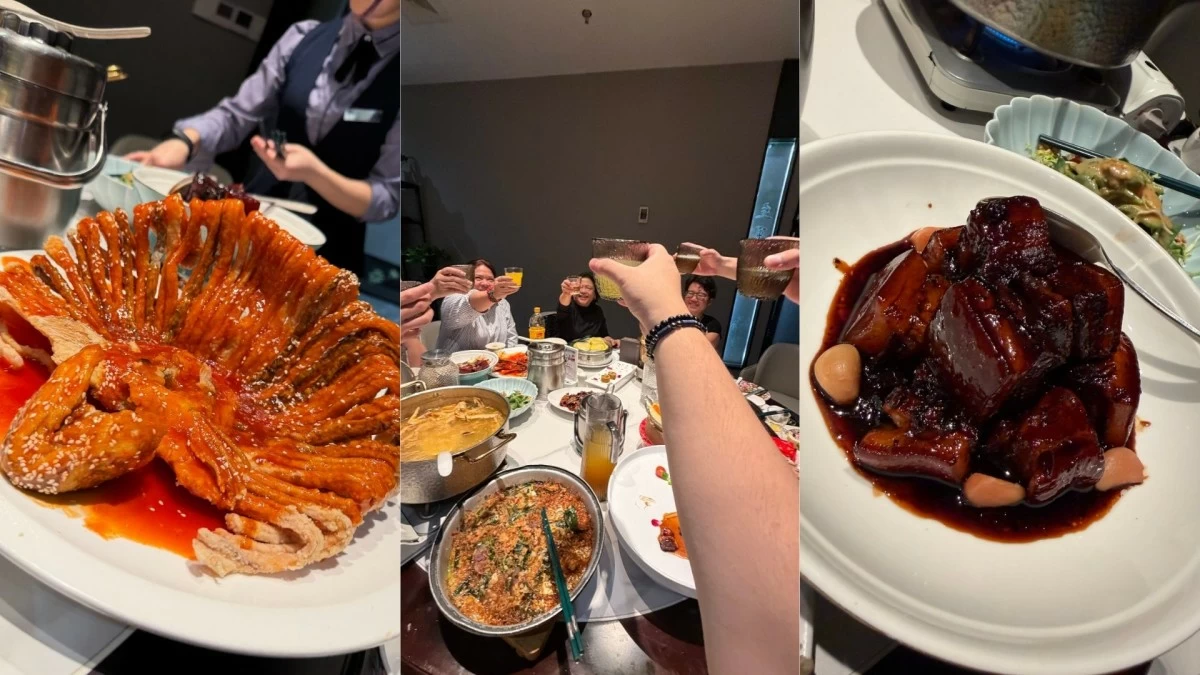
They took us straight to dinner, where a full spread of pork, fish, shrimp, noodles, vegetables, tofu, soup, and fruits was waiting.
It was our first real taste of Chongqing.
It would not be the last.
Step count: 9,685.
Day 2: High and ground floors
If Day 1 was a preview, Day 2 was confirmation.
Chongqing was not going to take it easy on us.
At Raffles City, Nora asked who wanted to try the Sky Walk — a 380-meter circular walkway suspended 250 meters above the ground.
I immediately said yes.
Chino and Rey were just as game, while AJ and Boss took a few extra seconds — and a bit of courage — before deciding to join us.
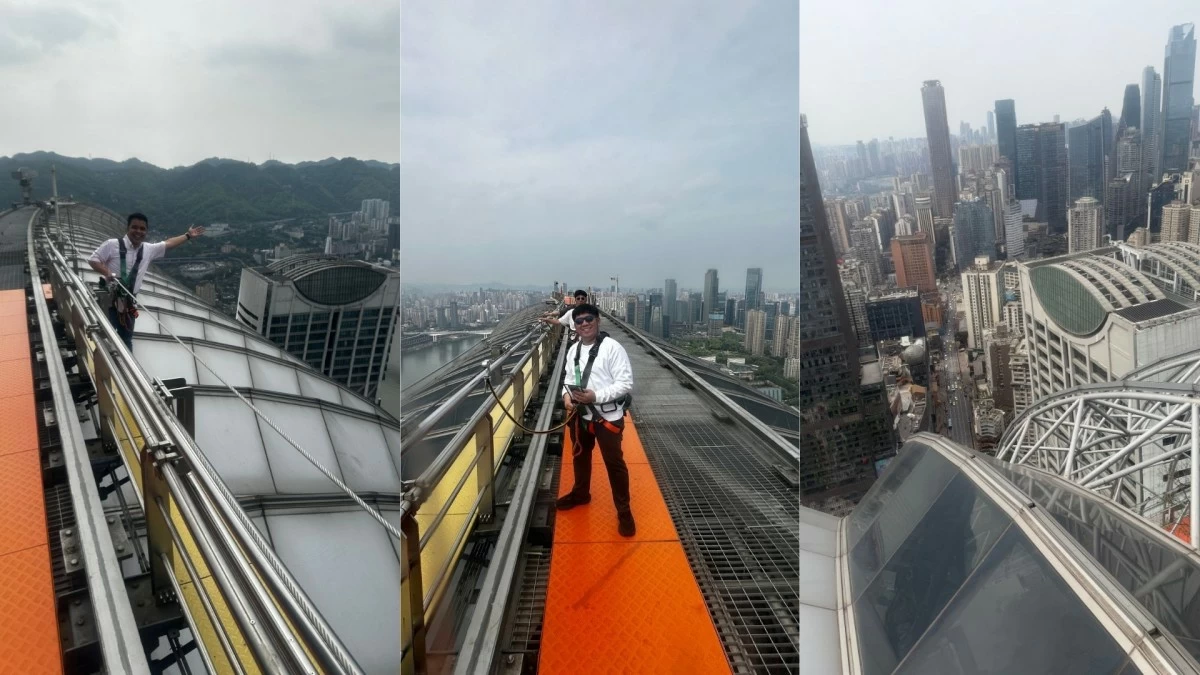
One wrong step, if your harness fails, and that’s it. We decided not to think about that. Instead, we laughed, took photos, and tried to act braver than we probably felt.
“So this is what it’s like living on the edge,” Rey said, as we literally walked the edge of the yellow walkway.
After lunch, we went to the so-called “Magical 22nd Floor,” where a ground-level plaza turns out to be on the 22nd floor of the Kuixing Building.
It sounds confusing until you see it for yourself.
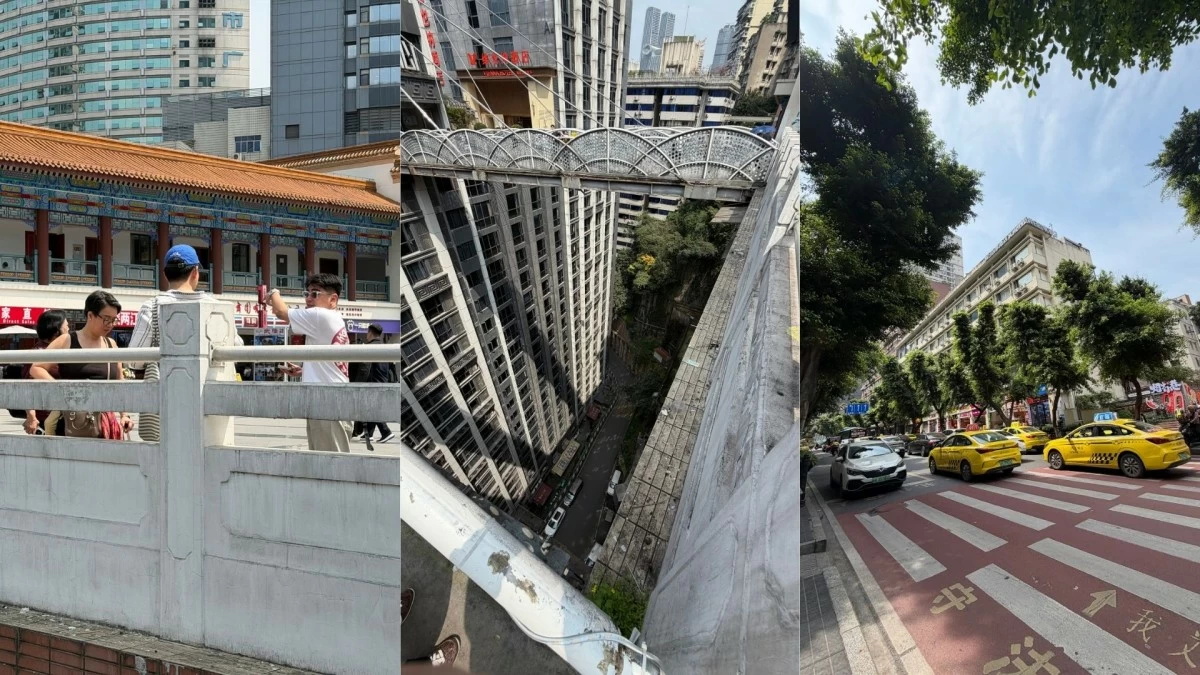
That was when it really clicked. In Chongqing, “ground floor” depends on where you’re standing.
We ended the day boarding a Two Rivers cruise along the Yangtze and Jialing Rivers. We had a room to ourselves, but we stayed on the deck, taking in the city lights. We passed by the Hongya Cave, an 11-story stilted building complex famous for its "Spirited Away"-like, stunning night illumination.
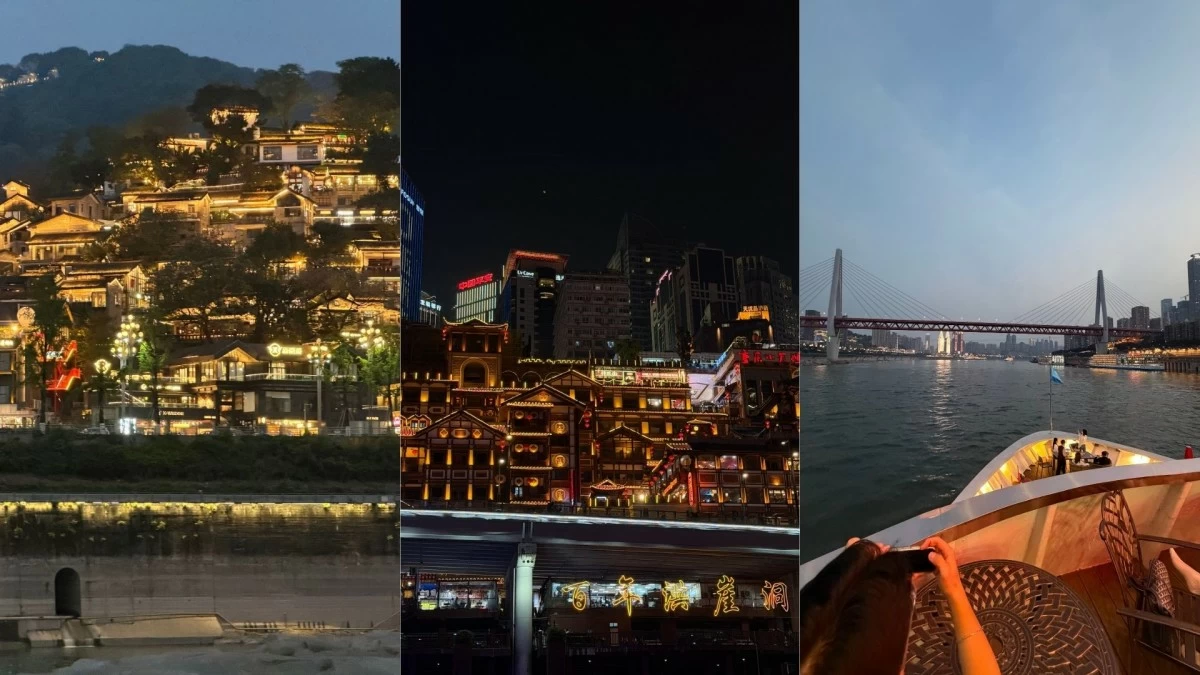
By this point, the steps were starting to feel real.
You don’t just walk in Chongqing. You figure it out as you go.
Step count: 15,134.
Day 3: A home ‘Huawei’ from home
Our third day brought us to Huawei, where we were welcomed by a full reception — something we didn’t expect for a group our size.
I thought we would just be seeing gadgets, but the experience turned out to be more immersive.
The self-driving Maextro stood out.
Sitting in the backseat, with massage chairs, a massive screen, and what felt like dozens of speakers surrounding you, it didn’t feel like a car. It felt like a space designed to make traffic almost irrelevant.
Seeing it drive on its own — smoothly reacting to sudden changes on the road — made it feel less like a novelty and more like something already within reach.

Later, we split up.
The girls went for a massage while we boys, including Boss, who later told us we could call him Jeremy, explored Shibati, a historic district that blends traditional architecture with modern life.
It was one of those places that makes you slow down a bit — even if the stone steps and your step count say otherwise.
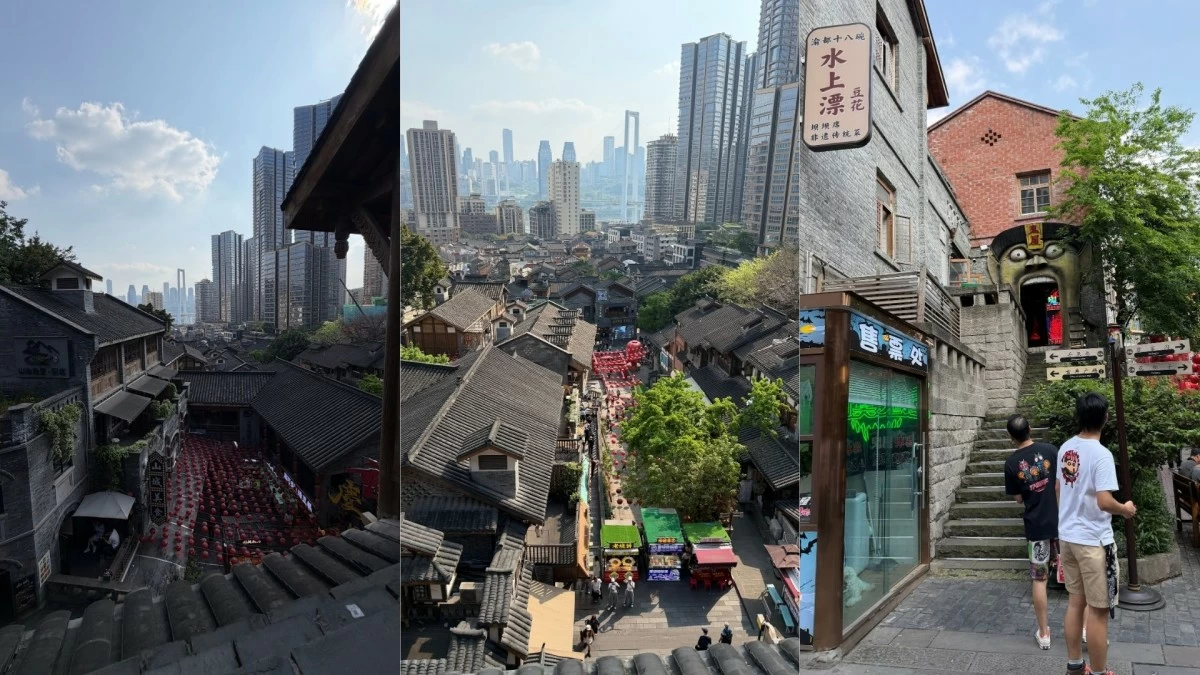
That night, AJ and I decide to explore some more. We went back to Raffles City, checking every store for Pokémon finds.
We asked Jeremy to join us, but he had work to finish. Even in a packed itinerary, reality still finds its way in.
Step count: 13,057.
Day 4: Last full day
By Day 4, our legs were starting to negotiate.
The pace, thankfully, was a bit lighter.
We visited the Eling Second Factory, an old printing factory that is now a cultural spot, and the Great Hall of the People, an iconic 65-meter-tall monumental structure, where we all squeezed in for a group photo printed on a mock newspaper.
At Liziba Light Rail Station, we joined a crowd of tourists waiting for the now-famous moment when the train quietly passes through a residential building.
Seeing it in person felt just as surreal as it does online.
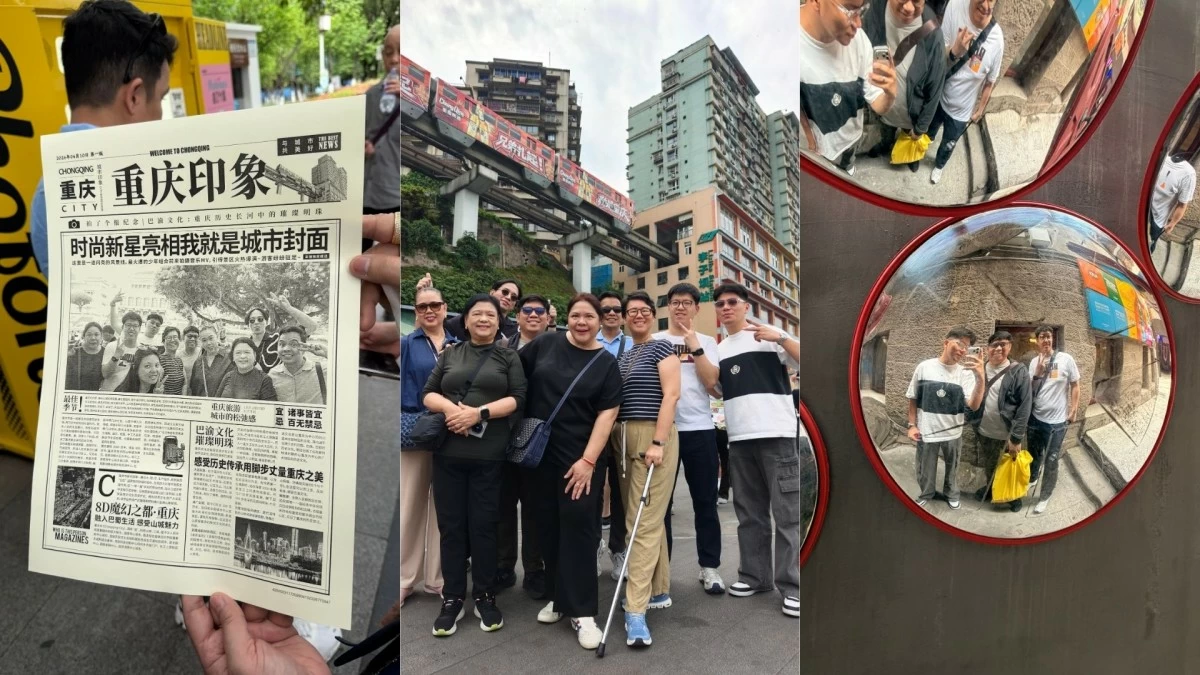
After lunch, we rode the Yangtze River Cableway. During that five-minute ride, Chongqing looked even more layered — a city that somehow stacks itself without falling apart.
We ended the day at Xiaohaoli, cooling down with tea and ice cream.
Our last stop was the Changjiang Wharf, where we were treated to the authentic Chongqing hotpot.
For me, the steps today didn’t feel like a challenge.
Step count: 9,265.
Day 5: Until we meet again!
Our final day came quickly.
We stopped by the Liziba Platform one last time for photos and videos before heading to Halo Shopping Mall, a high-value ecological shopping mall.
Lunch felt different. Not because of what we were eating, but because we knew it was the last one.
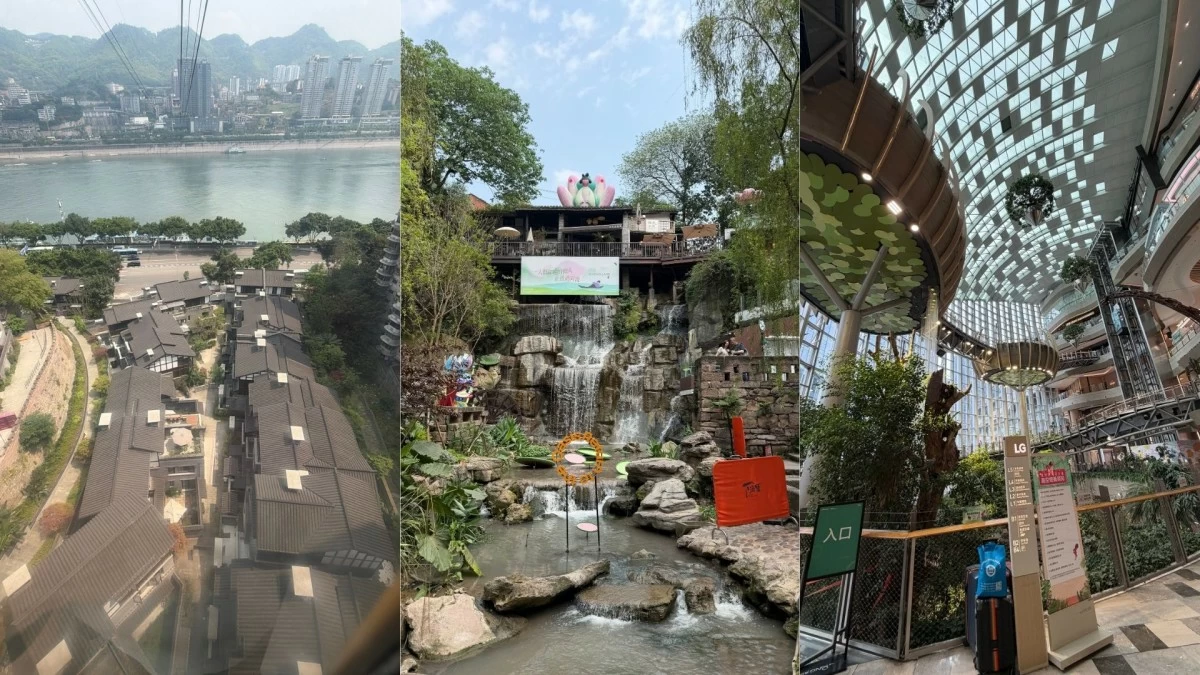
At the airport, we said our goodbyes to Noral and Jeremy, thanking them for guiding us through the city that doesn’t make things easy — but makes everything memorable.
Nora even handed us “ugly ponkans” to bring home.
After a layover in Hong Kong, we landed in Manila past 12 midnight on April 12. The eight of us went our separate ways, carrying our own memories of the trip.
Mine came with one clear realization: Chongqing isn’t a city you simply visit.
It’s a city you climb, descend, and understand one step at a time.
After making it through five days, I told the others, “We should have a T-shirt made. ‘I survived Chongqing.’”
Step count: 9,980.