







Carving histories in 'Engraved Memories'
A closer look at the printworks of Resty Flores and Brian Barrios
By S.C. Fojas
Published Apr 18, 2026 01:45 am


At A Glance
- The title "Engraved Memories" operated on both a literal and metaphorical level.
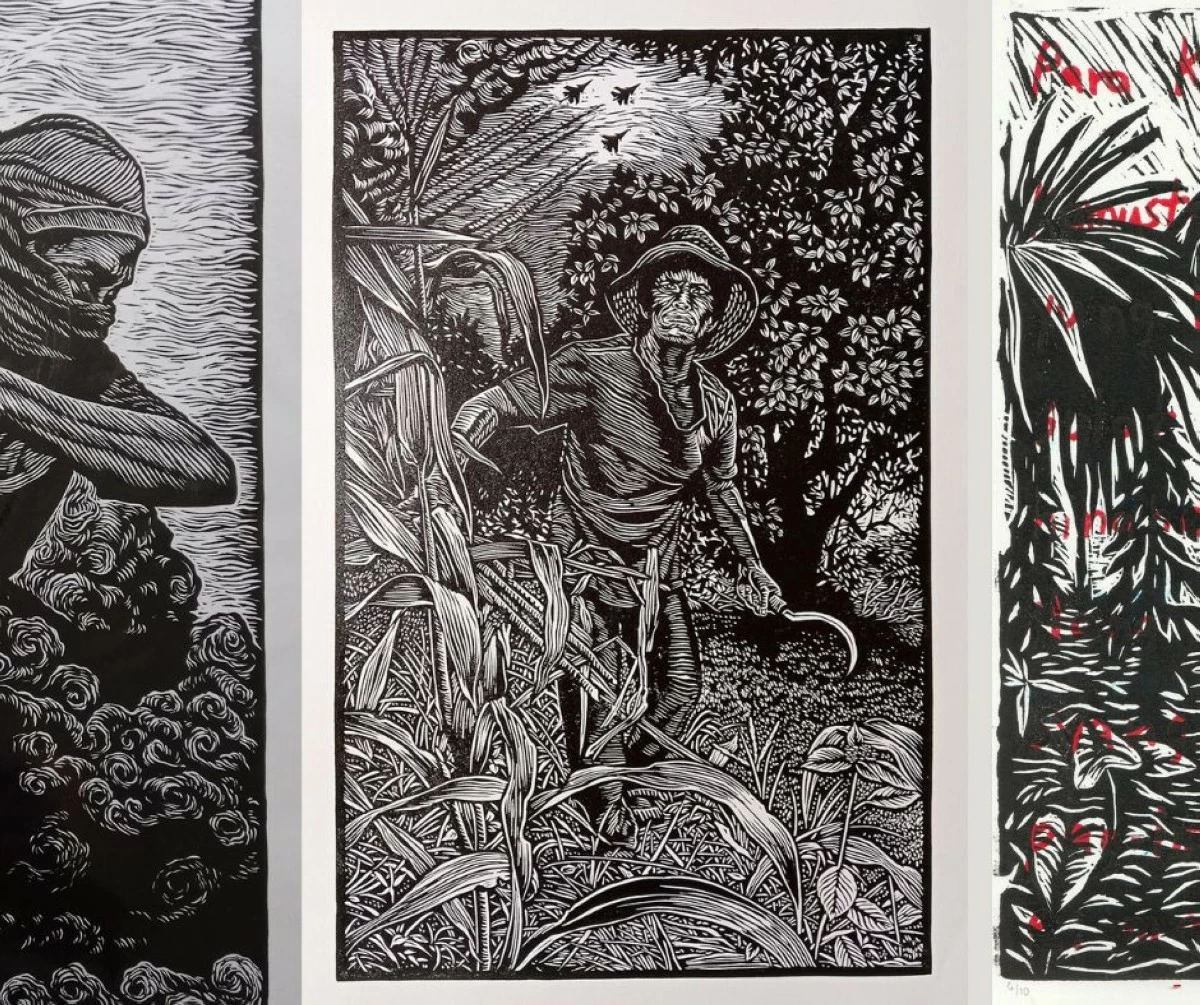
ENGRAVED MEMORIES Brian and Resty's exhibit was on display at the Eskinita Art Farm in Tanauan, Batangas.
In “Engraved Memories,” printmakers Resty Flores and Brian Barrios came together in a quietly urgent dialogue, one that does not shout, but cuts deep. Mounted at Eskinita Art Farm, the exhibit gathered a series of rubbercut prints that meditate on memory, struggle, and the enduring marks of history on everyday life.
The works explored a quiet reflection of images that bear the weight of an oppositional cultural consciousness shaped by postcolonial wounds and the contradictions of inherited systems. That weight was palpable in the works themselves - dense with carved textures, stark contrasts, and images that felt both intimate and collective.
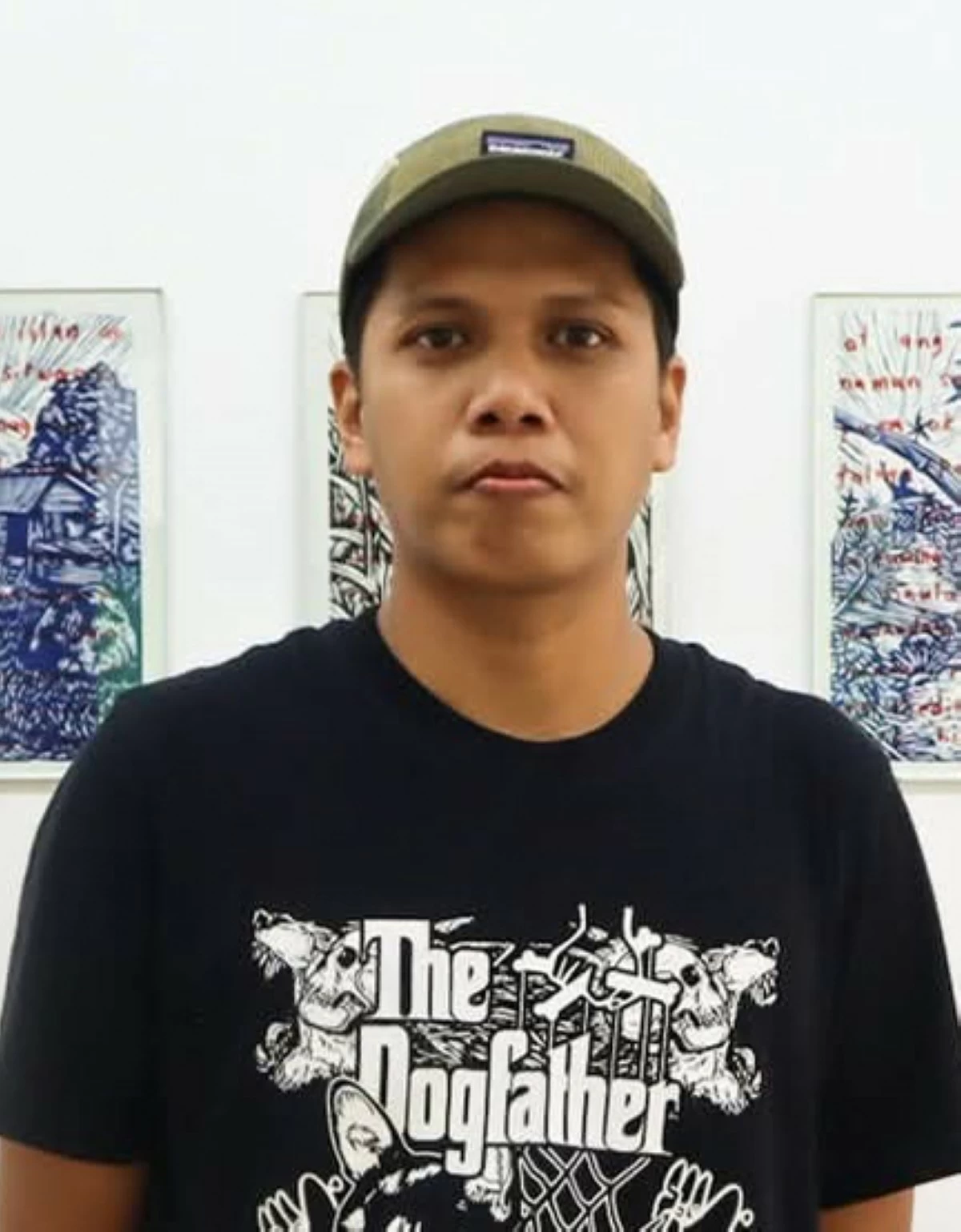
MEET THE ARTISTS Resty Flores
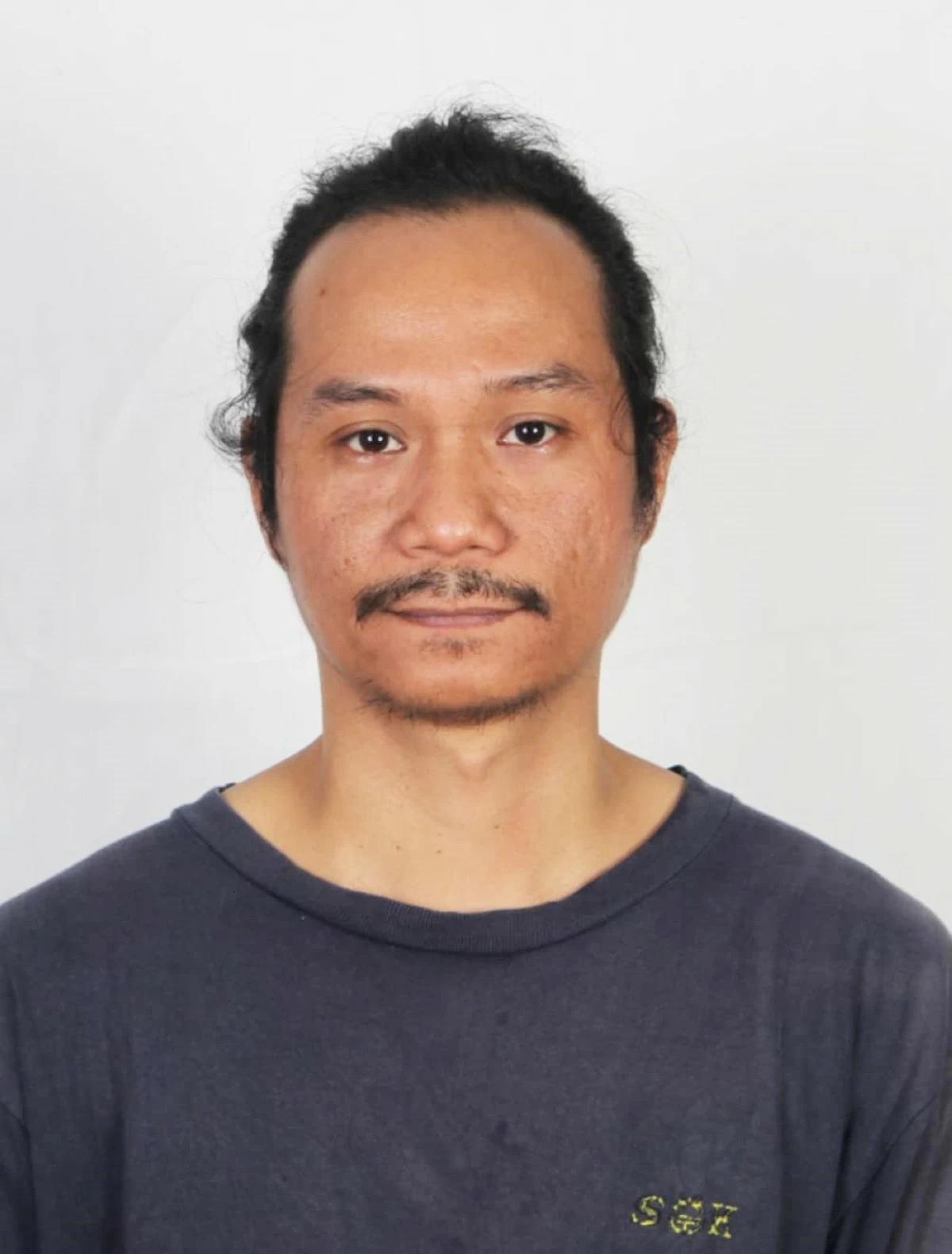
MEET THE ARTISTS Brian Barrios
A shared space, a shared pulse
The collaboration, as Brian reveals, was almost serendipitous. “‘Yung show po actually biglaan lang din po siya, may bagong small space na bagong bukas sa Eskinita Art Farm na sakto lang para sa mga paperworks (The show is actually started on a whim, there’s a newly opened small space at Eskinita Art Farm that was just right for the paperworks),” he said. The modest scale of the new gallery naturally lent itself to printmaking, a medium both artists had been exploring.
Despite the spontaneity, the conceptual alignment was unmistakable. “Magkaibang perspective at atake sa mga pyesa pero isa lang ang iniikutan na ideya, mga struggle na kinakaharap ng ating lipunan at mga pangyayari sa araw-araw (There are different perspectives and approaches for the pieces, but it all revolves around one idea, the struggles faced by our nation and daily happenings),” Brian added.
Resty echoes this shared grounding, tracing it to lived experience, “Iisa sa mga ideya dahil sa pagkakaugnay ng mga tao at lugar, mula rin ito sa aming mga personal na karanasan mula sa pakikisalamuha at pagkatuto sa perspektiba ng mga piniling subject (These ideas are one because of the relationship between people and places, it is also from our personal experiences from immersing ourselves and learning about the perspectives of our chosen subjects).”
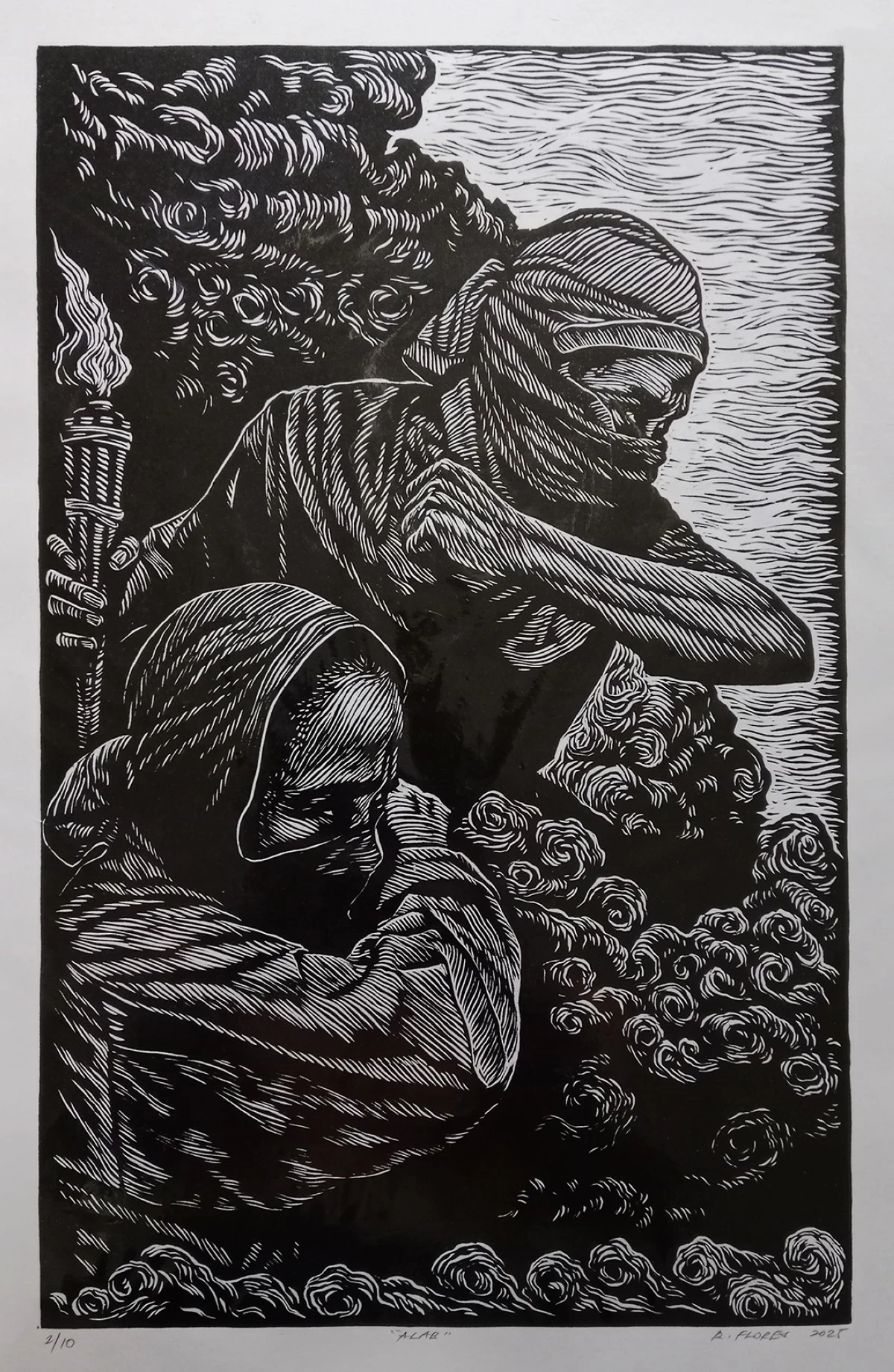
'ALAB,' rubbercut on paper, Resty Flores, 2026
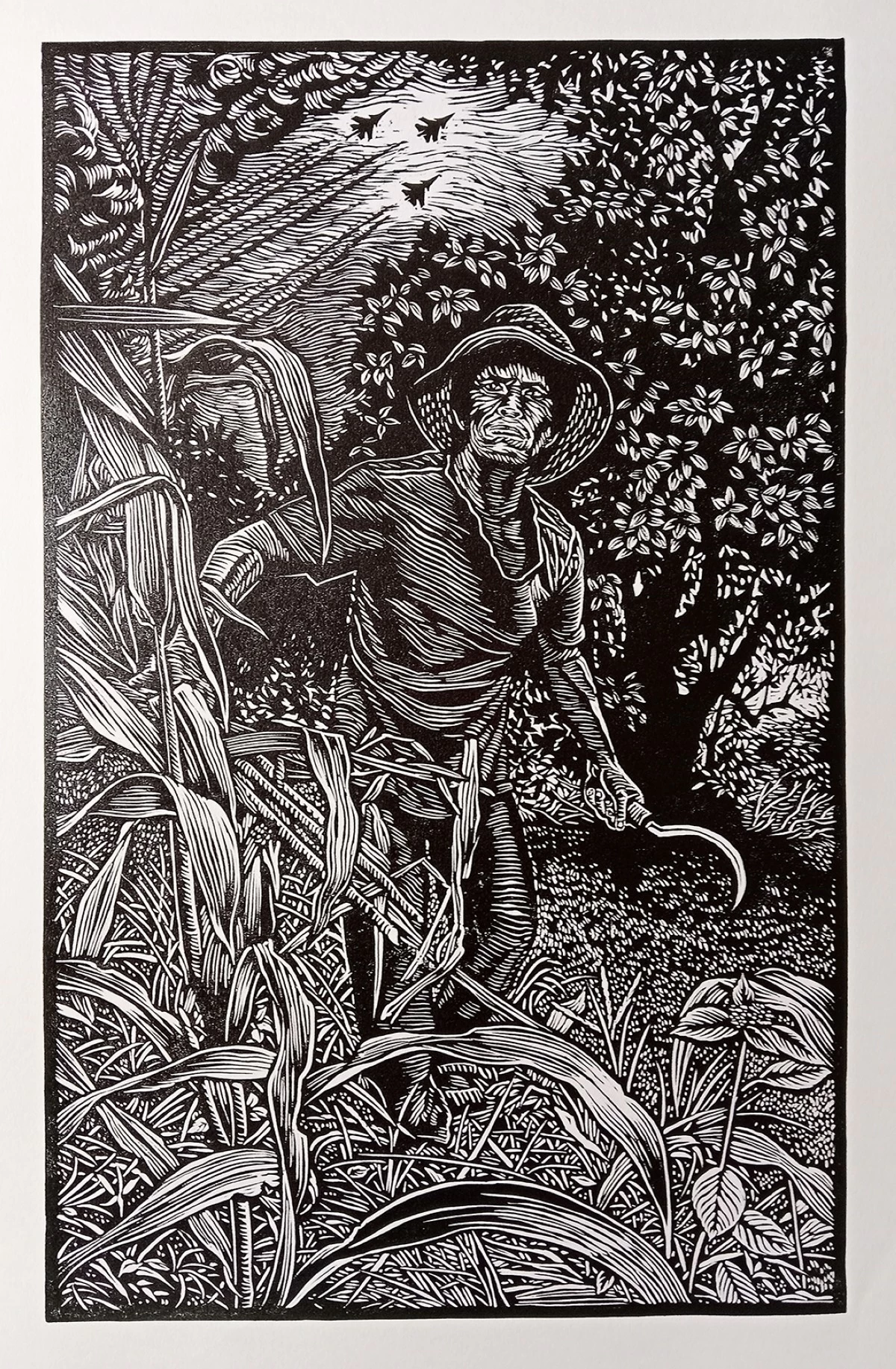
'BULALAKAW,' rubbercut on paper, Resty Flores, 2026
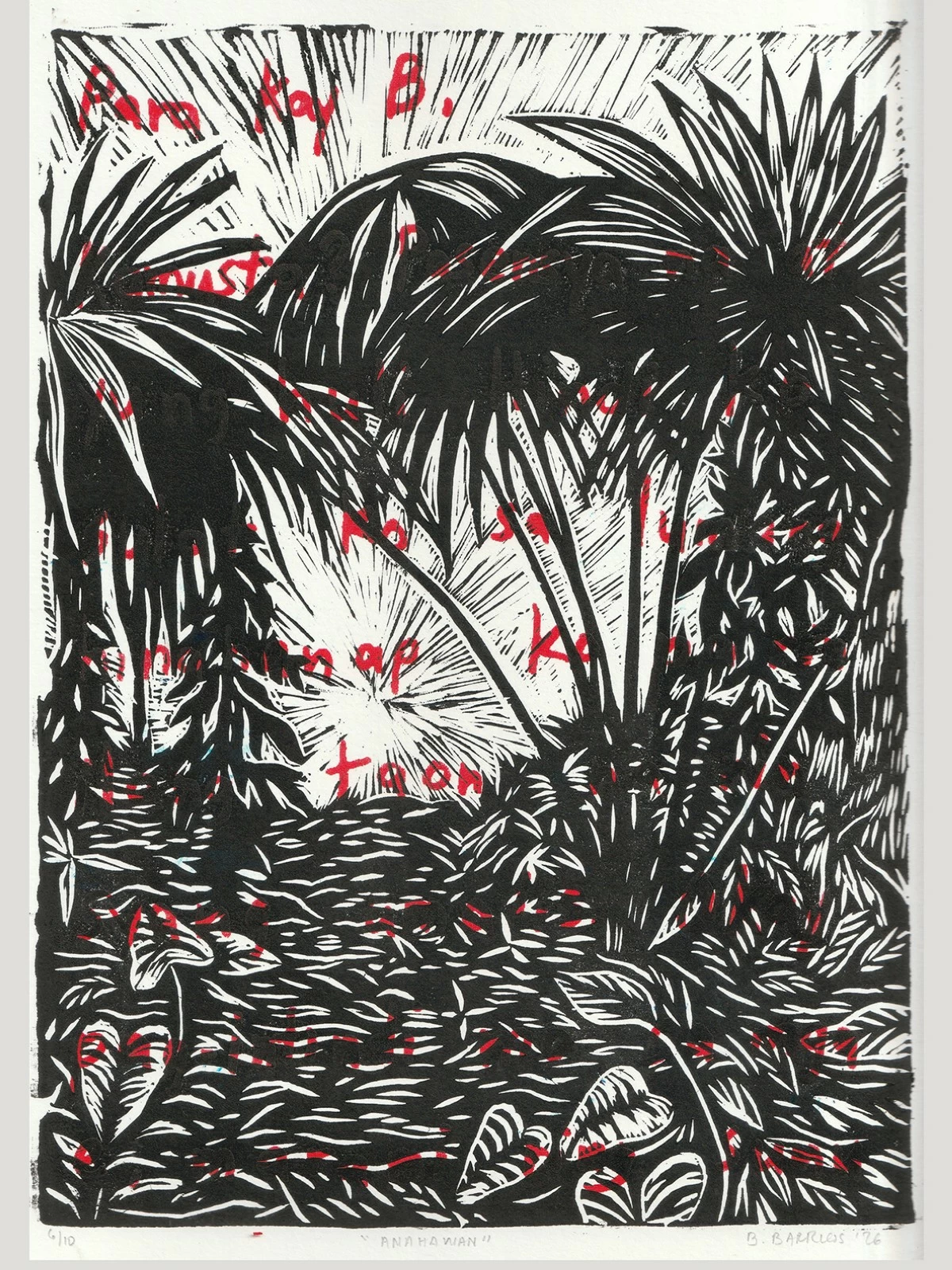
'ANAHAWAN,' rubbercut on paper, Brian Barrios, 2026
The mark of memory
The title “Engraved Memories” operated on both a literal and metaphorical level. In printmaking, engraving is a physical act, cutting into a surface to produce an image. But for Resty, the word carried a deeper resonance, “Galing ‘yung ideya sa salitang ‘ukit,’ parang sugat na nagmamarkat at pagtatatak sa historical na kalagayan ng isang lipunang ginagawalan natin (The idea came from the word ‘carving,’ similar to the scars of marking and recording historical events from a nation we are moving).”
This idea of memory as wound, and as record, ran through the exhibit.
Brian’s works, such as “Anahawan” and “Kawayanan,” rendered dense natural landscapes teeming with layered foliage. At first glance, they appeared lush and alive, but the compositions are restless. The carved lines felt almost frenetic, as if the environment itself was charged with unseen tension. Overlaid with handwritten text in red, the images became sites of interruption, language cutting through nature, echoing human intrusion, memory, or even protest.
Resty’s “Alab,” on the other hand, shifted the focus to the human figure. Two masked individuals emerged from a field of swirling, almost flame-like patterns. One held a torch, both appeared in motion, bracing against something unseen. The carving is meticulous, with tight, repetitive lines that build texture and emotional intensity. The piece evokes resistance, survival, and collective endurance - an image that felt both historical and immediate.
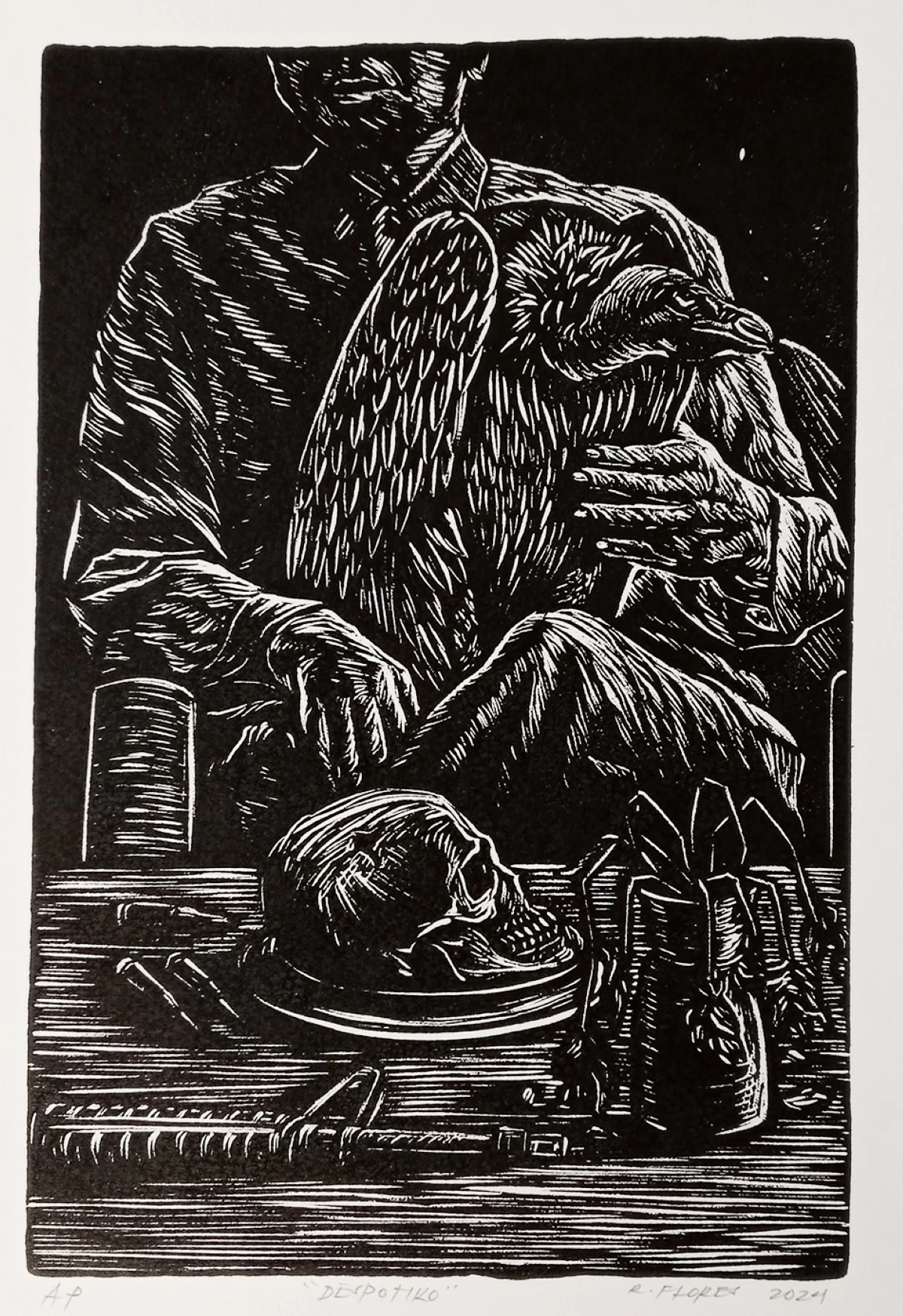
'DESPOTIKA,' rubbercut on paper, Resty Flores, 2026
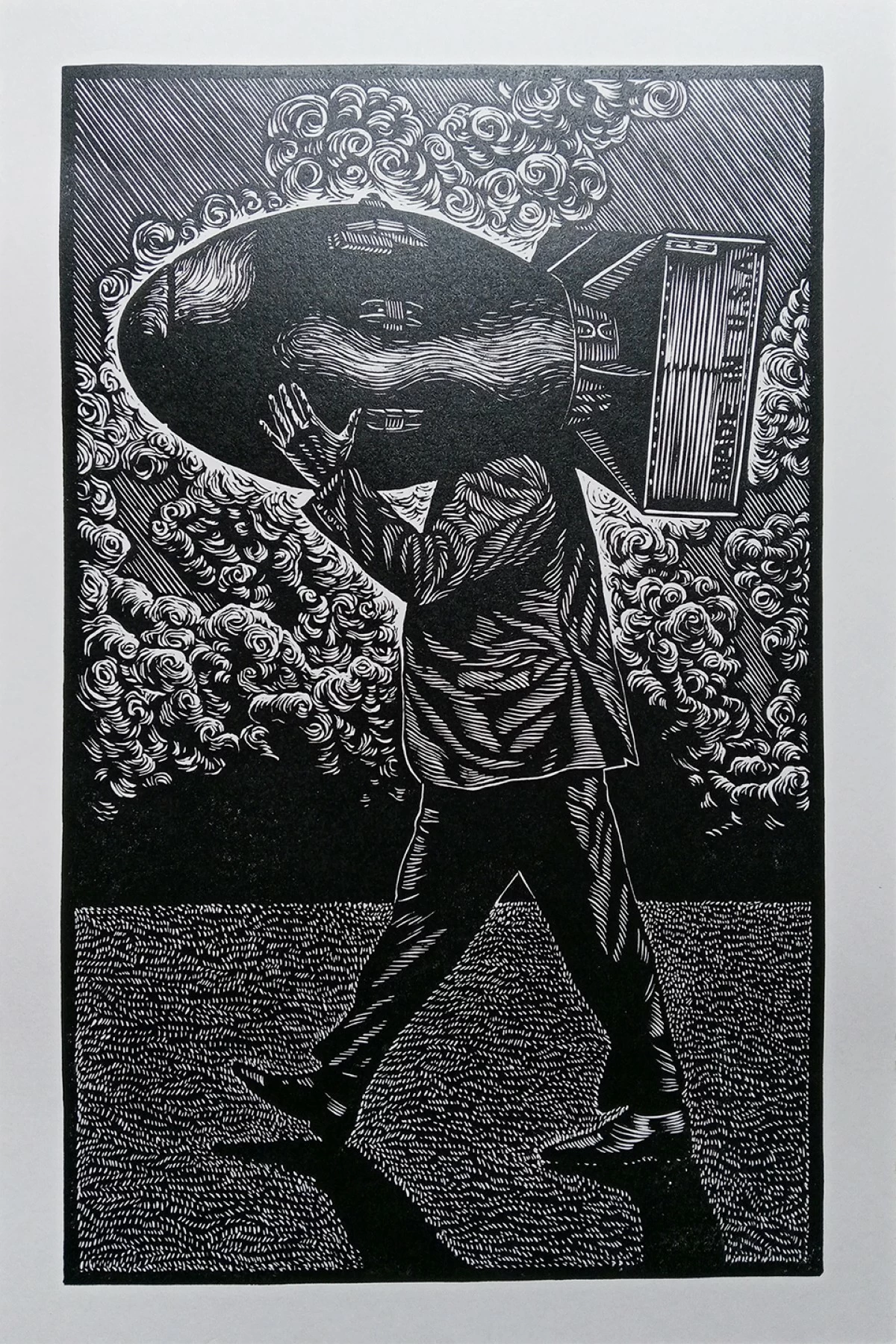
'KALAKAL,' rubbercut on paper, Resty Flores, 2026
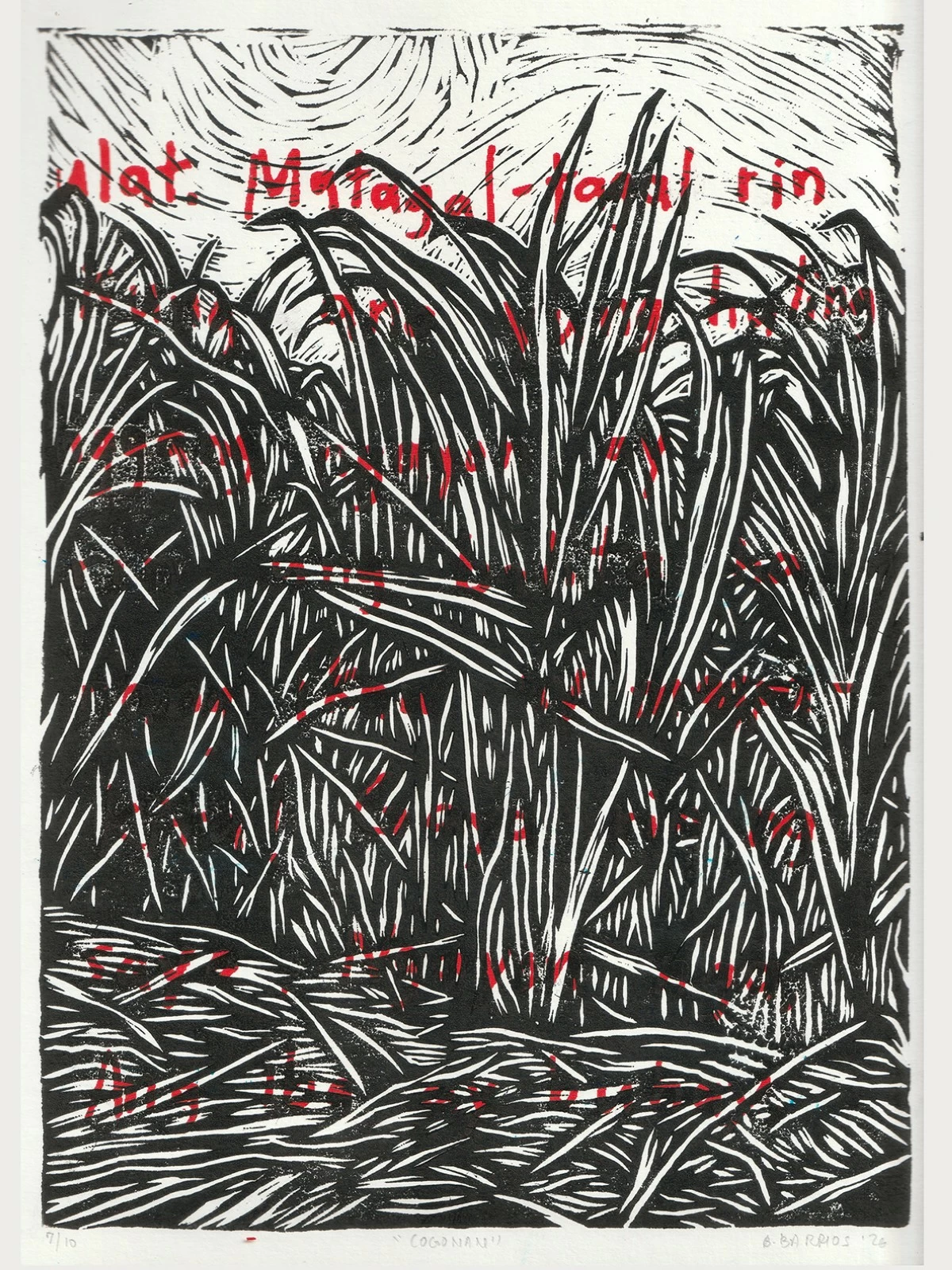
'COGONAN,' rubbercut on paper, Brian Barrios, 2026
Process as reflection
Despite the thematic weight, both artists described a process grounded in openness rather than pressure. “In-enjoy lang din namin ang paggawa at pagkatuto sa proseso (We just enjoyed the making of and learning about the process),” Brian shared.
For Resty, this freedom was crucial, “Typical day para sa production, walang pressure. Siguro dahil naging malaya kami sa pagpili ng tema, kaya naging smooth ‘yung process (It’s a typical day for production, no pressure. Probably because we were free to choose a theme, that’s why the process was smooth).”
The works were produced almost simultaneously, reinforcing a sense of shared rhythm in the exhibit. Brian noted, “Wala naman, sabay-sabay naman silang ginawa, pati printing (Nothing really, we just worked on them together, as well as printing).”
Yet within this fluid process, challenges still surfaced. Resty pointed to one particularly demanding piece, “Para sa akin ‘yung piyesa na ‘Bulalakaw’ dahil maliliit na detalye. Medyo mahirap ukitin ‘yung block. For me, it was ‘Bulalakaw’ because of the small details. It was also hard to carve the block.” The difficulty of carving becomes part of the narrative itself - labor embedded into the image.
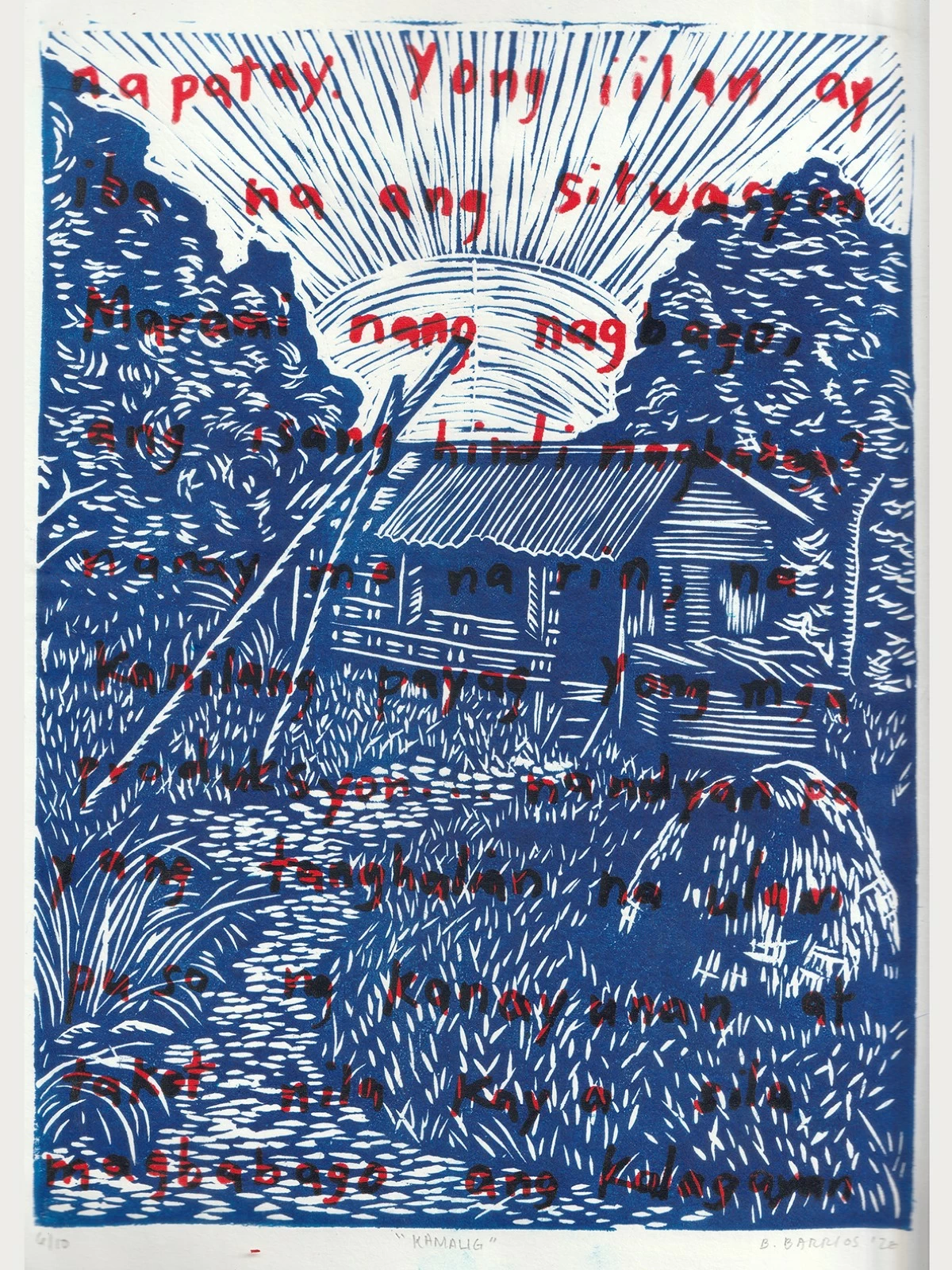
'KAMALIG,' rubbercut on paper, Brian Barrios, 2026
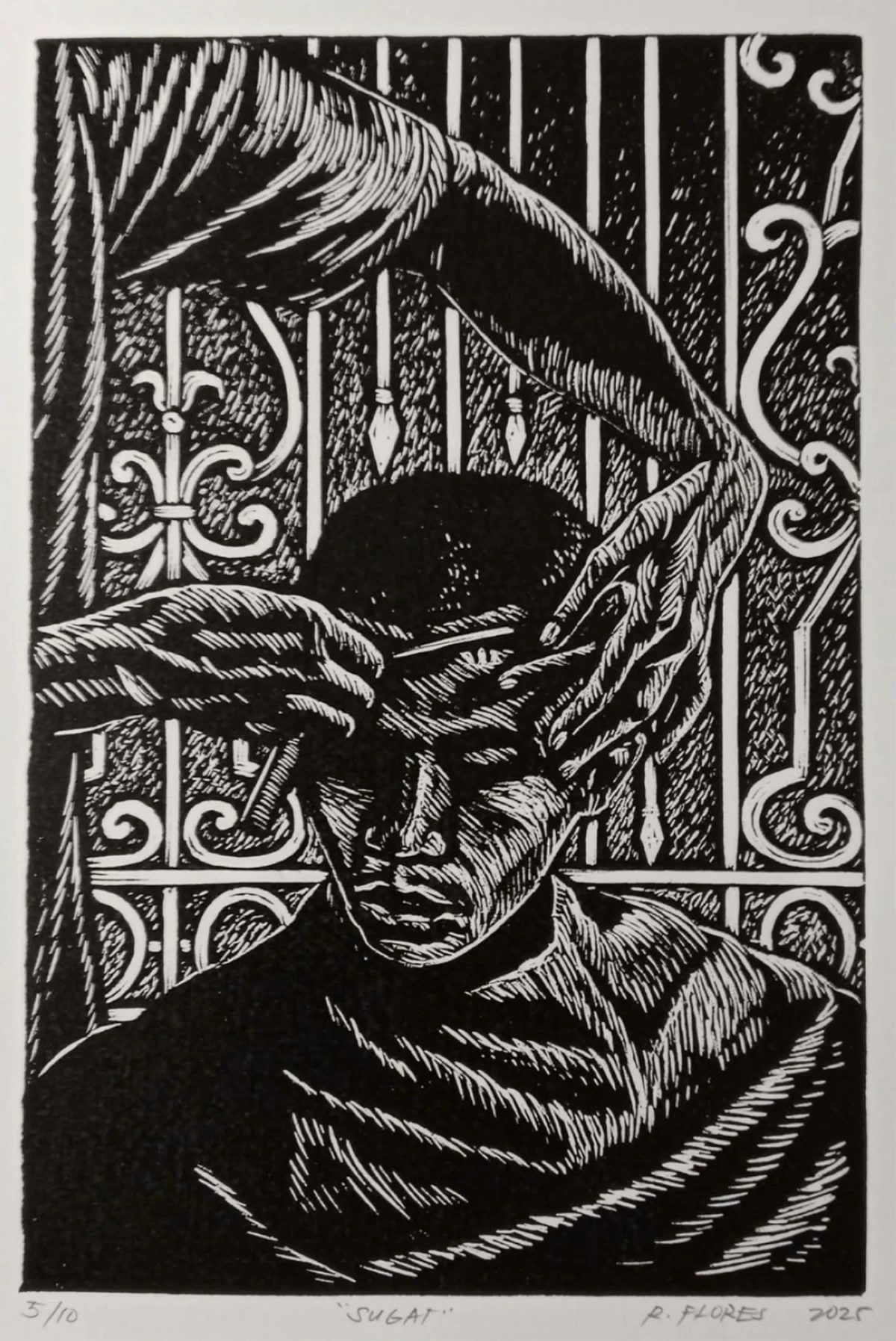
'SUGAT,' rubbercut on paper, Resty Flores, 2026
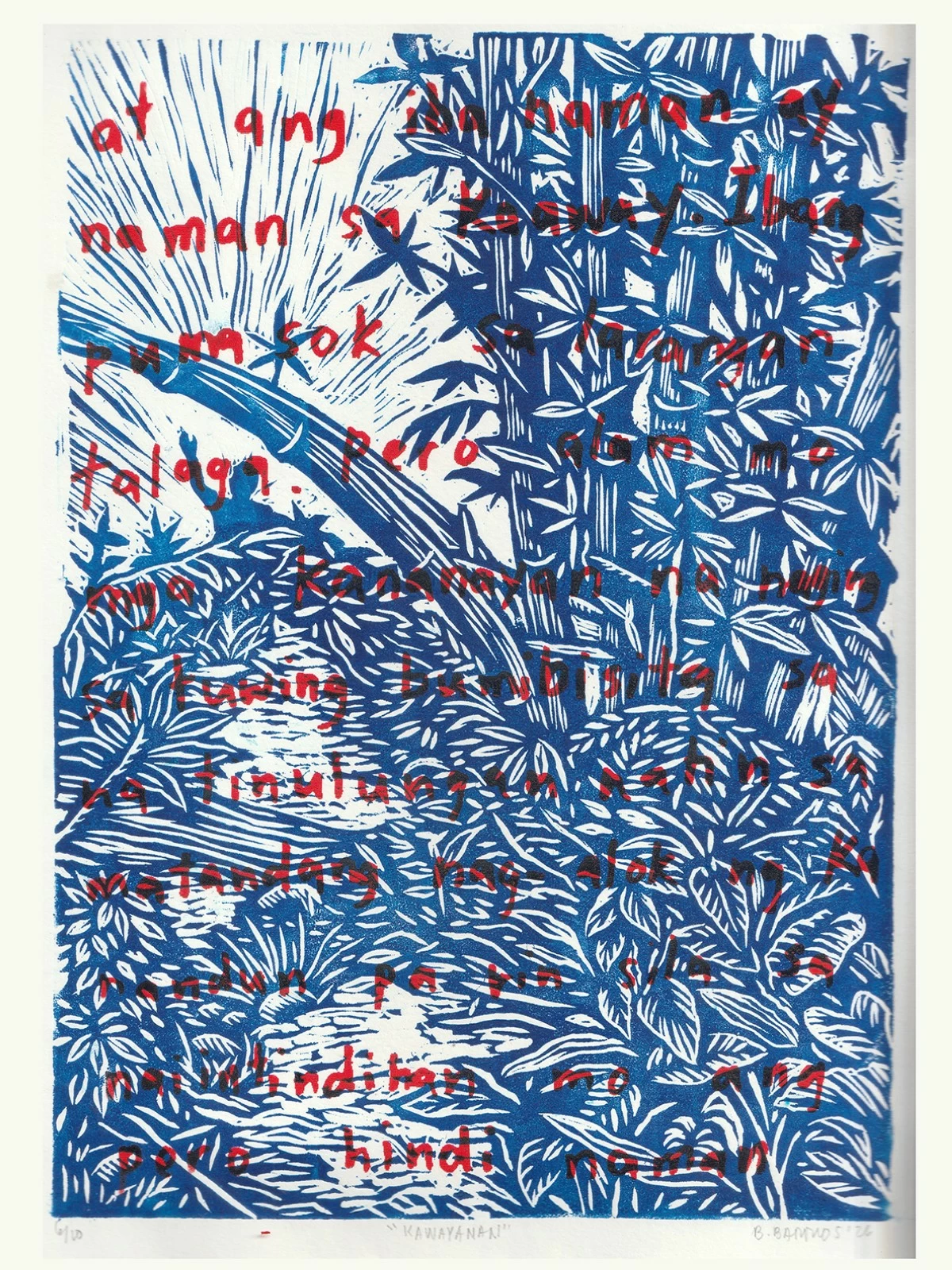
'KAWAYANAN,' rubbercut on paper, Brian Barrios, 2026
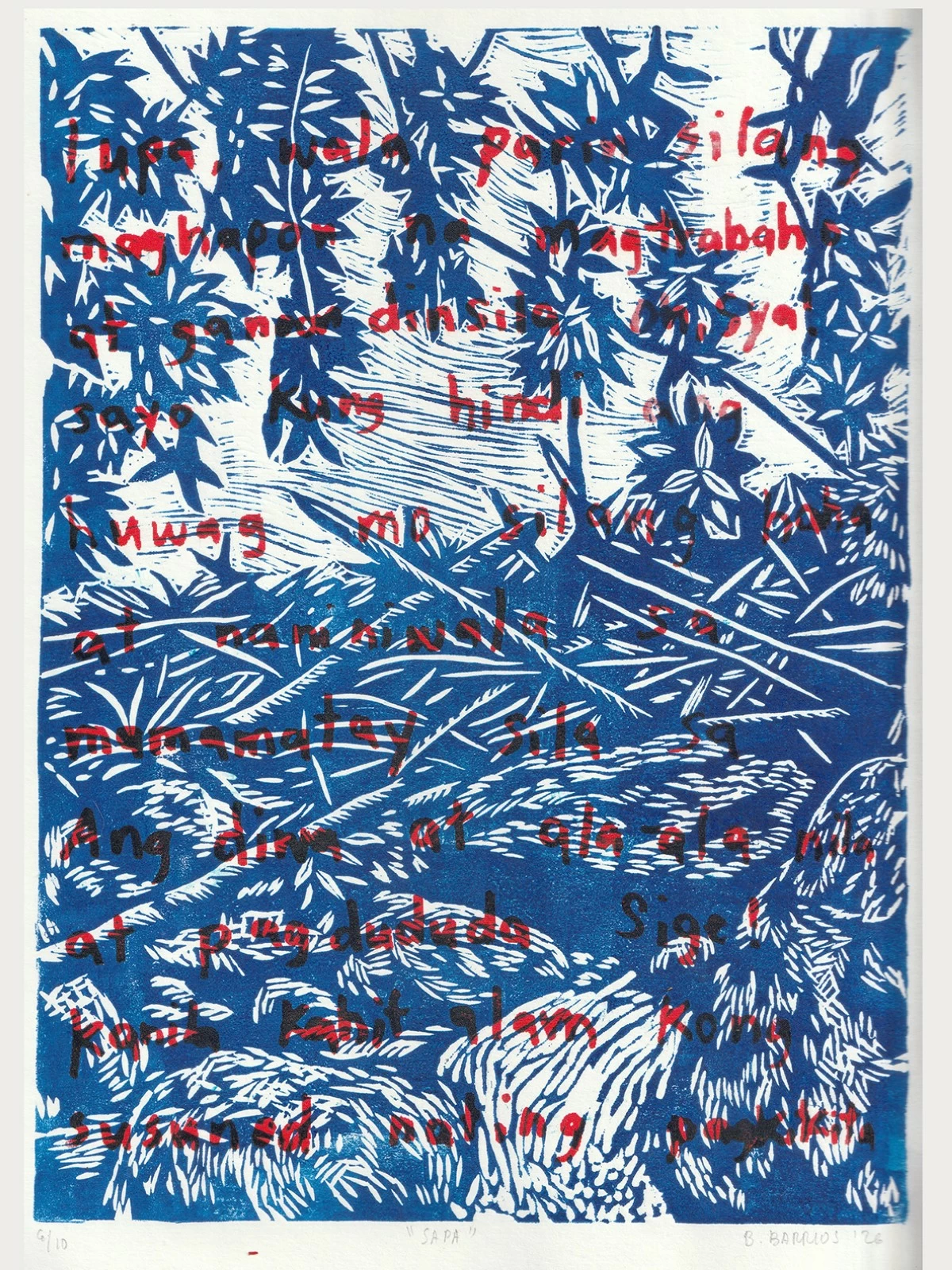
'SAPA,' rubbercut on paper, Brian Barrios, 2026
See and feel
Ultimately, “Engraved Memories” was less about presenting answers and more about sharpening awareness.
Brian hoped that viewers would recognize “ang kahalagahan ng pagiging makatao at makakakalikasan (the importance of being a man for others and one with nature).” Resty, meanwhile, emphasized reflection and recognition, “Maka-relate at mamilat sa kasalukuyang kalagayan ng lipunang Pilipino (Understand and recognize the current status of Filipinos).”
“Engraved Memories” ran from March 8 to April 19 at Eskinita Art Farm in Tanauan, Batangas.