ADVERTISEMENT

PH pushes territorial defense shift with HIMARS live fire in 'Salaknib'

Published Apr 17, 2026 08:49 am
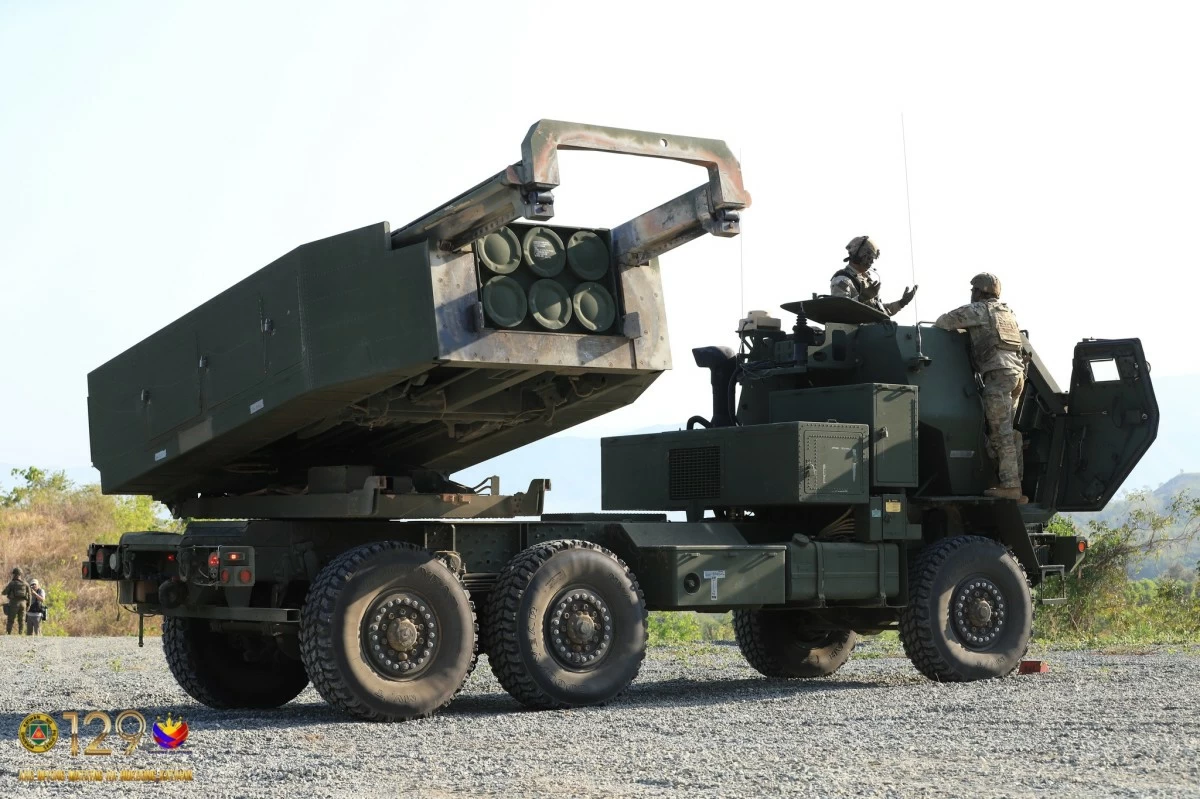
The Philippine Army fires a High Mobility Artillery Rocket System (HIMARS) during Exercise Salaknib in Laur, Nueva Ecija on April 16, 2026. (Photo: Philippine Army)
The Philippine Army (PA) stepped up its shift toward territorial defense as it joined United States forces in a live-fire exercise featuring the M142 High Mobility Artillery Rocket System (HIMARS) during Exercise Salaknib.
The PA Artillery Regiment and the US Army Pacific (USARPAC) 25th Infantry Division fired the system on Thursday, April 16, in Canantong, Laur, Nueva Ecija. The HIMARS is a long-range and multiple-launch rocket system mounted on a five-ton truck.
The system, widely used for precision strikes, was employed using reduced range practice rockets (RRPR) during the drill.
There are six reduced range practice rockets (RRPR) that are capable of launching the missiles in rapid fire. Its guided rockets can reach targets with a 15-kilometer range.
The PA said the use of training munitions reflected safety considerations as exercises expand in scale.
“The use of RRPRs underscores the Philippine Army's commitment to responsible range management and local safety,” PA spokesperson Col. Louie Dema-ala said.
The live-fire activity formed part of Exercise Salaknib, a bilateral training between the PA and US Army which focuses on enhancing combat readiness and interoperability.
“As the Philippine Army shifts to a territorial defense posture, the support from the USARPAC 25th Infantry Division partners provides Philippine troops with crucial capabilities on long-range precision fires (LRPF),” Dema-ala noted.
The military has since shifted its focus on territorial defense from internal security operations after its successful campaign against local threat groups, particularly communist insurgents and local terrorists. 
This year’s drills also saw the participation of other foreign forces, including the Japan Ground Self-Defense Force and the Australian Army, which reflected broader security cooperation in the Indo-Pacific.
“The exercise is a significant component of Salaknib, designed to enhance the interoperability and readiness of the Philippine Army,” Dema-ala said.
Separate from Salaknib, the Armed Forces of the Philippines (AFP) is also preparing for Exercise Balikatan, the Philippines’ largest annual military drill with the United States. More than 17,000 troops from the AFP and counterparts from US, Australia, New Zealand, Japan, France, and Canada will join in the war games from April 20 to May 8.
Amid criticisms from certain stakeholders expressing concerns on the presence of foreign troops in the country, Col. Xerxes Trinidad, chief of AFP public affairs office, said Balikatan is grounded in legal frameworks and not geopolitical rivalry. He said the participation of foreign troops is governed by existing agreements.
“Exercise Balikatan is a military exercise between the Philippines and the United States (US), and conducted under existing defense bilateral frameworks of the two countries,” he said.
The Philippines and US operate under long-standing defense arrangements, including the Visiting Forces Agreement (VFA), which allow the presence of American troops for joint training. Meanwhile, other participating countries have status of visiting forces agreement (SOVFA) or similar military pacts with Manila.
“Participation of other countries in Exercise Balikatan and other Philippines-US military exercises are anchored on established agreements such as a Status of Visiting Forces Agreement, which provide the necessary legal and operational foundations for the entry of foreign militaries to the Philippines,” Trinidad added.

Related Tags

Armed Forces of the Philippines Philippine Army Salaknib Balikatan
ADVERTISEMENT
.most-popular .layout-ratio{ padding-bottom: 79.13%; } @media (min-width: 768px) and (max-width: 1024px) { .widget-title { font-size: 15px !important; } }

{{ articles_filter_1561_widget.title }}

.most-popular .layout-ratio{ padding-bottom: 79.13%; } @media (min-width: 768px) and (max-width: 1024px) { .widget-title { font-size: 15px !important; } }

{{ articles_filter_1562_widget.title }}

.most-popular .layout-ratio{ padding-bottom: 79.13%; } @media (min-width: 768px) and (max-width: 1024px) { .widget-title { font-size: 15px !important; } }

{{ articles_filter_1563_widget.title }}

{{ articles_filter_1564_widget.title }}

.mb-article-details { position: relative; } .mb-article-details .article-body-preview, .mb-article-details .article-body-summary{ font-size: 17px; line-height: 30px; font-family: "Libre Caslon Text", serif; color: #000; } .mb-article-details .article-body-preview iframe , .mb-article-details .article-body-summary iframe{ width: 100%; margin: auto; } .read-more-background { background: linear-gradient(180deg, color(display-p3 1.000 1.000 1.000 / 0) 13.75%, color(display-p3 1.000 1.000 1.000 / 0.8) 30.79%, color(display-p3 1.000 1.000 1.000) 72.5%); position: absolute; height: 200px; width: 100%; bottom: 0; display: flex; justify-content: center; align-items: center; padding: 0; } .read-more-background a{ color: #000; } .read-more-btn { padding: 17px 45px; font-family: Inter; font-weight: 700; font-size: 18px; line-height: 16px; text-align: center; vertical-align: middle; border: 1px solid black; background-color: white; } .hidden { display: none; }
function initializeAllSwipers() { // Get all hidden inputs with cms_article_id document.querySelectorAll('[id^="cms_article_id_"]').forEach(function (input) { const cmsArticleId = input.value; const articleSelector = '#article-' + cmsArticleId + ' .body_images'; const swiperElement = document.querySelector(articleSelector); if (swiperElement && !swiperElement.classList.contains('swiper-initialized')) { new Swiper(articleSelector, { loop: true, pagination: false, navigation: { nextEl: '#article-' + cmsArticleId + ' .swiper-button-next', prevEl: '#article-' + cmsArticleId + ' .swiper-button-prev', }, }); } }); } setTimeout(initializeAllSwipers, 3000); const intersectionObserver = new IntersectionObserver( (entries) => { entries.forEach((entry) => { if (entry.isIntersecting) { const newUrl = entry.target.getAttribute("data-url"); if (newUrl) { history.pushState(null, null, newUrl); let article = entry.target; // Extract metadata const author = article.querySelector('.author-section').textContent.replace('By', '').trim(); const section = article.querySelector('.section-info ').textContent.replace(' ', ' '); const title = article.querySelector('.article-title h1').textContent; // Parse URL for Chartbeat path format const parsedUrl = new URL(newUrl, window.location.origin); const cleanUrl = parsedUrl.host + parsedUrl.pathname; // Update Chartbeat configuration if (typeof window._sf_async_config !== 'undefined') { window._sf_async_config.path = cleanUrl; window._sf_async_config.sections = section; window._sf_async_config.authors = author; } // Track virtual page view with Chartbeat if (typeof pSUPERFLY !== 'undefined' && typeof pSUPERFLY.virtualPage === 'function') { try { pSUPERFLY.virtualPage({ path: cleanUrl, title: title, sections: section, authors: author }); } catch (error) { console.error('ping error', error); } } // Optional: Update document title if (title && title !== document.title) { document.title = title; } } } }); }, { threshold: 0.1 } ); function showArticleBody(button) { const article = button.closest("article"); const summary = article.querySelector(".article-body-summary"); const body = article.querySelector(".article-body-preview"); const readMoreSection = article.querySelector(".read-more-background"); // Hide summary and read-more section summary.style.display = "none"; readMoreSection.style.display = "none"; // Show the full article body body.classList.remove("hidden"); } document.addEventListener("DOMContentLoaded", () => { let loadCount = 0; // Track how many times articles are loaded const offset = [1, 2, 3, 4, 5, 6, 7, 8, 9, 10]; // Offset values const currentUrl = window.location.pathname.substring(1); let isLoading = false; // Prevent multiple calls if (!currentUrl) { console.log("Current URL is invalid."); return; } const sentinel = document.getElementById("load-more-sentinel"); if (!sentinel) { console.log("Sentinel element not found."); return; } function isSentinelVisible() { const rect = sentinel.getBoundingClientRect(); return ( rect.top < window.innerHeight && rect.bottom >= 0 ); } function onScroll() { if (isLoading) return; if (isSentinelVisible()) { if (loadCount >= offset.length) { console.log("Maximum load attempts reached."); window.removeEventListener("scroll", onScroll); return; } isLoading = true; const currentOffset = offset[loadCount]; window.loadMoreItems().then(() => { let article = document.querySelector('#widget_1690 > div:nth-last-of-type(2) article'); intersectionObserver.observe(article) loadCount++; }).catch(error => { console.error("Error loading more items:", error); }).finally(() => { isLoading = false; }); } } window.addEventListener("scroll", onScroll); });

Sign up by email to receive news.