






Manila Bulletin
 Philippines
National
Pedestrian who? AI data shows cars hog most of Philippine roads
Philippines
National
Pedestrian who? AI data shows cars hog most of Philippine roads
Philippines
National
Pedestrian who? AI data shows cars hog most of Philippine roads
Pedestrian who? AI data shows cars hog most of Philippine roads
By Dhel Nazario
Published Apr 17, 2026 11:51 am


AI-powered mobility data revealing that private vehicles occupy a disproportionate share of road space is driving a push toward more people-centered transport planning in Philippine cities.
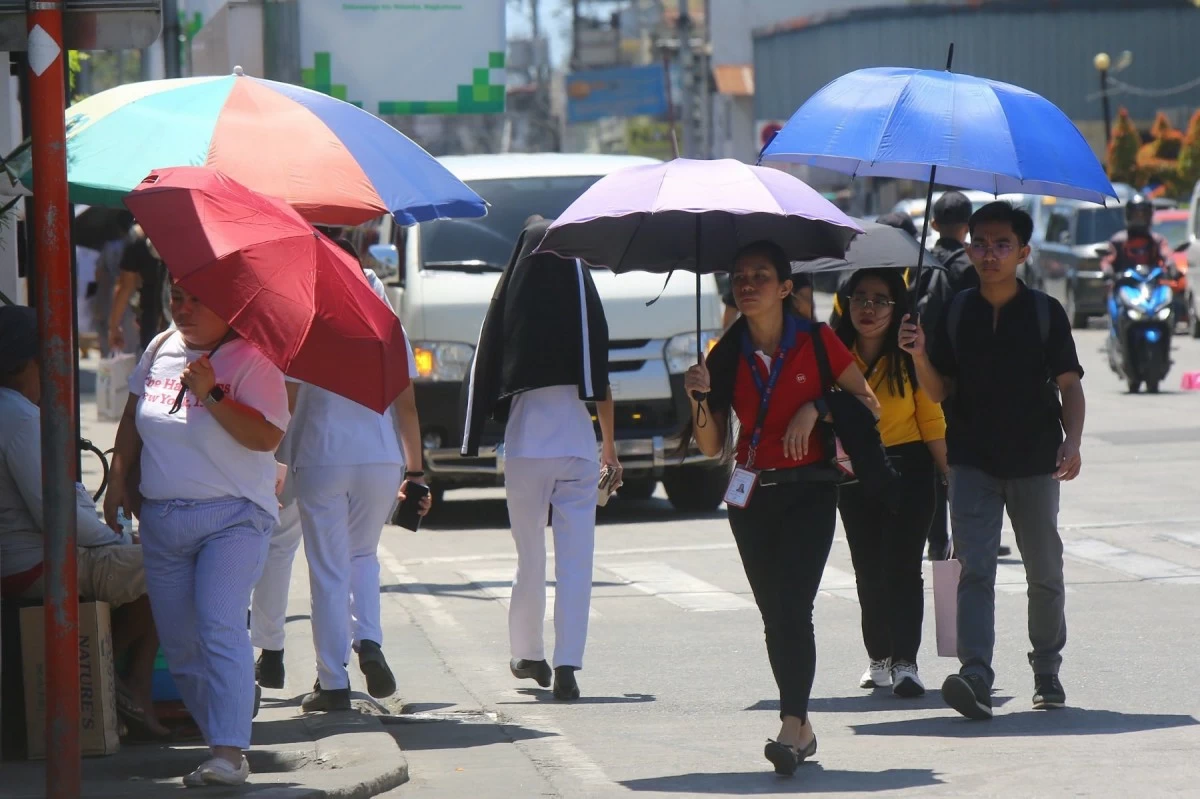
Pedestrians brave the heat in downtown Davao City as the Philippine Atmospheric, Geophysical and Astronomical Services Administration (PAGASA) has declared on Monday, March 23, the start of the warm and dry season.
As of 2pm Monday, the city's heat index was at 35 degrees Celsius according to the CDRRMO. (Keith Bacongco)
Recent data from SEERMO, an AI-powered mobility program, showed that only 23 percent of road space is available for pedestrians. In comparison, about 47 percent of travelers using private vehicles take up a significant 77 percent of road space.
Recognizing the need to prioritize people in improving public transportation, Filipino researcher Syrus Gomari has enhanced the SEERMO mobility application to help address the uneven use of road space across the country.
“The question should not be ‘How do we move more cars?’ but ‘How do we move more people efficiently?’ When we shift from car-centric to people-centric thinking, solutions expand beyond road widening to integrated transport systems, active mobility, and smarter urban design with SEERMO,” Gomari said during his exit presentation in Quezon City.
Gomari is among 710 Filipino scientists who returned to the Philippines through the Department of Science and Technology’s (DOST) Balik Scientist Program (BSP), which aims to strengthen science and innovation in the country by tapping global expertise.
“We at DOST are proud to see how Balik Scientists like Dr. Gomari are using their global expertise to help the country, especially in emerging and interdisciplinary fields like smart mobility, urban systems, and artificial intelligence,” said DOST Renato U. Solidum Jr..
DOST Undersecretary for Research and Development and BSP program lead Leah J. Buendia also underscored the importance of integrating artificial intelligence into transport and urban planning to address traffic congestion and build safer, more inclusive, and sustainable communities.
During his engagements, Gomari worked with local governments in Pasig City and Taguig City on pilot testing, and later expanded his research in Quezon City, focusing on deploying SEERMO in a larger urban setting.
The system uses AI-driven data and analytics to enable up to 10 times faster planning compared to traditional consultancy and manual data gathering. It integrates behavior-aware datasets of pedestrians and commuters, allowing cities to shift from vehicle-based traffic counts to people-centered mobility planning.
SEERMO functions similarly to a CCTV system but automates the monitoring of both people and vehicles through computer algorithms. It also allows reporting of on-ground incidents and transport infrastructure issues through smartphones, while combining field data and government records into a single database.
The platform has also been utilized in other areas, including Cauayan City, Porac in Pampanga, Naga City in Bicol, Isabela City in Basilan, and Roxas City in Capiz.
Further improvements to the system now allow it to generate detailed results for specific districts or road sections, showing how movement in one area affects another, instead of providing only city-wide data.
“The future of Philippine science and innovation will not be shaped by technology alone, nor by policies in isolation. It will be shaped by people—people who choose to come home, to contribute, and to believe that our cities and communities are worth improving,” DOST-PCIEERD Deputy Executive Director and Officer-in-Charge, Office of the Executive Director, Engr. Niñaliza H. Escorial said.