






Manila Bulletin
 Philippines
National
Cute but invasive: DENR warns vs 'Alvin and the Chipmunks'-like squirrel sightings in Metro Manila
Philippines
National
Cute but invasive: DENR warns vs 'Alvin and the Chipmunks'-like squirrel sightings in Metro Manila
Philippines
National
Cute but invasive: DENR warns vs 'Alvin and the Chipmunks'-like squirrel sightings in Metro Manila
Cute but invasive: DENR warns vs 'Alvin and the Chipmunks'-like squirrel sightings in Metro Manila
By Jel Santos
Published Apr 17, 2026 05:30 pm


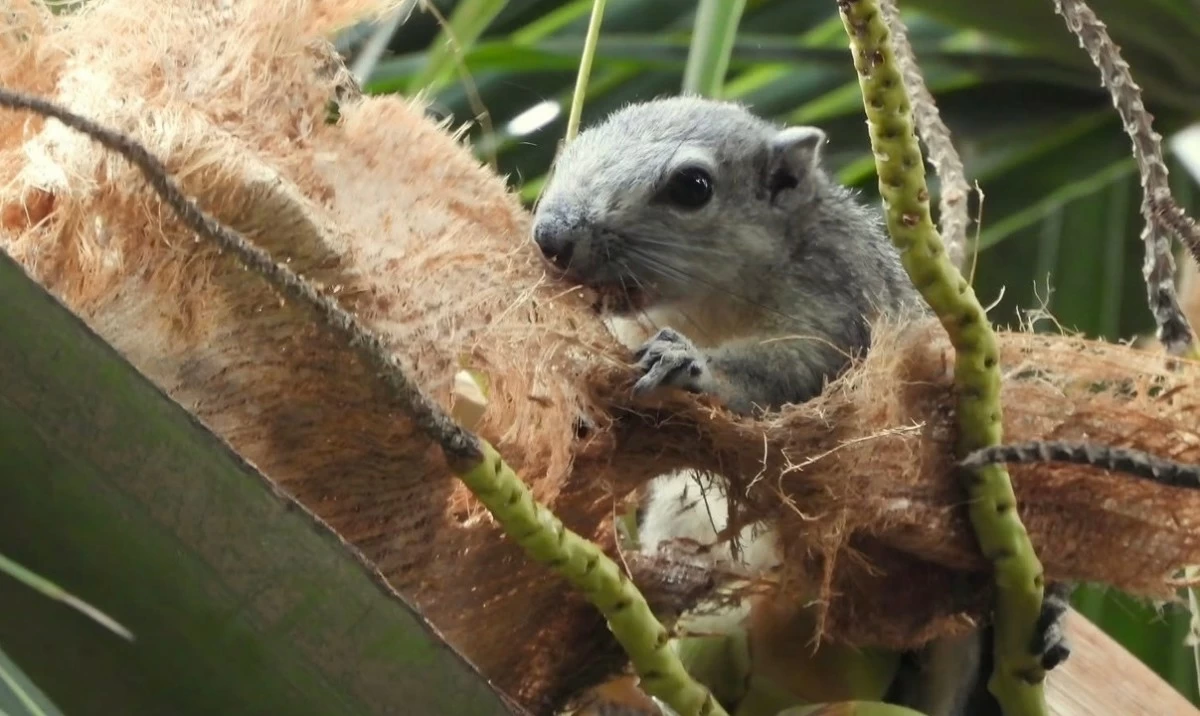
(DENR-BMB)
A small, fluffy visitor that looks like “Alvin and the Chipmunks,” seen darting across trees and power lines in Metro Manila, may appear harmless, even cute, but the Department of Environment and Natural Resources (DENR) is warning the public as sightings continue to increase.
From campuses to city parks, the Finlayson’s squirrel has been increasingly spotted around the metropolis, drawing attention for its striking appearance and playful movements.
Although they may look alike and belong to the same squirrel family, chipmunks and the Finlayson’s squirrel are different species and are not the same animal.
With coat colors ranging from black and white to reddish brown, the species has become a curious sight for urban dwellers, and is often mistaken for a native animal.
But the DENR stressed that the squirrel is not native to the Philippines and is considered an invasive species that could pose risks to local ecosystems.
“While every wildlife species has inherent value, this squirrel is an invasive species that may threaten local ecosystems, and its presence is not promoted,” the agency said.
The DENR said the Finlayson’s squirrel, native to parts of Southeast Asia such as Cambodia, Laos, Myanmar, Thailand, and Vietnam, is known for its varied coat color, making it visually distinct but a potential competitor to native wildlife.
The agency warned that if its population continues to grow, the species may compete with local animals for food and habitat, potentially disrupting ecological balance.
“While interesting to see in urban areas, the Finlayson’s squirrel is not native to the Philippines and may compete with local wildlife if populations grow,” the department said.
The DENR reiterated to the public that while every wildlife species has inherent value, the squirrel is an invasive species and its presence is not promoted.
As the animal continues to charm city residents with its quick leaps and soft features, the environment department reminded the public that not all wildlife seen in urban spaces belong there, and that even the cutest creatures can carry serious environmental consequences.