






 Business
The Stock Market
Shakey's operator earnings drop 32% in 2025 amid soft consumer spending, expansion costs
Business
The Stock Market
Shakey's operator earnings drop 32% in 2025 amid soft consumer spending, expansion costs
Shakey's operator earnings drop 32% in 2025 amid soft consumer spending, expansion costs


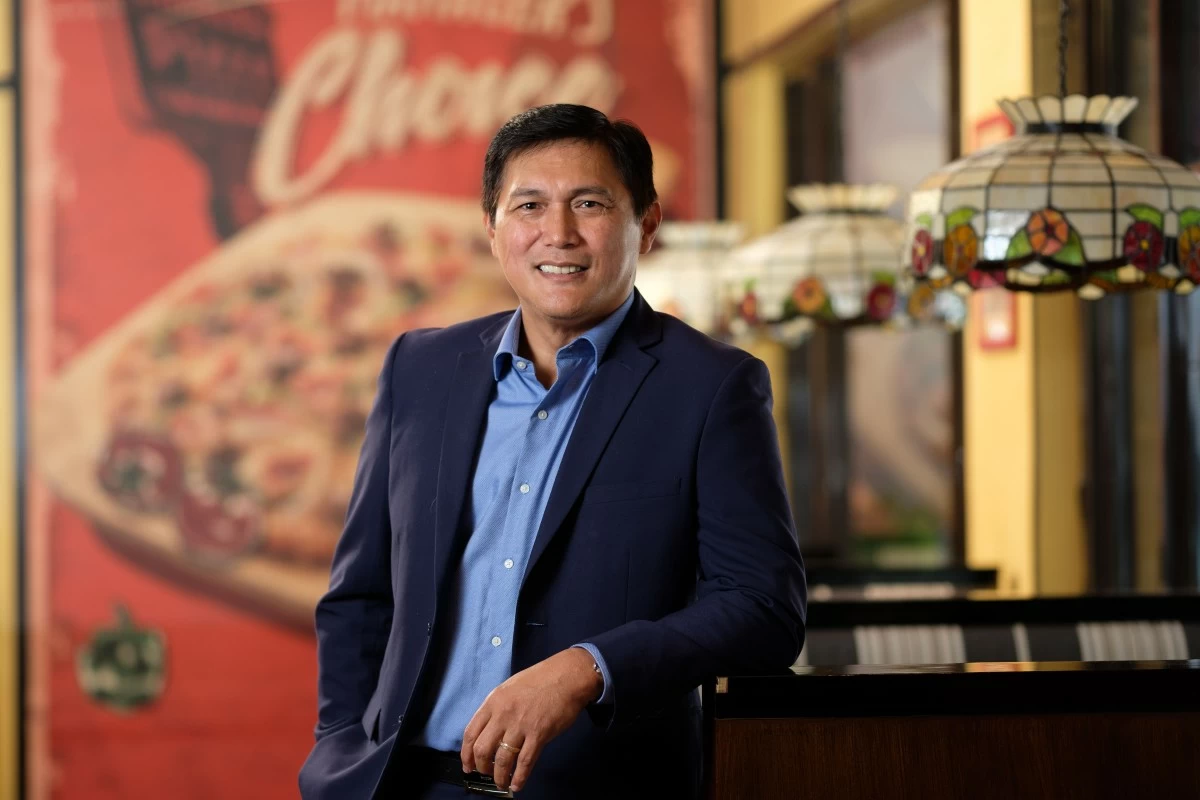
Shakey’s Pizza Asia Ventures Inc. (SPAVI), the owner of the Po family’s casual dining restaurants and kiosk chains, reported a 32-percent drop in its 2025 net income to ₱816 million as rising inflation dampened consumer spending while costs increased amid continued expansion.
In a disclosure to the Philippine Stock Exchange (PSE) on Thursday, April 16, the firm said its core income declined 20 percent year-on-year to ₱952 million last year. This excludes one-off items recognized in the second quarter of the year.
Systemwide sales (SWS) reached ₱24.8 billion in 2025, 14 percent higher than the previous year. The group recorded revenues amounting to ₱16.1 billion, up 11 percent versus 2024.
SPAVI operates a multi-brand portfolio comprised of casual dining and kiosk formats, led by Shakey’s and Potato Corner. In 2025, both brands reinforced their market leadership positions, gaining share in their respective categories. Other brands include Peri-Peri Charcoal Chicken, R&B Milktea, and Project Pie.
Propelling sales is the group’s network expansion program. In 2025, SPAVI opened 351 new stores and outlets, ending the year with a total of 2,970 units in its global network, with approximately 16 percent of these being international stores.
Meanwhile, against a backdrop of soft consumer confidence and operating headwinds, the group posted same-store sales growth (SSSG) of one percent.
Fourth-quarter systemwide sales growth mirrored the full-year rate at 14 percent. During this period, the group doubled down on new store openings with 163 new units.
However, continued weakness in consumption led to a muted holiday season, and same-store sales remained flat for the quarter.
SPAVI President and Chief Executive Officer (CEO) Vicente Gregorio said, “2025 was a tale of two halves. The first six months saw robust restaurant performance on stabilizing inflation and major campaigns. However, the second half of the year saw a pullback in discretionary spending.”
“Nonetheless, beyond navigating near-term headwinds, we made deliberate investments in network expansion, opening stores with attractive payback periods, reflecting our confidence in the long-term growth opportunities for the business,” he added.
According to Gregorio, while the group saw a lackluster holiday season in the fourth quarter, SPAVI’s multi-brand portfolio gave the business flexibility to capture demand, especially among value-seeking guests.
In this environment, casual dining saw softer demand for group occasions, while value-oriented formats like Potato Corner kiosks bucked the trend and performed well.
With subdued same-store sales, combined with the cost implications of new store openings, SPAVI’s gross margins landed at 22.9 percent, reflecting a 2.3-percentage-point (ppt) compression versus last year.
While input costs trended favorably during the year, expansion-related costs, such as pre-operating expenses and depreciation, weighed on gross margins.
Meanwhile, operating expenses (opex) as a percentage of sales saw a 70-basis-point (bp) uptick to 14.6 percent due to softer sales coupled with investments in demand-generating activities toward the tail end of the year.
Gregorio said, “2025 proved to be a challenging year, but one that we didn’t take lying down. Efforts were implemented to unlock more efficiencies in our business model, from improving store-level profitability to tightening cost management across our supply chain and expansion program. At the same time, we needed to stimulate demand amidst a strained consumer environment.”
“Entering 2026, our operating landscape has become even more complex, muddied by geopolitical tension and its impact on the macroeconomic environment. Hence, we place our focus on what we can control: reinforcing business resilience,” he noted.
This means keeping core brands relevant, optimizing the network while pursuing sustainable expansion, and driving cost discipline.