






Manila Bulletin
 Philippines
National
'Para sa mas ligtas na Pilipinas:' PH unveils 10-year rescue roadmap to standardize disaster response
Philippines
National
'Para sa mas ligtas na Pilipinas:' PH unveils 10-year rescue roadmap to standardize disaster response
Philippines
National
'Para sa mas ligtas na Pilipinas:' PH unveils 10-year rescue roadmap to standardize disaster response
'Para sa mas ligtas na Pilipinas:' PH unveils 10-year rescue roadmap to standardize disaster response
Published Apr 15, 2026 04:24 pm


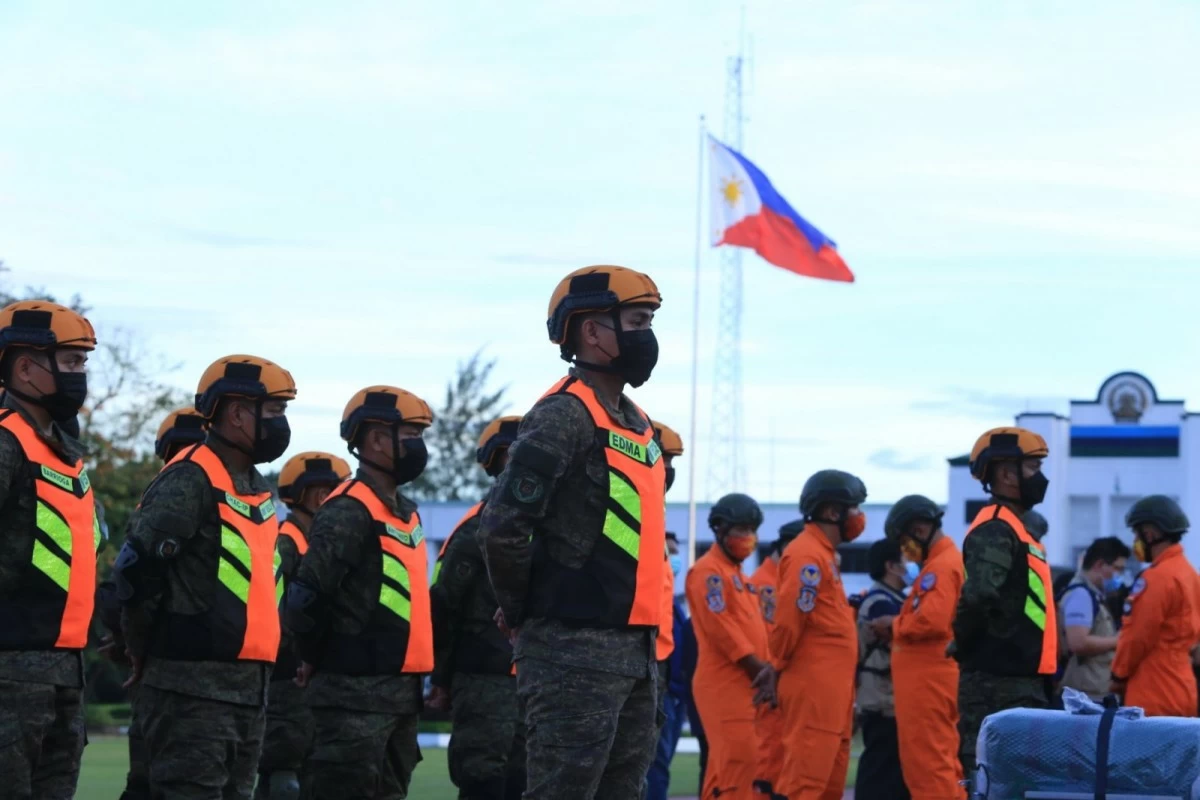
The Armed Forces of the Philippines (AFP) sends its urban search and rescue (USAR) teams from the Philippine Army's 525th Engineer Combat Battalion, 51st Engineer Brigade, and the Philippine Air Force 505th Search and Rescue Group as part of the Philippine delegation to Turkey on Feb. 28, 2023 to aid the response team of the earthquake-stricken country. (Photo: AFP)
The national government announced Wednesday, April 15, that it has finalized a 10-year-long strategic plan to overhaul how the nation conducts urban search and rescue (USAR) operations.
The Office of Civil Defense (OCD) said that the Search and Rescue Strategic Plan 2026–2036, a comprehensive blueprint designed to modernize and unify the Philippines’ disaster response capabilities, was approved during a meeting at the National Disaster Risk Reduction and Management Council (NDRRMC) Operations Center in Quezon City.
Developed by the Philippine Urban Search and Rescue (USAR) National Accreditation Body (NAB), it serves as the official playbook for how the country will handle complex rescue scenarios over the next decade.
The meeting was led by USAR-NAB committee chair Superintendent Robert M. Pacis, director for operations of the Bureau of Fire Protection (BFP), and attended by representatives from the Metropolitan Manila Development Authority (MMDA), Philippine Navy (PN), Philippine Army (PA), Philippine Air Force (PAF), as well as Disaster Risk Reduction and Management Office (DRRMO) leaders from Pasig, Makati, and Olongapo.
“The strategic plan, which secured committee approval, aims to standardize and enhance the country’s SAR capabilities,” Pacis said.
The document lays out systems for coordination, training, and resource use among national and local responders. It is essentially a blueprint for saving lives during emergencies such as typhoons, floods, earthquakes, maritime accidents, and missing persons cases.
At its core, the plan is a policy framework that moves the country away from fragmented and siloed rescue efforts. Instead of different agencies like the Navy, BFP, or local government units having their own separate methods, the plan creates a universal standard.
Why it matters
The OCD said the approval of the plan marked a key step in the government’s push to tighten disaster readiness.
The Philippines is among the most disaster-prone countries in the world due to frequent typhoons, earthquakes, and volcanic activity.
Super Typhoon Yolanda (Typhoon Haiyan), one of the world’s strongest tropical cyclones in the world, made landfall in Eastern Samar on Nov. 8, 2013. The super typhoon killed 6,000 people, affected 16 million individuals, and displaced four million.
By having a pre-approved strategic direction, the OCD said it avoids administrative delays and confusion regarding “who is in charge” or “who brings what equipment,” especially since in the immediate aftermath of a disaster, the first few hours are critical for saving lives
The strategic plan allows the government to identify gaps in national assets and invest taxpayer money where it is most needed, rather than duplicating resources across agencies.
Further, by following standardized USAR protocols, the OCD said that local search and rescue teams become better aligned with international standards such as those set by International Search and Rescue Advisory Group (INSARAG), a United Nations-affiliated network of global disaster managers, governments, and rescue teams.
This also makes it easier for the Philippines to receive foreign aid during massive disasters or even send our own accredited teams to help other countries.
After the approval at the committee level, the plan will be endorsed to the USAR-NAB chairperson and Undersecretary Harold Cabreros, OCD administrator and NDRRMC executive director. It will then be elevated for final approval by Department of National Defense (DND) Secretary Gilberto Teodoro Jr., who chairs the NDRRMC.
The OCD stressed that the strategic plan “reflects a unified government effort to build a more prepared and resilient Philippines, ensuring responders are guided by a clear strategic direction over the next decade.”