

ADVERTISEMENT

Overseas remittances hit 9-month low in February amid post-holiday slowdown

Published Apr 15, 2026 01:36 pm

At A Glance

  • Money sent home by overseas Filipinos (OFs) fell to $2.79 billion in February 2026, marking the lowest level in nine months.
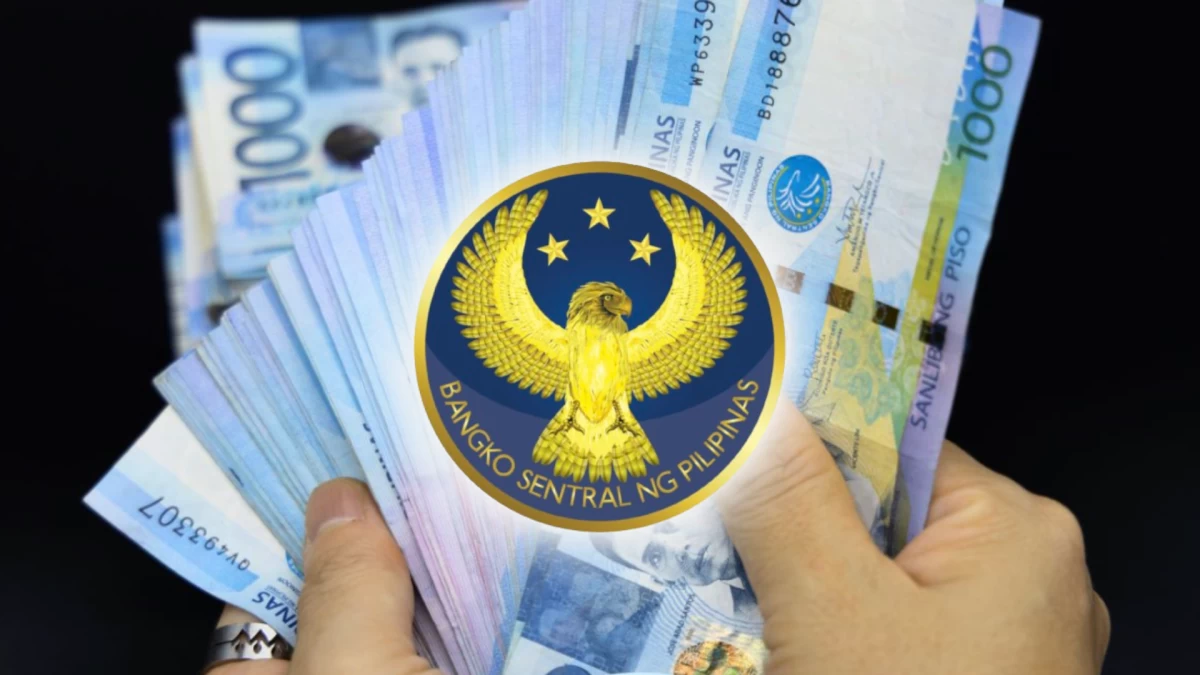
Money sent home by overseas Filipinos (OFs) fell to $2.79 billion in February, marking the lowest level in nine months, just before Middle East tensions erupted, which could further reduce remittances.

Remittance inflows, which dipped to their lowest since May 2025 at $2.66 billion, reflect a continued easing following the year-end holiday surge in 2025.

The latest data from the Bangko Sentral ng Pilipinas (BSP) released on Wednesday, April 15, showed that while the February figure represents a 2.6-percent increase compared with the $2.72 billion recorded in the same month last year, it slowed from the $3.02 billion seen in the previous month.

During the month, land-based workers contributed $2.25 billion to the total, a 2.7-percent year-on-year increase, while sea-based workers contributed $530 million, representing two-percent growth.

Personal remittances—a broader category including informal channels and remittances in kind—reached $3.1 billion in February, up 2.6 percent from $3.02 billion in the same month last year.

For the first two months, cash remittances increased by 3.1 percent to $5.81 billion from $5.63 billion in the same period last year.

These 2026 figures follow a record-breaking performance in 2025, when holiday spending and year-end bonuses pushed annual cash inflows to an all-time high of $35.63 billion, slightly exceeding the central bank’s $35.5-billion forecast.

During the two-month period, the United States (US) remained the primary source of cash remittances, accounting for two-fifths of total. This was followed by Singapore (7.6 percent), Saudi Arabia (6.1 percent), Japan (5.3 percent), and the United Kingdom (UK) at 4.7 percent.

Cumulative personal remittances from January to February reached $6.46 billion, a 3.1-percent increase over the $6.27 billion recorded in early 2025.

According to the BSP, the US’ dominance as a source is partly due to the use of US-based correspondent banks by money transfer centers and the fact that many money couriers are headquartered there.

Consequently, banks often attribute the origin of funds to the most immediate source rather than the actual country of origin.

Being an economic growth engine, cash remittances accounted for 7.3 percent of the country’s gross domestic product (GDP) in 2025, a slight decline from 7.5 percent in 2024 and 7.7 percent in 2023.

For this year, the BSP forecasts cash remittances to reach $36.7 billion, representing a three-percent growth rate from the actual 2025 figure. However, this is seen easing from the actual growth seen last year of 3.3 percent.

“Cash remittances remain a key source of external stability... despite geopolitical tensions, as there remain no signs of mass repatriation or widespread deployment bans,” the BSP earlier said.

Similarly, the Manila-based Asian Development Bank (ADB) expects private consumption to expand moderately in 2026, as remittance inflows are expected to remain steady.

“Remittances have been fairly resilient during past shocks, and in some years have even proven to be counter-cyclical. That is, more remittances tend to be sent during crises. However, if this crisis becomes prolonged, even remittances could become highly vulnerable,” ADB principal economics officer Teresa Mendoza said last week.

Mendoza noted that while inflows have been steady early this year, a prolonged conflict could hurt remittances, as around 17 percent of inflows come from Saudi Arabia and the United Arab Emirates (UAE).

Related Tags

Bangko Sentral ng Pilipinas (BSP) Asian Development Bank (ADB)
ADVERTISEMENT
.most-popular .layout-ratio{ padding-bottom: 79.13%; } @media (min-width: 768px) and (max-width: 1024px) { .widget-title { font-size: 15px !important; } }

{{ articles_filter_1561_widget.title }}

.most-popular .layout-ratio{ padding-bottom: 79.13%; } @media (min-width: 768px) and (max-width: 1024px) { .widget-title { font-size: 15px !important; } }

{{ articles_filter_1562_widget.title }}

.most-popular .layout-ratio{ padding-bottom: 79.13%; } @media (min-width: 768px) and (max-width: 1024px) { .widget-title { font-size: 15px !important; } }

{{ articles_filter_1563_widget.title }}

{{ articles_filter_1564_widget.title }}

.mb-article-details { position: relative; } .mb-article-details .article-body-preview, .mb-article-details .article-body-summary{ font-size: 17px; line-height: 30px; font-family: "Libre Caslon Text", serif; color: #000; } .mb-article-details .article-body-preview iframe , .mb-article-details .article-body-summary iframe{ width: 100%; margin: auto; } .read-more-background { background: linear-gradient(180deg, color(display-p3 1.000 1.000 1.000 / 0) 13.75%, color(display-p3 1.000 1.000 1.000 / 0.8) 30.79%, color(display-p3 1.000 1.000 1.000) 72.5%); position: absolute; height: 200px; width: 100%; bottom: 0; display: flex; justify-content: center; align-items: center; padding: 0; } .read-more-background a{ color: #000; } .read-more-btn { padding: 17px 45px; font-family: Inter; font-weight: 700; font-size: 18px; line-height: 16px; text-align: center; vertical-align: middle; border: 1px solid black; background-color: white; } .hidden { display: none; }
function initializeAllSwipers() { // Get all hidden inputs with cms_article_id document.querySelectorAll('[id^="cms_article_id_"]').forEach(function (input) { const cmsArticleId = input.value; const articleSelector = '#article-' + cmsArticleId + ' .body_images'; const swiperElement = document.querySelector(articleSelector); if (swiperElement && !swiperElement.classList.contains('swiper-initialized')) { new Swiper(articleSelector, { loop: true, pagination: false, navigation: { nextEl: '#article-' + cmsArticleId + ' .swiper-button-next', prevEl: '#article-' + cmsArticleId + ' .swiper-button-prev', }, }); } }); } setTimeout(initializeAllSwipers, 3000); const intersectionObserver = new IntersectionObserver( (entries) => { entries.forEach((entry) => { if (entry.isIntersecting) { const newUrl = entry.target.getAttribute("data-url"); if (newUrl) { history.pushState(null, null, newUrl); let article = entry.target; // Extract metadata const author = article.querySelector('.author-section').textContent.replace('By', '').trim(); const section = article.querySelector('.section-info ').textContent.replace(' ', ' '); const title = article.querySelector('.article-title h1').textContent; // Parse URL for Chartbeat path format const parsedUrl = new URL(newUrl, window.location.origin); const cleanUrl = parsedUrl.host + parsedUrl.pathname; // Update Chartbeat configuration if (typeof window._sf_async_config !== 'undefined') { window._sf_async_config.path = cleanUrl; window._sf_async_config.sections = section; window._sf_async_config.authors = author; } // Track virtual page view with Chartbeat if (typeof pSUPERFLY !== 'undefined' && typeof pSUPERFLY.virtualPage === 'function') { try { pSUPERFLY.virtualPage({ path: cleanUrl, title: title, sections: section, authors: author }); } catch (error) { console.error('ping error', error); } } // Optional: Update document title if (title && title !== document.title) { document.title = title; } } } }); }, { threshold: 0.1 } ); function showArticleBody(button) { const article = button.closest("article"); const summary = article.querySelector(".article-body-summary"); const body = article.querySelector(".article-body-preview"); const readMoreSection = article.querySelector(".read-more-background"); // Hide summary and read-more section summary.style.display = "none"; readMoreSection.style.display = "none"; // Show the full article body body.classList.remove("hidden"); } document.addEventListener("DOMContentLoaded", () => { let loadCount = 0; // Track how many times articles are loaded const offset = [1, 2, 3, 4, 5, 6, 7, 8, 9, 10]; // Offset values const currentUrl = window.location.pathname.substring(1); let isLoading = false; // Prevent multiple calls if (!currentUrl) { console.log("Current URL is invalid."); return; } const sentinel = document.getElementById("load-more-sentinel"); if (!sentinel) { console.log("Sentinel element not found."); return; } function isSentinelVisible() { const rect = sentinel.getBoundingClientRect(); return ( rect.top < window.innerHeight && rect.bottom >= 0 ); } function onScroll() { if (isLoading) return; if (isSentinelVisible()) { if (loadCount >= offset.length) { console.log("Maximum load attempts reached."); window.removeEventListener("scroll", onScroll); return; } isLoading = true; const currentOffset = offset[loadCount]; window.loadMoreItems().then(() => { let article = document.querySelector('#widget_1690 > div:nth-last-of-type(2) article'); intersectionObserver.observe(article) loadCount++; }).catch(error => { console.error("Error loading more items:", error); }).finally(() => { isLoading = false; }); } } window.addEventListener("scroll", onScroll); });

Sign up by email to receive news.