







Gov't to import more cooking gas to prevent shortages
Published Apr 15, 2026 03:51 pm


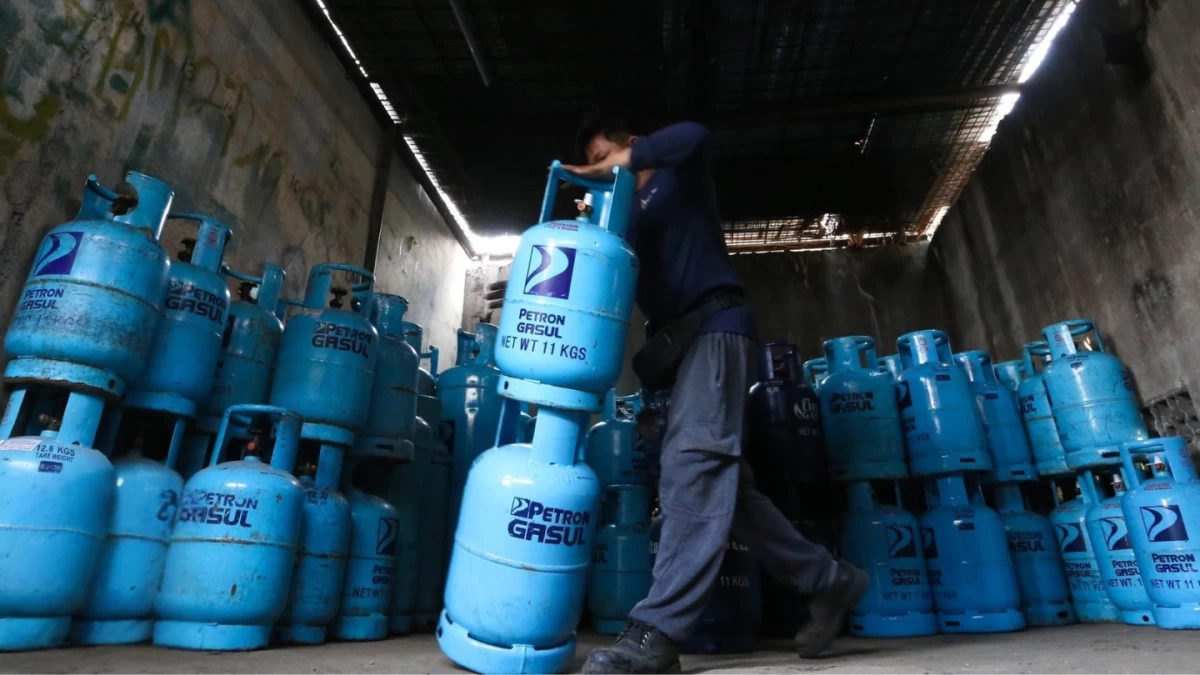
(Photo by Santi San Juan I MB)
The Marcos administration is moving to shore up the country’s depleted cooking fuel reserves as geopolitical volatility threatens energy security, with the government securing its first major import of liquefied petroleum gas (LPG) in months.
The Department of Energy (DOE) authorized the purchase of 22,000 metric tons of LPG for delivery in May, Energy Undersecretary Alessandro Sales said in a briefing on Wednesday, April 15.
Sales said the procurement, handled by the Philippine National Oil Co. Exploration Corp. (PNOC_EC), is designed to replenish the stockpile that has fallen to the lowest level among all refined petroleum products in the country.
Inventory levels for fuel, used by millions of Filipino households for cooking, currently stand at 36.27 days of supply as of April 10, according to Energy Secretary Sharon Garin.
While the upcoming shipment, scheduled to arrive between the second and third weeks of May, will provide a necessary buffer, Garin said the government is actively seeking additional sources to maintain long-term inventory sustenance.
The tight supply of LPG contrasts with more robust stockpiles of other fuels. Diesel inventories are currently at 48.90 days, while gasoline stands at 54.38 days. Kerosene remains the most insulated against market shocks, with 104.73 days of supply on hand.
To further stabilize the energy outlook, Garin said the government has recently tapped Vitol for additional volumes and is awaiting a 300,000-barrel shipment of crude from Oman.
Domestic fuel prices are expected to continue their downward trend next week, tracking a decline in international benchmarks.
Early monitoring of the Mean of Platts Singapore indicates a potential price cut of ₱14 to ₱16 per liter for diesel and a rollback of ₱1 to ₱2 per liter for gasoline.
Despite the projected relief at the pump, Garin warned that the market remains highly sensitive to developments in the Middle East.
While the temporary easing of geopolitical tensions has kept prices steady in recent days, any escalation that disrupts maritime trade would immediately ripple through to the local economy.
The DOE chief noted that the volatility of the international market is typically reflected in Philippine pump prices with a one-week lag, leaving the country vulnerable to sudden shocks in global supply chains.