

ADVERTISEMENT

Getting to know tengui

This iconic Japanese fabric is also a symbol of inter-cultural friendship

Published Apr 15, 2026 05:08 pm
2026 marks the 70th anniversary of Philippines-Japan friendship, remembering the signing of the San Francisco Peace Treaty in 1951 and the Philippines-Japan Reparations Agreement in 1956.
This year, the Japan International Cooperation Agency (JICA), the largest implementing agency of official Japanese development aid, partnered with Jan Vincent Ong, tenugui enthusiast and proprietor of Japanese specialty online store J Travel Finds, on a special tengui giveaway that draws heavily from both Japanese and Filipino cultures and nostalgia.
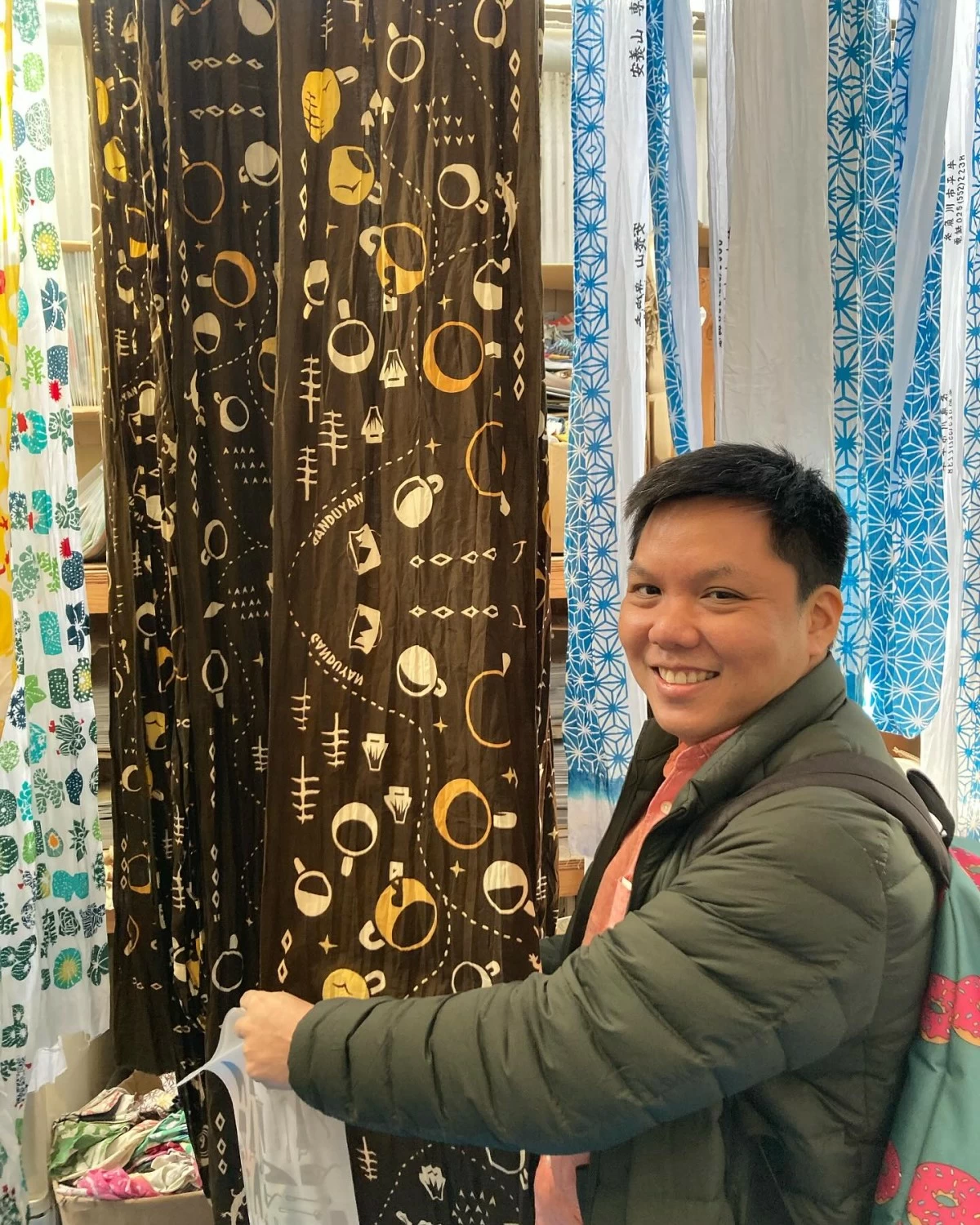
JAN VINCENT ONG posing with tenugui drying at Nakani Dyeing Factory. The design is a homage to the Sagada rice planting ritual of Begnas and features the town's original name Ganduyan.
A tenugui is a traditional decorative Japanese towel measuring 35 by 14 inches that’s made from thin, light cotton and are known for their decorative designs, which can vary from traditional patterns to pop culture characters. It has many uses: aside from the aforementioned towel, it can also used as a wrap to carry bottles and bento boxes, as headbands (particularly in the sport kendo, where they are often emblazoned with inspirational idioms), as dishcloths (before being replaced by modern dishtowels), and as home decor. Tenugui is also seasonal. “Whenever there's a celebration, [the Japanese] use tenugui to match the season,” Ong said.
Ong’s interest in tenugui began in 2023 when, while searching for items to offer in his store, he came across his first tenugui, a Star Wars-themed one based on hanafuda, traditional Japanese playing cards. He began focusing on tenugui, selling his curated wares online and at different bazaars. Most of his customers were, “art lovers [and] people who want to stand out.” Titas, he added, made up a huge part of both.
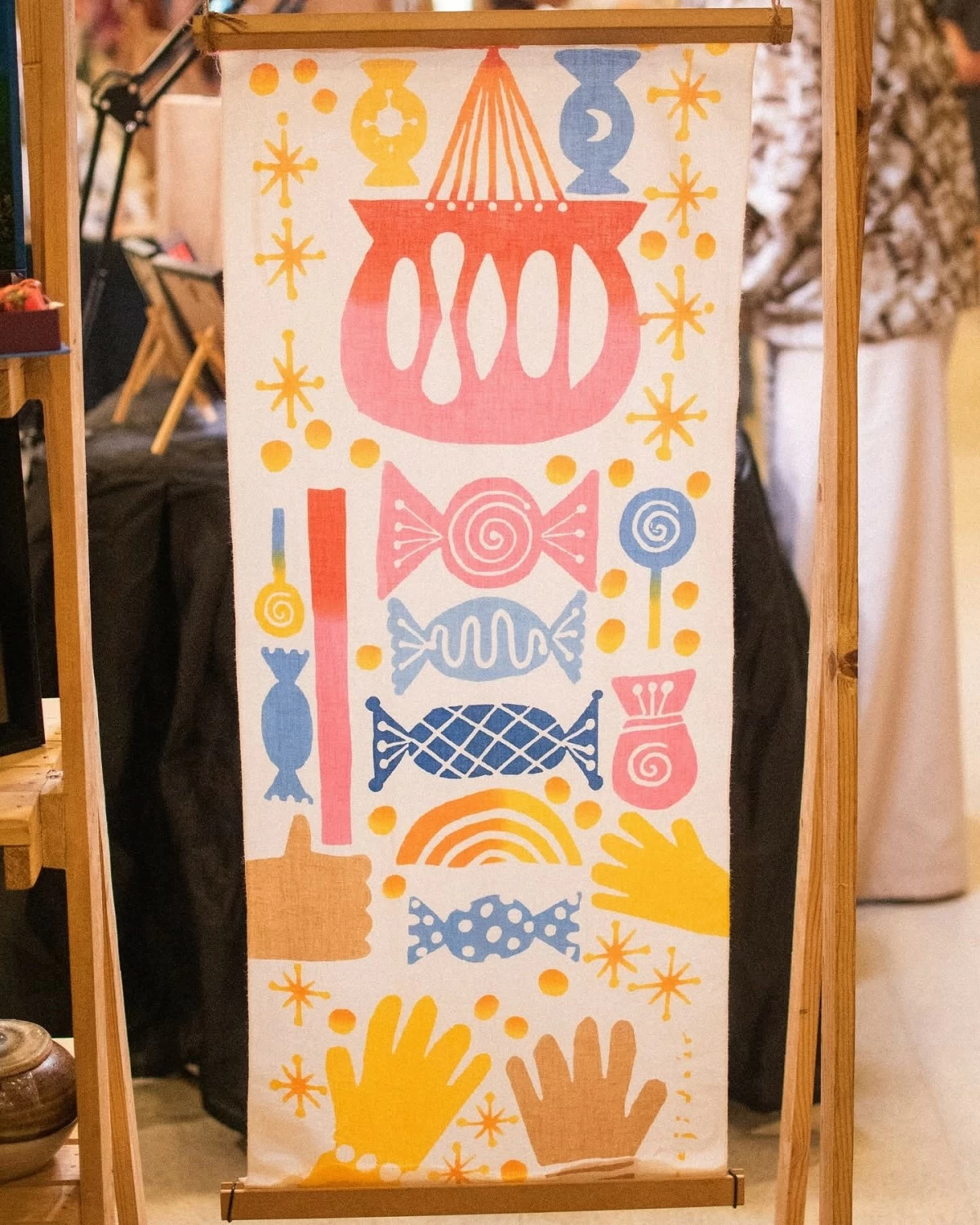
DRAWING ON CULTURE — The Pukpok Palayok design capitalizes on the tapestry's verticality and encourages artists to go beyond mainstream elements like the jeepney.
He also began collaborating with artists on original tenugui designs. “Tenuguis are also used as souvenirs for each [Japanese] city, so my dream is [to have] one for each city in the Philippines,” Ong said. His first design, a collaboration with Andrei Salud of Hocus MNL, focused on Sagada coffee. “My goal as a designer is for Filipinos to do research and tinker with themes and elements not commonly used. We have a rich tapestry of folklore to draw on for inspiration.”
His second design, originally created to commemorate the 69th anniversary of Philippine-Japan Friendship last year, is a collaboration with architect, artist, and children’s book author Jomike Tejido and focuses on the children’s party game pukpok palayok, where blindfolded children take turns trying to break a clay pot filled with candies and small toys. The tenuguis are produced by Nakani Dyeing Factory in Osaka, which specializes in chusen, a traditional dye blocking method. “Chusen means graduation,” Ong explained. “So you could say one tenugui is one of a kind because of the gradation of the color.”
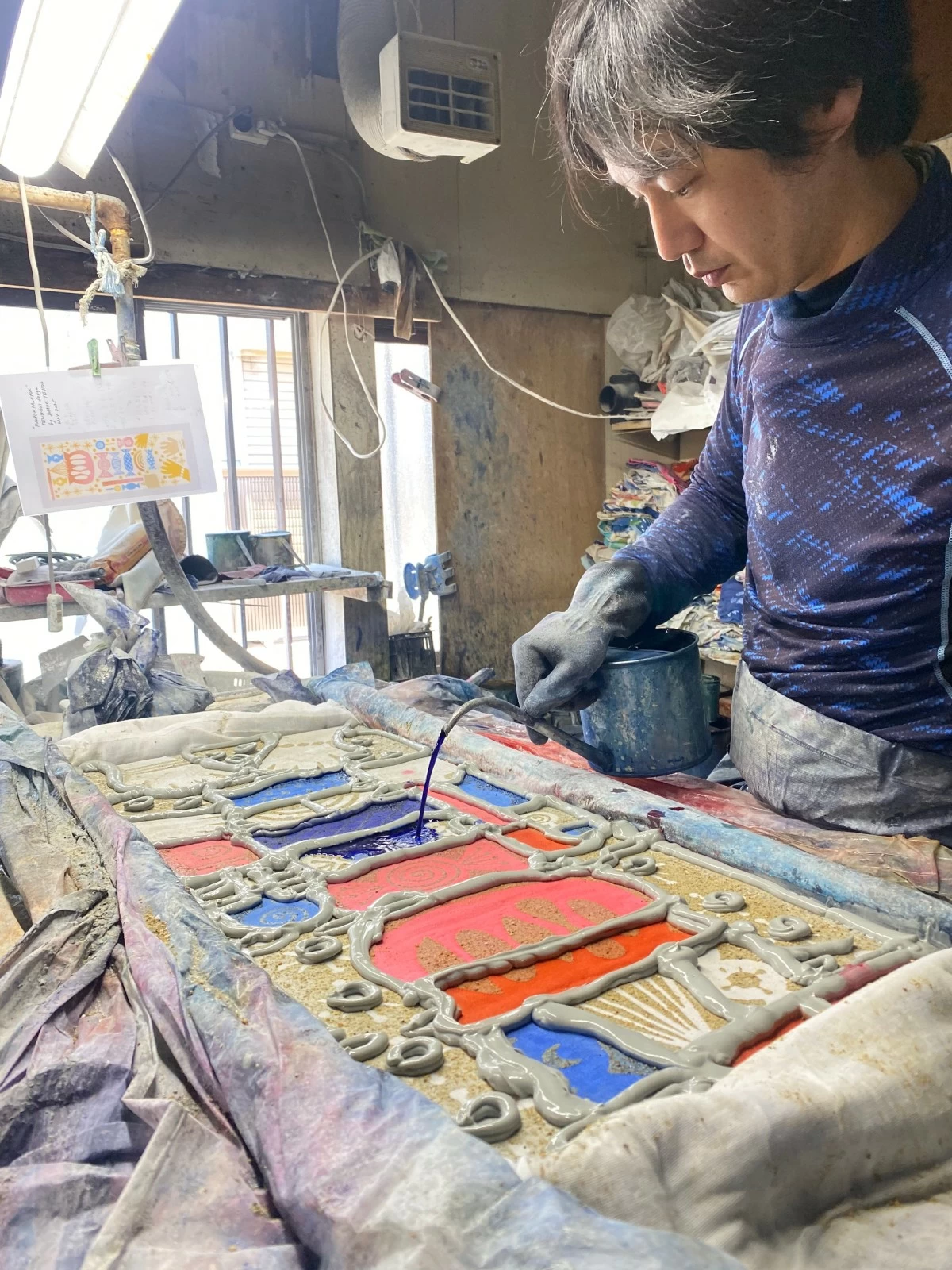
TRADITIONAL CRAFT - The Filipino tenuguis are hand dyed by expert craftsmen in Sakai, Osaka. Nakani Dyeing factory is known for their use of chusen color gradation.
The Pukpok Palayok tenugui isn’t just reserved for JICA’s guests. It’s also available at Ong’s online store. “I use it as a scarf, and that's [many people’s] 1st contact with it to tenugui that kind of sticks with them,” Ong said. “Now I've been promoting it as a bag charm. I have fun with the tenuguis because it's very adaptable.”
A tenugui is a cute and unique way to represent some of the best aspects of Philippine and Japanese cultures. How would you use your tenugui? (Photos courtesy of Jan Vincent Ong)

Related Tags

JAPANESE FABRIC SPOTLIGHT FEATURES YVETTE TAN
ADVERTISEMENT
.most-popular .layout-ratio{ padding-bottom: 79.13%; } @media (min-width: 768px) and (max-width: 1024px) { .widget-title { font-size: 15px !important; } }

{{ articles_filter_1561_widget.title }}

.most-popular .layout-ratio{ padding-bottom: 79.13%; } @media (min-width: 768px) and (max-width: 1024px) { .widget-title { font-size: 15px !important; } }

{{ articles_filter_1562_widget.title }}

.most-popular .layout-ratio{ padding-bottom: 79.13%; } @media (min-width: 768px) and (max-width: 1024px) { .widget-title { font-size: 15px !important; } }

{{ articles_filter_1563_widget.title }}

{{ articles_filter_1564_widget.title }}

.mb-article-details { position: relative; } .mb-article-details .article-body-preview, .mb-article-details .article-body-summary{ font-size: 17px; line-height: 30px; font-family: "Libre Caslon Text", serif; color: #000; } .mb-article-details .article-body-preview iframe , .mb-article-details .article-body-summary iframe{ width: 100%; margin: auto; } .read-more-background { background: linear-gradient(180deg, color(display-p3 1.000 1.000 1.000 / 0) 13.75%, color(display-p3 1.000 1.000 1.000 / 0.8) 30.79%, color(display-p3 1.000 1.000 1.000) 72.5%); position: absolute; height: 200px; width: 100%; bottom: 0; display: flex; justify-content: center; align-items: center; padding: 0; } .read-more-background a{ color: #000; } .read-more-btn { padding: 17px 45px; font-family: Inter; font-weight: 700; font-size: 18px; line-height: 16px; text-align: center; vertical-align: middle; border: 1px solid black; background-color: white; } .hidden { display: none; }
function initializeAllSwipers() { // Get all hidden inputs with cms_article_id document.querySelectorAll('[id^="cms_article_id_"]').forEach(function (input) { const cmsArticleId = input.value; const articleSelector = '#article-' + cmsArticleId + ' .body_images'; const swiperElement = document.querySelector(articleSelector); if (swiperElement && !swiperElement.classList.contains('swiper-initialized')) { new Swiper(articleSelector, { loop: true, pagination: false, navigation: { nextEl: '#article-' + cmsArticleId + ' .swiper-button-next', prevEl: '#article-' + cmsArticleId + ' .swiper-button-prev', }, }); } }); } setTimeout(initializeAllSwipers, 3000); const intersectionObserver = new IntersectionObserver( (entries) => { entries.forEach((entry) => { if (entry.isIntersecting) { const newUrl = entry.target.getAttribute("data-url"); if (newUrl) { history.pushState(null, null, newUrl); let article = entry.target; // Extract metadata const author = article.querySelector('.author-section').textContent.replace('By', '').trim(); const section = article.querySelector('.section-info ').textContent.replace(' ', ' '); const title = article.querySelector('.article-title h1').textContent; // Parse URL for Chartbeat path format const parsedUrl = new URL(newUrl, window.location.origin); const cleanUrl = parsedUrl.host + parsedUrl.pathname; // Update Chartbeat configuration if (typeof window._sf_async_config !== 'undefined') { window._sf_async_config.path = cleanUrl; window._sf_async_config.sections = section; window._sf_async_config.authors = author; } // Track virtual page view with Chartbeat if (typeof pSUPERFLY !== 'undefined' && typeof pSUPERFLY.virtualPage === 'function') { try { pSUPERFLY.virtualPage({ path: cleanUrl, title: title, sections: section, authors: author }); } catch (error) { console.error('ping error', error); } } // Optional: Update document title if (title && title !== document.title) { document.title = title; } } } }); }, { threshold: 0.1 } ); function showArticleBody(button) { const article = button.closest("article"); const summary = article.querySelector(".article-body-summary"); const body = article.querySelector(".article-body-preview"); const readMoreSection = article.querySelector(".read-more-background"); // Hide summary and read-more section summary.style.display = "none"; readMoreSection.style.display = "none"; // Show the full article body body.classList.remove("hidden"); } document.addEventListener("DOMContentLoaded", () => { let loadCount = 0; // Track how many times articles are loaded const offset = [1, 2, 3, 4, 5, 6, 7, 8, 9, 10]; // Offset values const currentUrl = window.location.pathname.substring(1); let isLoading = false; // Prevent multiple calls if (!currentUrl) { console.log("Current URL is invalid."); return; } const sentinel = document.getElementById("load-more-sentinel"); if (!sentinel) { console.log("Sentinel element not found."); return; } function isSentinelVisible() { const rect = sentinel.getBoundingClientRect(); return ( rect.top < window.innerHeight && rect.bottom >= 0 ); } function onScroll() { if (isLoading) return; if (isSentinelVisible()) { if (loadCount >= offset.length) { console.log("Maximum load attempts reached."); window.removeEventListener("scroll", onScroll); return; } isLoading = true; const currentOffset = offset[loadCount]; window.loadMoreItems().then(() => { let article = document.querySelector('#widget_1690 > div:nth-last-of-type(2) article'); intersectionObserver.observe(article) loadCount++; }).catch(error => { console.error("Error loading more items:", error); }).finally(() => { isLoading = false; }); } } window.addEventListener("scroll", onScroll); });

Sign up by email to receive news.