







Hopes rise for renewed talks as US military says Iran blockade is in force
Published Apr 15, 2026 07:52 am
|
Updated Apr 15, 2026 02:19 pm


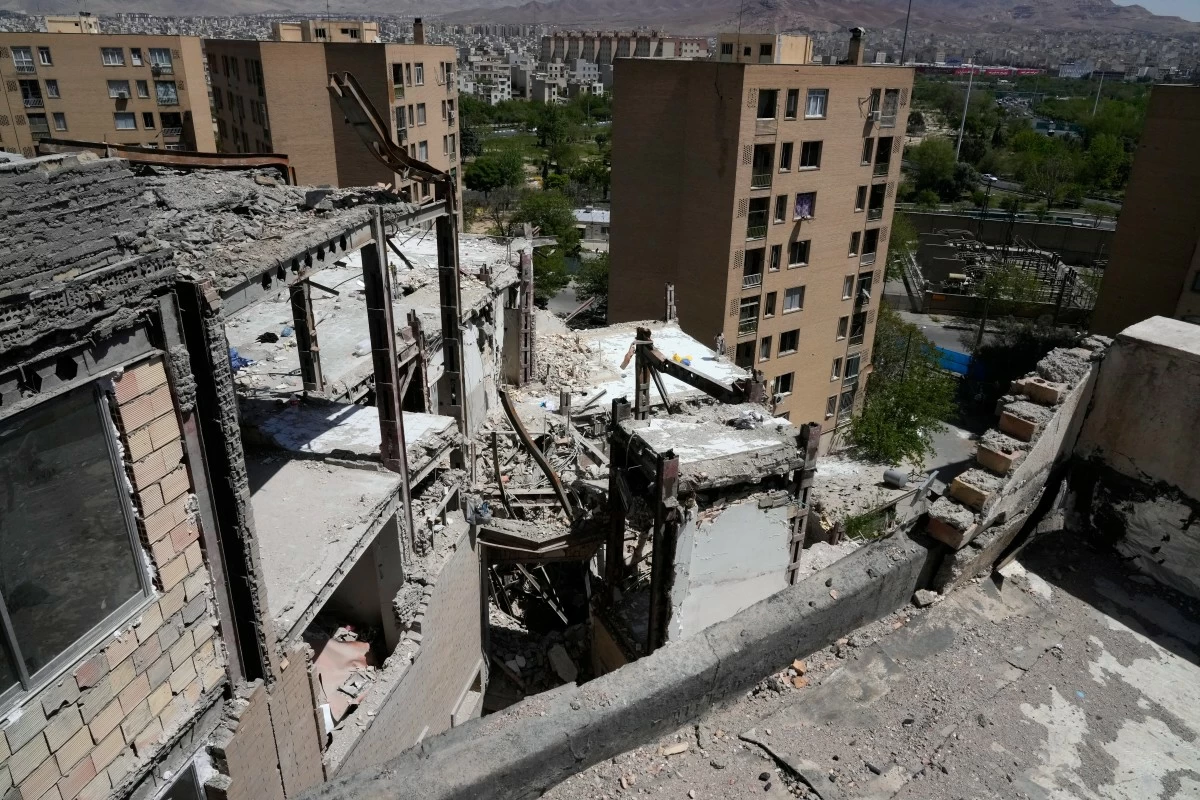
Damage is visible on a residential building that, according to Iranian authorities, was hit by a strike on March 4 during the U.S.-Israeli military campaign, in southeastern Tehran, Iran, Tuesday, April 14, 2026. (AP Photo/Vahid Salemi)
ISLAMABAD (AP) — Hopes rose for renewed talks between the United States and Iran on Wednesday, as the U.S. military said its blockade of Iranian ports was in full effect and Tehran threatened to retaliate by strike targets across the war-weary region.
U.S. President Donald Trump said Tuesday that a second round of talks could happen "over the next two days," telling the New York Post the negotiations could be held again in Islamabad as diplomats worked through back channels to arrange them.
U.N. Secretary-General António Guterres said it’s “highly probable” that talks will restart, citing a meeting he had with Pakistan’s Foreign Minister Ishaq Dar. The office of Pakistan’s Prime Minister Shehbaz Sharif said he would travel to Saudi Arabia Wednesday as his country pushes to mediate new talks and to Turkey for the Anatalya Peace Forum, which starts Friday.
Oil prices fell on hopes for an end to fighting, and in the U.S. stocks surged close to records set in January. The war, now in its seventh week, has jolted markets and rattled the global economy as shipping has been cut off and airstrikes have torn through military and civilian infrastructure across the region.
Meanwhile in Washington, the first direct talks in decades between the Israeli and Lebanese ambassadors to the U.S. concluded on a productive note Tuesday, according to the U.S. State Department.
Israeli Ambassador Yechiel Leiter said the two countries are “on the same side of the equation” in “liberating Lebanon” from the militant Hezbollah group. Lebanese Ambassador Nada Hamadeh Moawad called the meeting “constructive” but urged an end to the ongoing conflict between Israel and Iran-backed Hezbollah militants. Since March, that war has displaced more than 1 million people in Lebanon.
Israel and Lebanon have technically been at war since Israel was established in 1948, and Lebanon remains deeply divided over diplomatic engagement with Israel.
First round of talks with Iran failed to end conflict
Last weekend in Pakistan, an initial round of talks aimed at permanently ending the U.S.-Iran conflict failed to produce an agreement. The White House said Iran’s nuclear ambitions were a central sticking point.
“I think they want to make a deal very badly,” Trump said in an excerpt from an interview with Fox Business Network’s “Mornings with Maria" scheduled to air Wednesday morning. He added: “I view it as very close to over.”
A U.S. official said Tuesday that fresh talks with Iran were still under discussion and that nothing has been scheduled. The official spoke on condition of anonymity because they were not authorized to discuss sensitive negotiations.
Muhammad Aurangzeb, Pakistan’s finance minister, told The Associated Press that “our leadership is not giving up” on efforts to help the U.S. and Iran end the conflict.
Though the ceasefire appeared to hold, the showdown over the strategic Strait of Hormuz risked reigniting hostilities and deepening the regional war's economic fallout.
The fighting has killed at least 3,000 people in Iran, more than 2,100 in Lebanon, 23 in Israel and more than a dozen in Gulf Arab states. Thirteen U.S. service members have also been killed.
Tankers turned around after blockade took effect
U.S. Central Command said Tuesday no ships made it past the blockade in the first 24 hours, while six merchant vessels complied with direction from U.S. forces to turn around and reenter Iranian waters.
The blockade is intended to pressure Iran, which has exported millions of barrels of oil, mostly to Asia, since the war began Feb. 28. Much of it has likely been carried by so-called dark transits that evade sanctions and oversight, providing cash that’s been vital to keeping Iran running.
Tankers approaching the strait Monday turned around shortly after the blockade took effect, though one reversed course again and transited the waterway.
Since the war began, Iran has curtailed maritime traffic, with most commercial vessels avoiding the waterway. Tehran's effective closure of the strait, through which a fifth of global oil transits in peacetime, has sent oil prices skyrocketing, pushing up the cost of gasoline, food and other basic goods far beyond the Middle East.
Israel and Lebanon conclude talks
The Israel-Lebanon talks in Washington were "productive," the U.S. State Department said in a statement, adding that "all sides agreed to launch direct negotiations at a mutually agreed time and venue."
U.S. Secretary of State Marco Rubio, who facilitated the talks, had downplayed expectations for any immediate agreement.
Leiter, the Israeli ambassador to the U.S, said after the talks that both countries saw eye-to-eye in several areas.
"The Lebanese government made it very clear that they will no longer be occupied by Hezbollah," he said.
Moawad, Lebanon's top U.S. envoy, said in a brief statement that she had called for a ceasefire between Israel and Hezbollah and the return home of Lebanese displaced by the fighting.
After the ceasefire in Iran, Israel pressed ahead with its air and ground campaign in Lebanon. It has, however, halted strikes in Beirut, the country's capital since April 8, after a deadly bombardment that hit several crowded commercial and residential areas in central Beirut and killed more than 350 people in one day.
The deaths sparked an international outcry and threats by Iran that it would end the ceasefire.
Lebanese officials have pushed for a ceasefire. Israel has framed the negotiations around Hezbollah's disarmament and a potential peace deal, without publicly committing to halting hostilities or withdrawing its forces.
Israel wants Lebanon's government to assume responsibility for disarming Hezbollah, much as was envisaged in a November 2024 ceasefire. But the militant group has survived efforts to curb its strength for decades and said on Monday that it will not abide by any agreements that may result from the talks.