






Manila Bulletin
 Environment and Sustainability
Break free from imports: Villar Foundation promotes organic fertilizer as the way forward
Environment and Sustainability
Break free from imports: Villar Foundation promotes organic fertilizer as the way forward
Environment and Sustainability
Break free from imports: Villar Foundation promotes organic fertilizer as the way forward
Break free from imports: Villar Foundation promotes organic fertilizer as the way forward
Published Apr 15, 2026 10:42 am


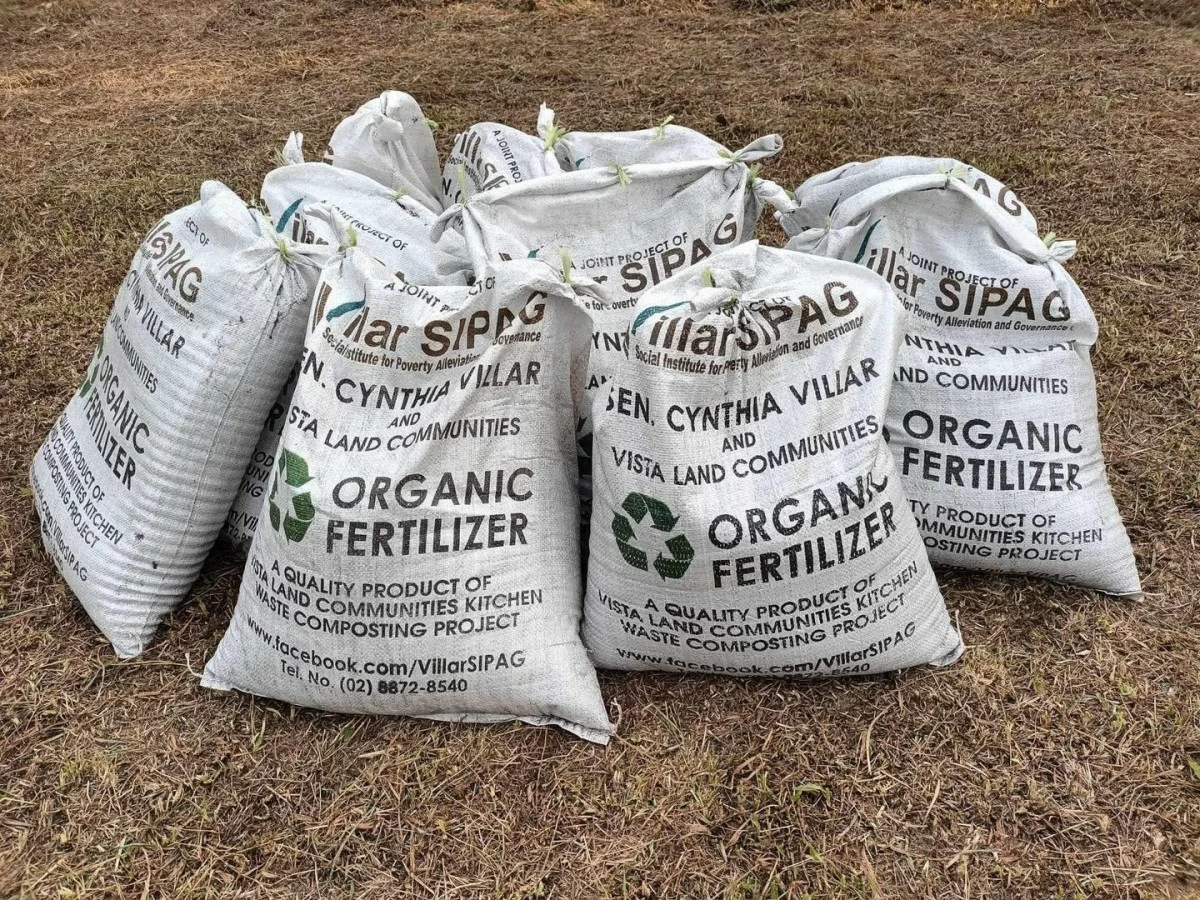
The Villar Foundation’s organic fertilizer is distributed free of charge to farmers and urban gardeners.
While global geopolitical tensions send fertilizer prices soaring and threaten to shrink Philippine rice and vegetable outputs, a domestic antidote has been decades in the making. As the region's most import-dependent nation, the Philippines is uniquely exposed to $800-per-ton urea prices according to the Department of Agriculture. Yet, amid these warnings of agricultural decline, the Villar Foundation’s more than 20 years of commitment to self-sufficiency is finally taking center stage.
Against this backdrop, the Villar Foundation in Las Piñas City has long been running a program that offers a practical alternative, one built not on imports but on kitchen and garden wastes.
In 2002, Villar Foundation started a project called the Las Piñas Kitchen and Garden Waste Composting Project.
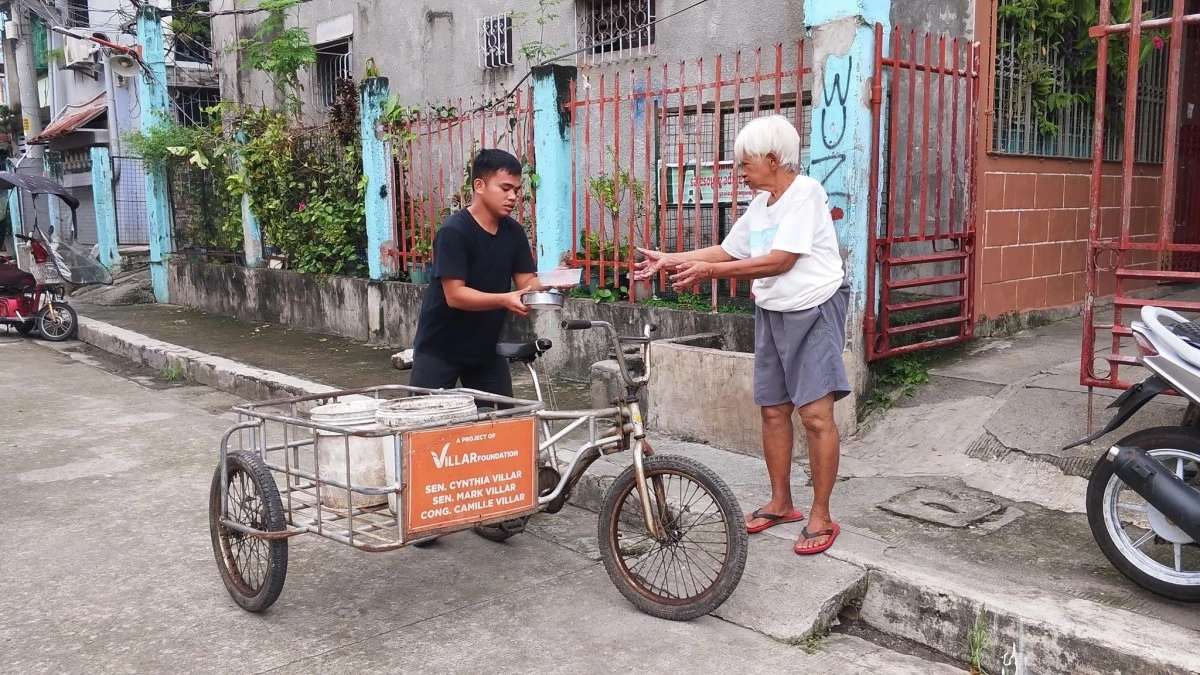
Kitchen waste is collected daily and delivered to composting facilities for organic fertilizer processing.
This initiative has also become a source of livelihood in Las Pinas.
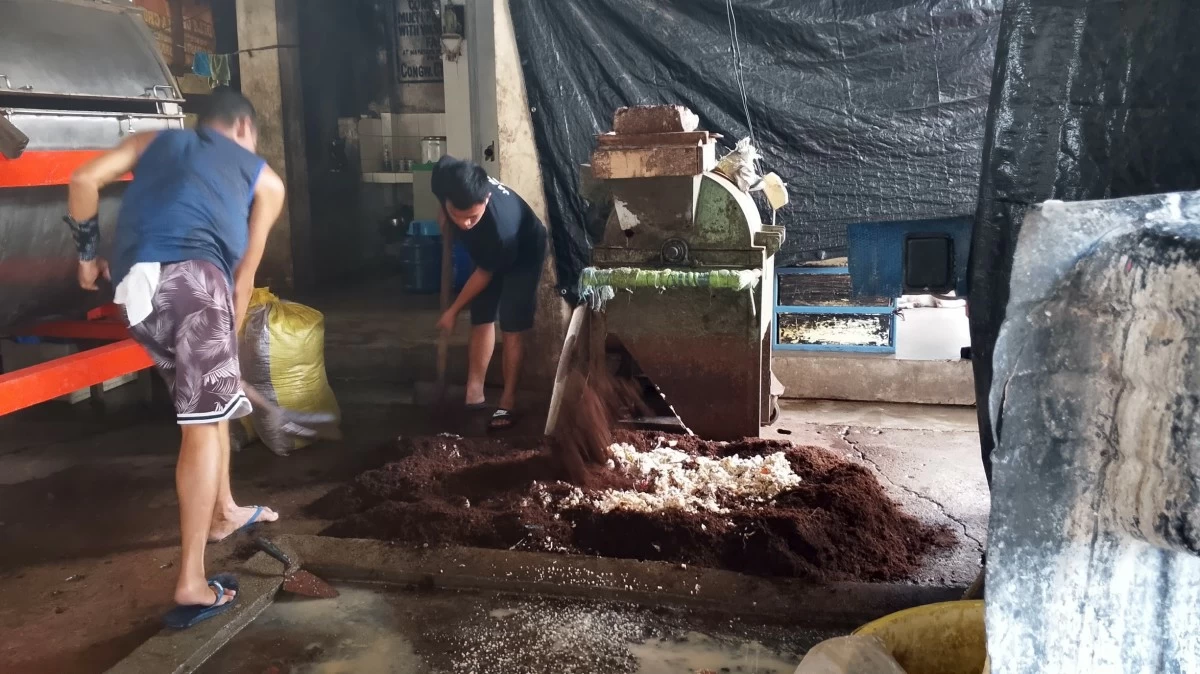
Kitchen waste is mixed with cocopeat and placed in a rotary composter to be converted into organic fertilizer.
Born from the necessity to streamline waste segregation and sanitation through its Las Piñas-Zapote River Rehabilitation Project, the Kitchen and Garden Waste Composting Project has evolved into a cornerstone of community sustainability. By recycling kitchen and garden wastes into organic fertilizer, and diverting these biodegradable materials from landfills and returning them to the soil, Villar Foundation has successfully integrated waste management with the promotion of organic farming.
By converting kitchen and garden waste into organic fertilizer, the Villar Foundation has created a scalable model for sustainable urban agriculture.
The project’s impact is backed by significant international recognition, proving that grassroots environmental solutions can achieve global standards. While the Las Piñas Zapote River Rehabilitation Project won the UN-Water for Life "Best Practices" Award (2011) for its holistic approach to water and waste management, its offshoot project, the Kitchen Waste Composting Project, won the World’s Best Environmental Project by Energy Globe Awards from Austria in 2022, honoring the project’s contribution to sustainability and resource efficiency.
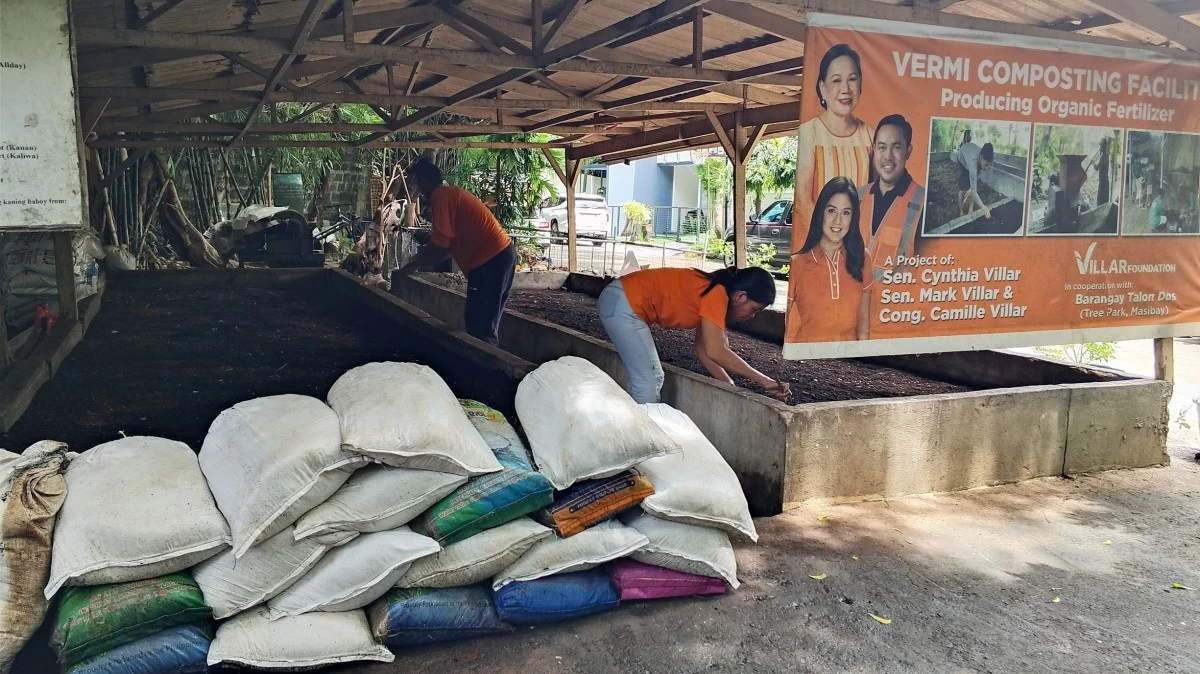
Villar Foundation's Vermi-composting Facility. Organic waste is placed in composting beds, where earthworms break it down into nutrient-rich fertilizer that improves soil and plant growth.
Currently, the Villar Foundation operates 73 composting facilities in Las Piñas City, donated personally by Former Senator Cynthia Villar. These composters are capable of producing up to 73 tons of organic fertilizer every month, converting kitchen and garden wastes, which account for roughly 50% of the city's total garbage, into usable agricultural inputs.
The impact is both environmental and economic. The program has saved the city approximately 300 million pesos that would otherwise have been spent on garbage hauling and disposal.
Alongside the composting initiative, the Villar Foundation regularly distributes free organic fertilizer and vegetable seeds to encourage urban gardening among residents, not only in Las Piñas but in communities across the Philippines. To sustain public awareness and enthusiasm, the Villar Foundation established the Urban Gardening Festival and Cooking Competition, held every May.
The legislative foundation for scaling such efforts nationwide comes from Former Senator Cynthia Villar.
In 2021, former Senator Villar championed Republic Act 11511, which amends Republic Act 10068 or the Organic Agriculture Act of 2010.
The law aimed to promote, develop and strengthen organic agriculture in the Philippines and benefit over 165,000 organic farming practitioners in the Philippines, the majority of whom are smallholder farmers, by establishing their affordable accreditation as organic practitioners under the Participatory Guarantee System (PGS). This allowed small farmers to be able to afford organic certification. Their use of organic inputs like compost or fertilizers greatly enhances the promotion of organic farming in the Philippines.
Building on this momentum, Former Senator Villar also passed Republic Act No. 12078, amending RA NO. 8178 or the "Agricultural Tariffication Act as amended by Republic Act 11203”, extending the Rice Tariffication Law until 2031 and allocating a 30-Billion Budget for local farmers. A portion of the budget covered priority projects that would address food security, including the creation of “Composting facilities for biodegradable wastes, which shall be used to address the micronutrient deficiencies in the soil.”
Complementing this legislation, former Senator Villar secured funding for composting equipment distributed through the Bureau of Soils and Water Management (BSWM).
Since 2012 and while Chairperson for the Committee on Agriculture and Food, former Senator Villar worked for the yearly budget allocation of the Department of Agriculture-Bureau of Soil and Water Management (BSWM) in providing Small Scale Composting Facilities (SSCFs) for Biodegradable Wastes (CFBWs), distributing rotary composter and shredding machine to various farmer cooperatives, irrigators' associations, and local government units across the country.
Fertilizer is critical to agricultural productivity, particularly for rice, which requires large amounts of urea to produce healthy grains.
These organic fertilizers can be used for rice farming by adding animal manure.
With prices rising and supply uncertainties deepening, application rates for the 2026-2027 grain crops could plunge across Southeast Asia, making locally produced organic fertilizer not just an environmental choice, but an urgent food security measure.
Villar Foundation’s two-decade experiment may well be the model the rest of the country needs now.